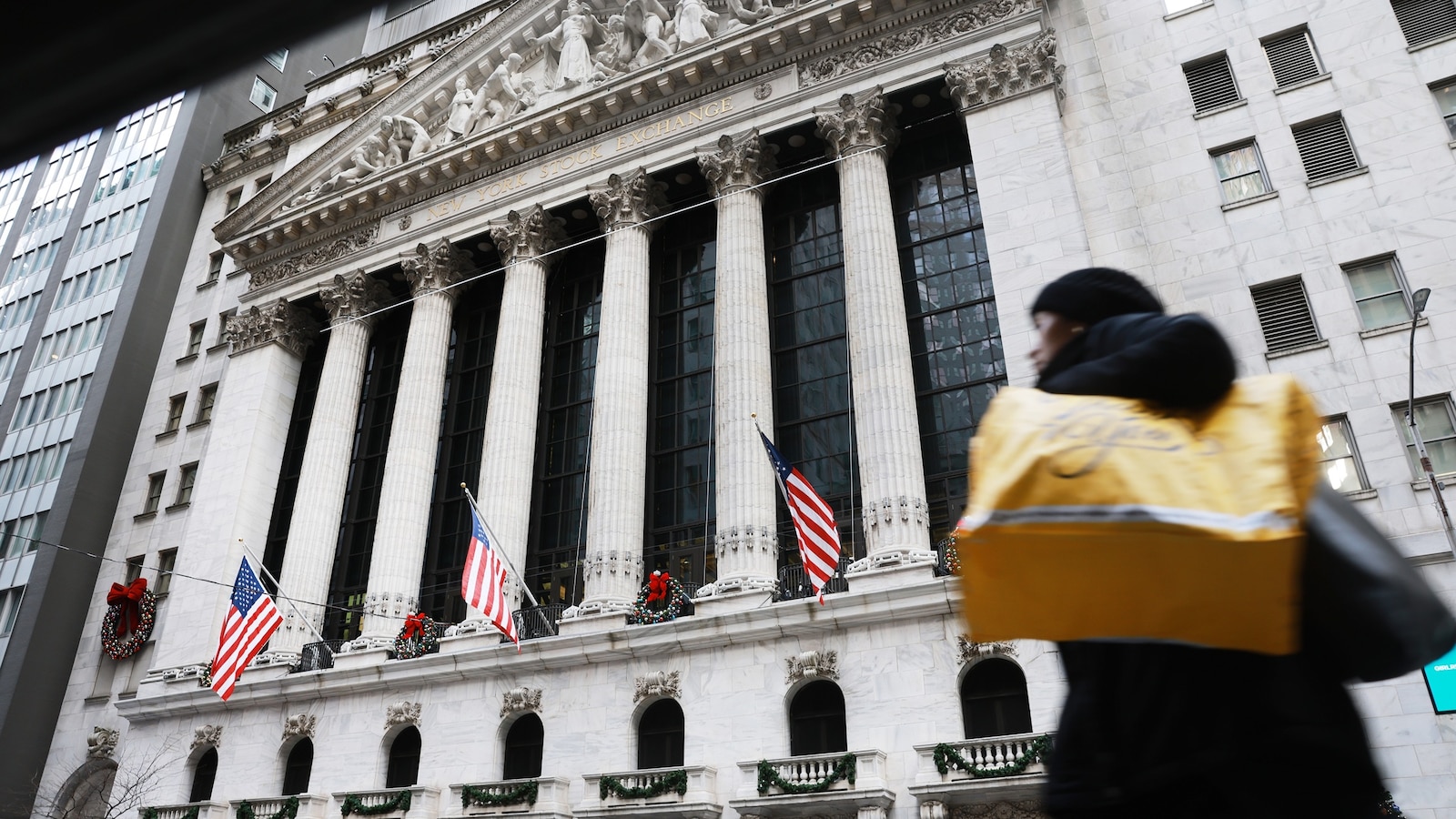
U.S. equity benchmarks closed 2025 with strong returns—S&P 500 +16%, Nasdaq +19% and the Dow +13%—marking a third consecutive year of double-digit gains driven by resilient corporate earnings, a series of interest-rate cuts and heavy investor enthusiasm for AI. Market gains were concentrated among the ‘magnificent seven’ tech giants, with Nvidia up 39% and its November earnings helping reverse earlier AI-driven weakness; tariffs announced in April initially triggered a $3.1 trillion one-day market drop but later suspensions limited lasting disruption. Despite the rally and record highs, analysts flag concentration risk around AI-exposed large caps and continued uncertainty from tariffs and political events.
Market structure has become top-heavy: Nvidia (NVDA) and cloud incumbents (MSFT, GOOGL, AMZN) directly benefit from outsized AI capex while ad-dependent META and more cyclical names (TSLA uneven) face margin pressure. Pricing power has shifted to chip designers and hyperscalers — expect semiconductor ASPs to stay elevated for 6–12 months as supply (advanced nodes, packaging) lags demand, supporting NVDA-style revenue mixes.
Risk profile is asymmetric: tail threats include rapid regulatory action on AI/exports, reinstated tariffs, or a Fed pivot back to hikes if inflation surprises — each could erase 15–30% from concentrated tech names. Near-term (days–weeks) volatility will track Fed minutes and tariff headlines; medium term (3–9 months) depends on earnings conversion of AI investments; long term (1–3 years) hinges on monetization of AI and supply-chain resiliency in Taiwan/Netherlands.
Trade-wise, the market favors concentrated longs but requires active hedging: relative-value should pair cloud/AI winners vs ad/social cyclicals while options can buy convexity around earnings. Cross-asset impact: lower yields from rate cuts support multiples but increase crowding risk; consider delta-hedged option strategies to manage skew and implied-vol concentration in NVDA.
Contrarian view: consensus underestimates execution risk — market prices flawless AI rollouts; a 20–30% drawdown is plausible if revenue mix disappoints. Historical parallels to 1999 tech concentration suggest diversify into under-owned cyclicals and semiconductor-equipment (KLAC/LRCX) where capex reinvestment can surprise to the upside if tariffs remain muted.
AI-powered research, real-time alerts, and portfolio analytics for institutional investors.
Request DemoOverall Sentiment
moderately positive
Sentiment Score
0.55
Ticker Sentiment
