
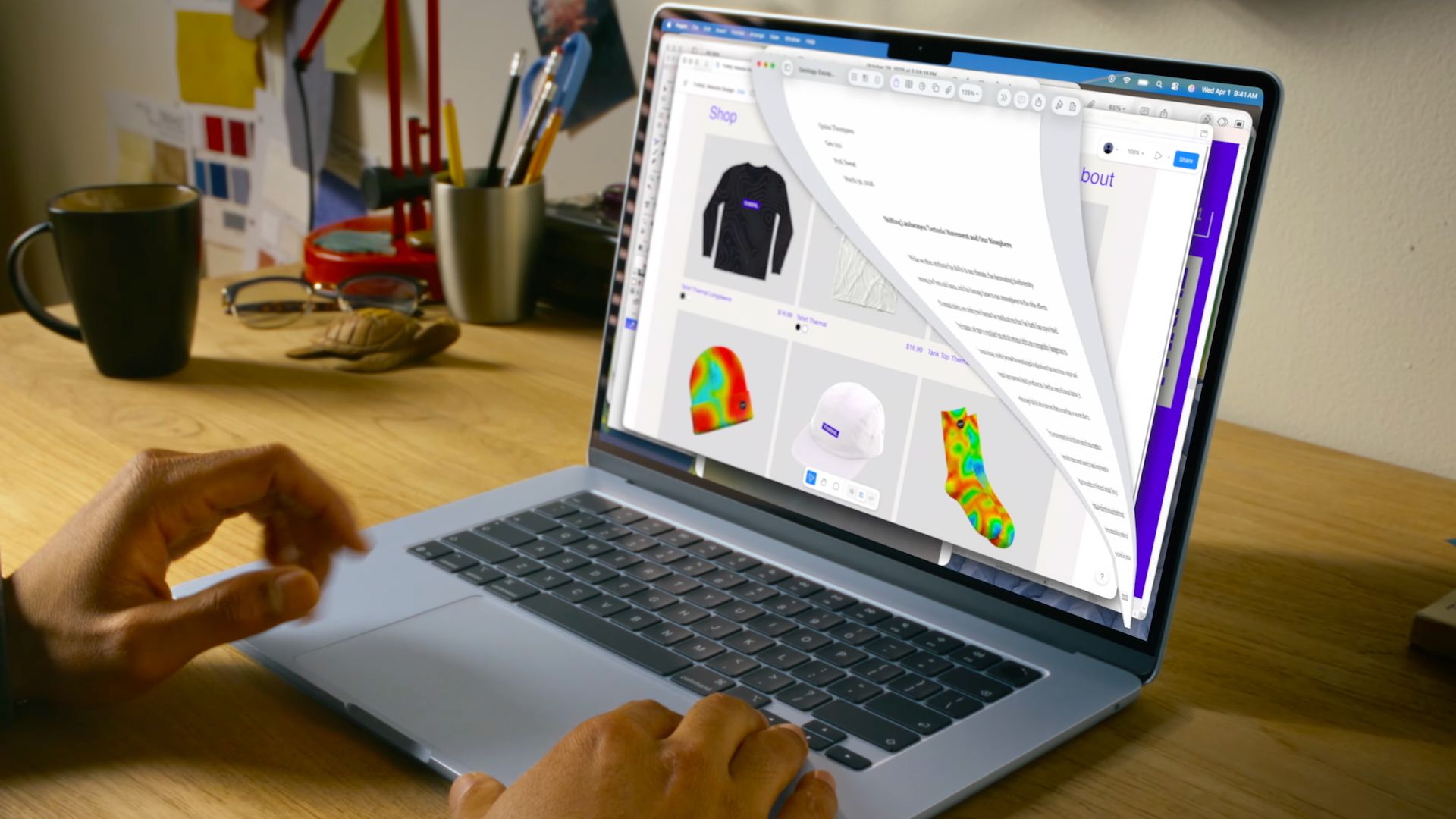
Apple unveiled five products targeting creatives: M5-powered MacBook Air (now starting at $1,099, up from $999) with a 10-core CPU, next-gen GPU, Neural Accelerator per core and up to 18 hours battery; MacBook Pro M5 Pro and M5 Max in 14- and 16-inch models with 1TB base storage, an 18-core CPU architecture including 'Super Cores', a 40-core GPU (claimed 4x AI power and ~30% faster multithreaded performance) and pricing from $2,199 to $2,699. It also refreshed displays with the Studio Display (2nd gen) at $1,599 (Thunderbolt 5, +100 nits, true 10-bit, 100% P3) and a more affordable Studio Display XDR at $3,299 (mini‑LED, ~2,000 nits peak, 120Hz on 27-inch); all models are available to preorder March 4 and begin shipping March 6, signalling a push for AI-readiness and higher ASPs in Apple's creatives segment absent near-term sales guidance.
Market structure: Apple (AAPL) increases ASPs ($100 on Air, $200+ on Pros) and targets creative pros with M5 silicon and two new displays, which should lift revenue per unit and services leverage over 6–12 months. Winners: Apple, TSMC (TSM) as chip foundry, select mini‑LED suppliers; losers: premium monitor incumbents and Windows OEMs (HPQ/DELL) in creative verticals if share shifts by 5–10% within a year. Expect tighter supply for mini‑LED/advanced packaging near term, supporting supplier pricing for 1–2 quarters.
Risk assessment: Immediate risk is demand miss or inventory gluts (days–weeks) that compress margins; medium term (3–9 months) regulatory scrutiny on AI features or App Store monetization could impose revenue headwinds of 1–3% of sales. Tail risks include a major TSMC yield shock or EU/US AI regulation that forces feature pullback; monitor pre‑order sell‑through over first 14 days and channel lead times (2–6 weeks) as primary risk signals. Long term (12–36 months) product stickiness depends on Apple Intelligence uptake and third‑party software optimization.
Trade implications: Direct: establish 1–3% long AAPL exposure on dips, target 10–20% upside over 6–12 months driven by ASP lift and services; hedge near term by selling 30–45 day covered calls if AAPL rallies >6% intraday. Pair: long AAPL vs short HPQ or DELL (1:1) sized to capture creative workstation share gains over 12 months. Options: buy 6–9 month calls (LEAPS) on TSM to play higher silicon demand; consider selling short‑dated strangles on AAPL post‑announcement to harvest IV compression.
Contrarian angles: Consensus assumes strong upgrade cycle; missed uptake on AI features or price sensitivity could produce a 10–15% reversion similar to past Apple hardware refreshes. Risks underappreciated: cannibalization between Apple’s displays and premium third‑party monitors, and increased power/thermal requirements that may raise return rates. Action triggers: trim AAPL if up >8% on launch day or cut exposure if 14‑day sell‑through <50%.
AI-powered research, real-time alerts, and portfolio analytics for institutional investors.
Request TrialOverall Sentiment
moderately positive
Sentiment Score
0.35
Ticker Sentiment
