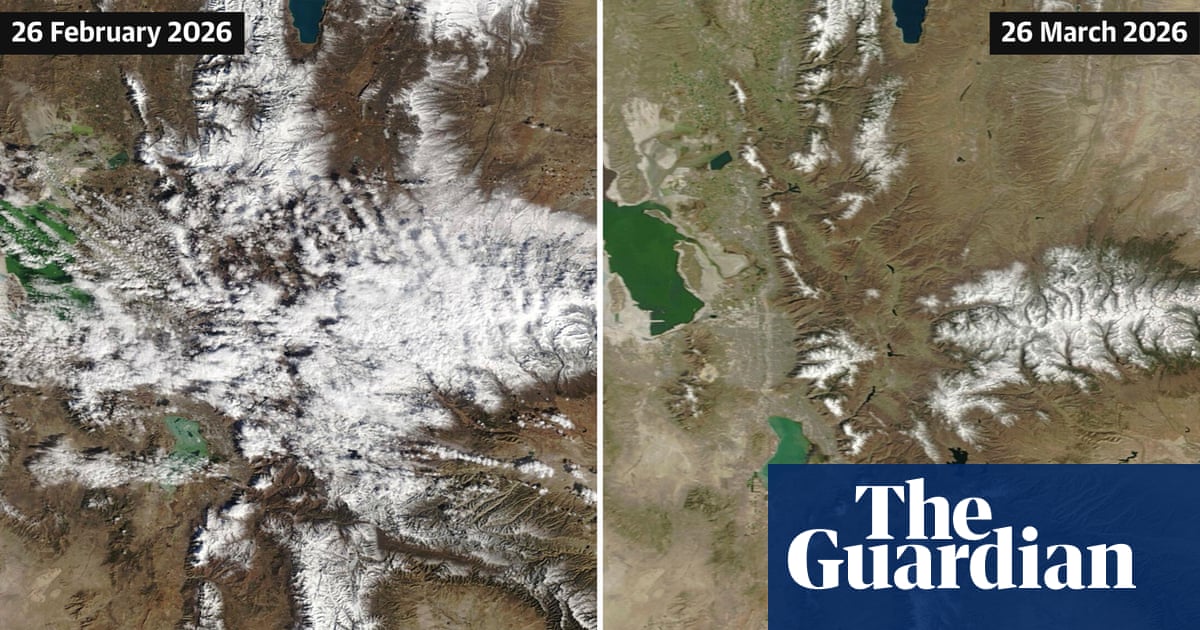
Sierra Nevada SWE measured 4.9 in (18% of average) and Colorado River headwaters ~4 in (24% of average); key basins report SWE as low as 8% (Rio Grande), 10% (lower Colorado) and 16% (Great Basin), while Lake Mead and Lake Powell are ~25% and 33% full. Rapid March melt and record heat have pushed snowpack levels to near-record lows, raising material risks to water supply for 40m+ users, agriculture on 5.5m acres, hydroelectric generation (deadpool risk), and an earlier, more intense fire season; >1.5m acres have burned YTD. For portfolios, raise risk-off posture for utilities, ag names, water-dependent recreation/real-estate and municipal bonds exposed to western water infrastructure, stress-test water-exposed assets, and monitor Colorado River allocation negotiations and regional emergency conservation measures.
The primary market mechanism to watch is timing mismatch: earlier melt shifts runoff into a narrower window that storage and diversion systems were not designed to capture, forcing greater reliance on groundwater pumping and thermal generation during the summer peak. Expect incremental power burn (thermal and peaker) and higher short‑term power prices in the West as hydro capacity factors compress and utilities buy more spot energy and ancillary services.
Agriculture and municipal water managers will accelerate capital spending on wells, pumps, telemetry and treatment to substitute for unreliable surface supplies, while also buying more spot water and trading allocations. That dynamic benefits specialist water‑tech and pump OEMs, raises diesel/electricity load for irrigation, and increases cashflow stress on small irrigation districts—creating muni credit dispersion and higher spreads for water‑resource dependent counties.
An early and intense fire season is a fast‑acting amplifier: insurers and reinsurers will face elevated near‑term losses and, in turn, price capacity higher, improving underwriting economics for well‑positioned reinsurers but stressing municipal budgets and tourism operators. The main reversals are meteorological (a sustained cool/wet 30–60 day period) or large reservoir drawdown/capture projects; structurally, rising baseline temperatures make these shocks more frequent, supporting multi‑year demand for storage, water efficiency and flexible generation.
AI-powered research, real-time alerts, and portfolio analytics for institutional investors.
Request DemoOverall Sentiment
strongly negative
Sentiment Score
-0.80
