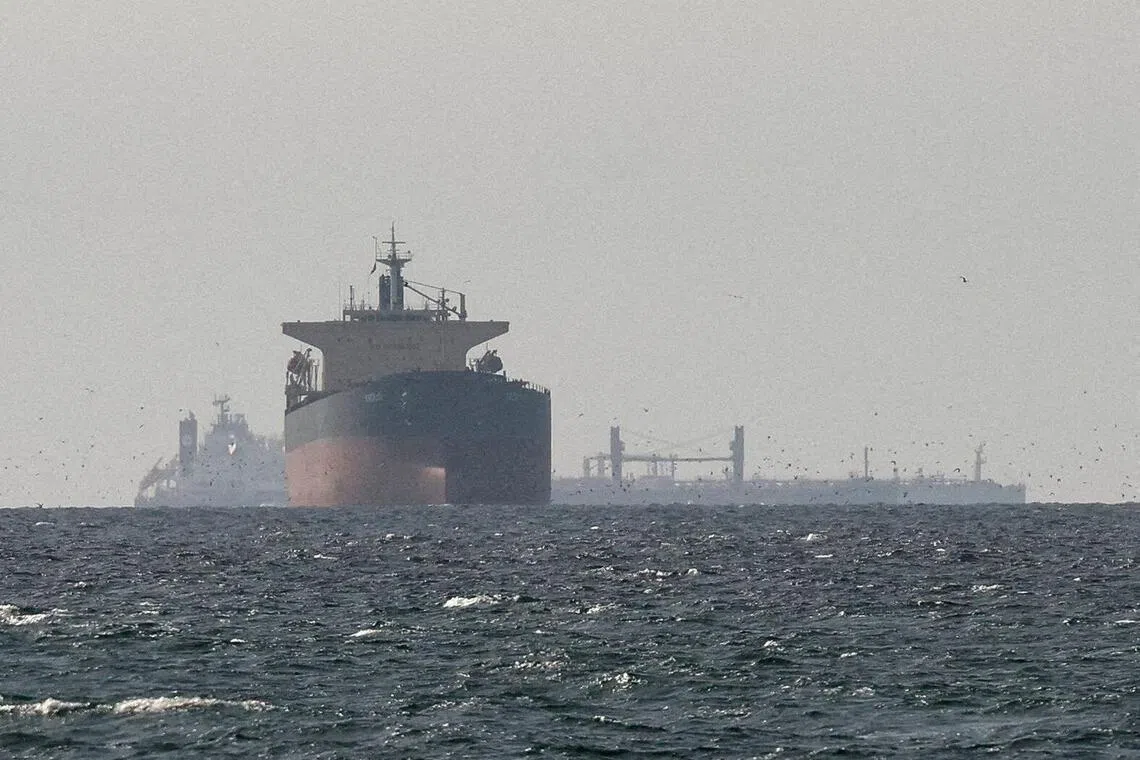
Three VLCCs exited the Strait of Hormuz on April 11, marking the first reported outbound passage since the US-Iran ceasefire deal and the start of peace talks. The blockade had disrupted a chokepoint handling about 20% of global oil and LNG shipments, helping drive oil prices higher since late February. The vessels are carrying Saudi, UAE, and Iraqi crude and are headed to Malaysia and China, signaling a possible easing in Gulf shipping disruption, though geopolitical risk remains elevated.
The first-order read is relief for physical crude flows, but the more important signal is optionality returning to the market: once the chokepoint is demonstrably open, risk premia can collapse faster than fundamentals improve. That matters because a large part of the recent move in oil has been a scarcity/rerouting premium, not just pure supply loss; if vessels can transit repeatedly without incident, Brent can give back a meaningful chunk of the geopolitical overlay in days, while refined product tightness may persist longer due to inventory dislocations.
The second-order winner is not simply crude buyers, but downstream and freight-sensitive industries that have been carrying an embedded hedge expense. Tanker insurance, war-risk premiums, and detours through alternative routes have likely created a temporary margin tax on Asian refiners and commodity traders; if those frictions unwind, integrated refiners and shipping insurers lose pricing power, while Asian chemical, airline, and industrial users should see input-cost relief with a lag of 1-2 months. The most exposed loser is the cohort that monetized scarcity—spot VLCC rates, near-dated oil volatility sellers, and long-only energy momentum positions built on an assumption of a persistent blockade.
The contrarian risk is that this is a ceasefire/trial balloon rather than a durable normalization. If talks stall or any one incident reintroduces closure risk, the market will reprice the tail almost instantly, and the reaction could be sharper than the original spike because inventories have already been depleted and positioning likely crowded into the unwind. In that sense, the right question is not whether oil is cheaper from here, but whether the market is underpricing a binary regime change in the next 2-6 weeks versus a slower normalization over 2-3 months.
AI-powered research, real-time alerts, and portfolio analytics for institutional investors.
Request DemoOverall Sentiment
moderately negative
Sentiment Score
-0.35
