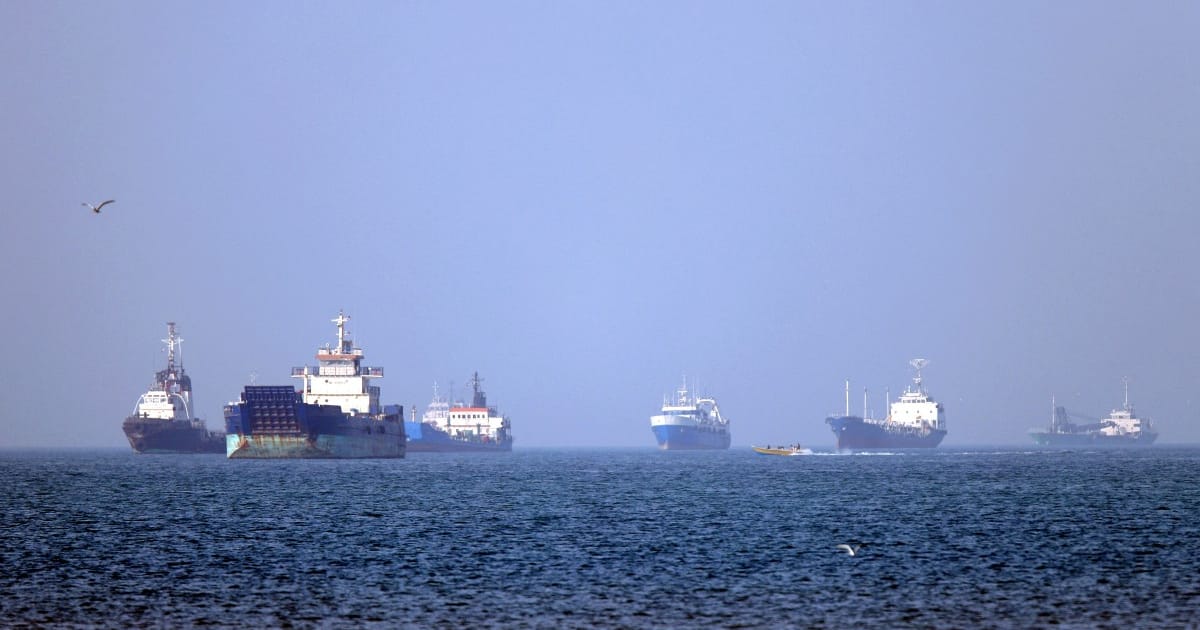
Iran is attempting to impose a new permission-and-fee regime on Strait of Hormuz transits, with shipping traffic reportedly collapsing to 40 vessels in the week ending May 3 versus a pre-war average of about 120 crossings a day. The strait handles roughly one-fifth of global oil and LNG flows, and disruptions have already pushed U.S. gasoline above $4.50 a gallon, amplifying energy-market and shipping risk. The move raises the prospect of lasting restrictions, sanctions exposure, and a broader hit to global trade and oil/gas supply chains.
The key market implication is not just a higher risk premium on Middle East flows, but the emergence of a quasi-royalty regime over a chokepoint that market participants assumed was governed by international transit norms. That shifts the problem from a transient supply shock to a potentially persistent transaction tax on global energy and freight, which is materially more inflationary because it embeds itself in routing, insurance, and working-capital decisions rather than simply taking barrels offline. Second-order effects should hit shipping equities and commodity derivatives before the physical oil market fully reprices. If even a minority of owners begin refusing Gulf loadings, non-Hormuz routes, floating storage, and war-risk premiums can tighten vessel supply globally, lifting effective freight costs for LNG, crude, and refined products well beyond the immediate region. That is bearish for airline margins, European industrials, and Asia ex-Japan importers, while selectively supportive for diversified tanker owners and marine insurance-linked names. The tail risk is that Iran succeeds enough to normalize compliance without a full legal settlement: once fees, manifests, and approvals become routine, the market may underappreciate the permanence of the toll. The reversal catalyst would be a credible multinational escort regime or a US-backed enforcement action that restores freedom of navigation for several consecutive weeks; absent that, the regime likely persists in diluted form even if headline violence fades. The time horizon matters: near-term dislocation is days-to-weeks, but the control premium can last quarters if shippers keep pricing in intermittent stoppage risk. Consensus may be underestimating how quickly this bleeds into non-energy inflation and earnings guidance. The first-order move is crude and LNG; the second-order move is higher delivered costs for everything from petrochemicals to consumer goods, which can compress margins in transport-heavy and import-dependent sectors even if spot oil retraces. That creates a better risk/reward in relative-value trades than in outright commodity chasing, because the market may overreact to one headline but underprice the persistence of the logistics tax.
AI-powered research, real-time alerts, and portfolio analytics for institutional investors.
Request DemoOverall Sentiment
strongly negative
Sentiment Score
-0.72
