
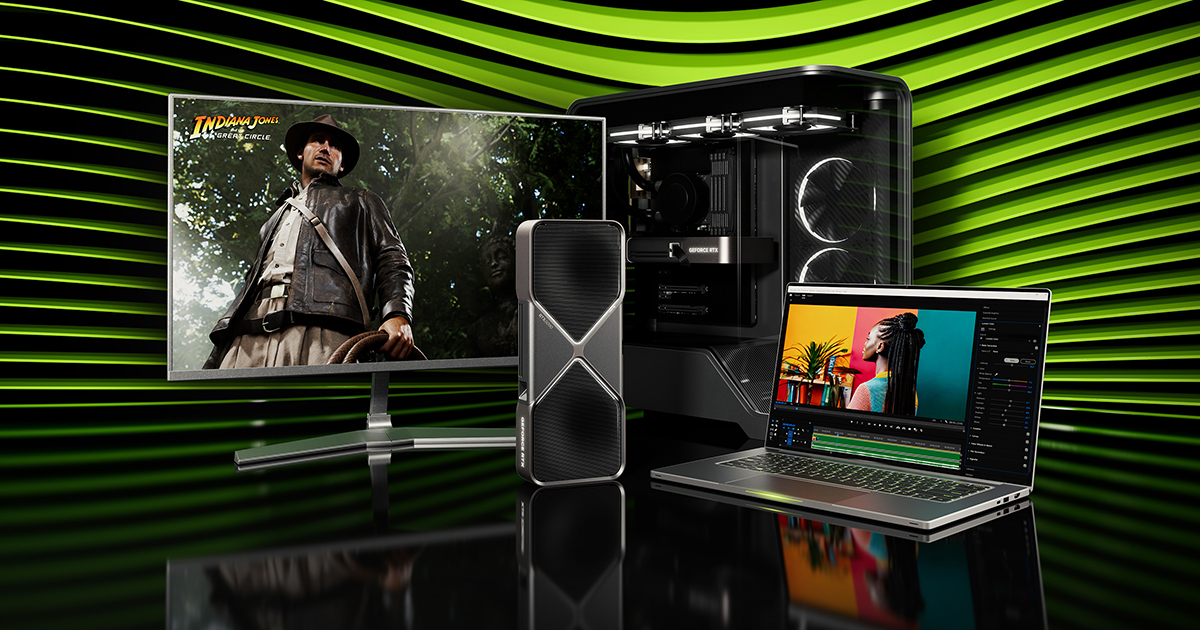
NVIDIA and its partners unveiled a broad slate of new GeForce RTX 50 Series graphics cards, laptops, monitors, and pre-built PCs at COMPUTEX 2026, including ASUS, GIGABYTE, MSI, PNY, Acer, MECHREVO, and ZOTAC products. Highlights include RTX 5090/5080 desktop cards, RTX 50 Series laptops, and multiple new G-SYNC-compatible and OLED display models with refresh rates up to 1000Hz in niche configurations. The news is positive for NVIDIA’s ecosystem and partner product momentum, but it is primarily a product showcase with limited immediate market impact.
The signal here is not the product parade itself; it is that NVIDIA is turning every adjacent category into a demand-pull channel for its core silicon. By seeding premium GPUs, laptops, displays, and small-form-factor systems across a broad partner roster, it raises the attach rate for the full RTX ecosystem and increases the probability that upgrades happen as bundles rather than isolated component purchases. That matters because bundle economics are stickier: once a user upgrades the GPU, the display and chassis decision often follows within the next 1-2 replacement cycles.
Second-order, the most important margin lever may be ASP mix rather than unit growth. The emphasis on halo SKUs, creator devices, and ultra-high-refresh displays suggests NVIDIA and partners are optimizing for premiumization at a time when PC demand is still recovering unevenly. If that premium mix holds, NVDA can sustain revenue per system even if the broader consumer PC market remains only mid-single-digit growth; if it doesn’t, the channel could see inventory normalization by late summer as enthusiasts buy once and pause.
Competitively, this is more threatening to AMD and display incumbents than it first appears. The ecosystem pitch is increasingly “NVIDIA-compatible by default,” which can suppress share gains from rival GPUs even when raw performance gaps narrow. In monitors, the push toward very high-refresh OLED and MiniLED creates a trap for lower-end LCD suppliers: they may keep units, but lose margin and spec leadership as the premium tier expands.
The main risk is that this is a demand forward-fill, not a true acceleration. If macro spending weakens, the current wave of launches could pull forward upgrades into the next 1-2 quarters and create a softer back half for channel checks. A second risk is that many of these features are enthusiast-only; the broader consumer base may not pay up for 500Hz/540Hz displays or top-bin GPUs, limiting conversion outside the top decile of spenders.
AI-powered research, real-time alerts, and portfolio analytics for institutional investors.
Request TrialOverall Sentiment
mildly positive
Sentiment Score
0.35
Ticker Sentiment
