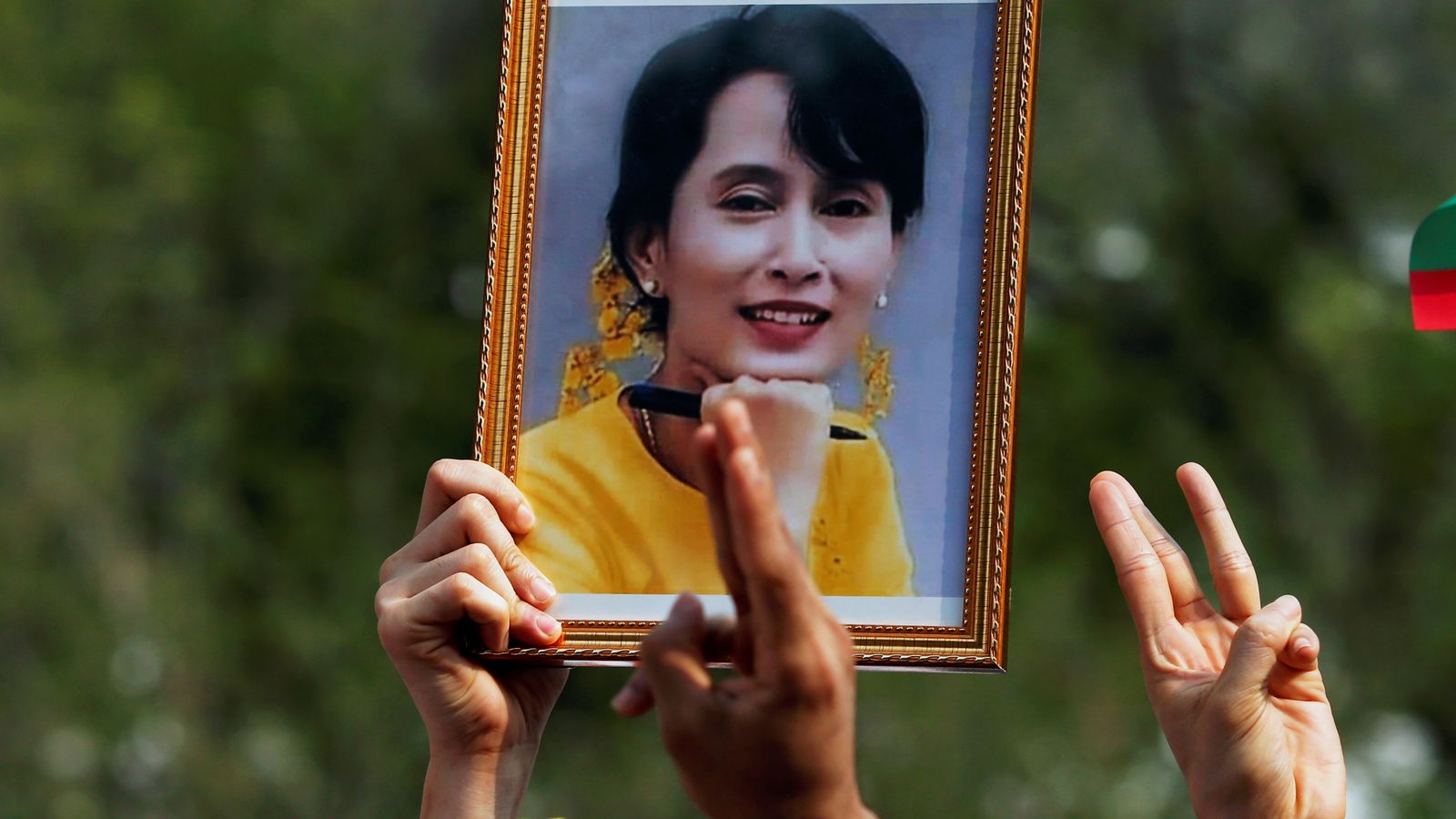
Five years after the 1 February 2021 military coup that deposed Aung San Suu Kyi, UK Foreign Secretary Yvette Cooper warns of a 'deepening crisis' in Myanmar as the junta holds a contested three-phase election and a new president is expected in March. The UN reports about 3.6 million displaced; the UK says it provided humanitarian assistance to over 1.4 million people and essential health services to 1.3 million; at least 170 people were killed by airstrikes during the election period and roughly 400 arrested. The National League for Democracy was dissolved, large segments of the population (including Rohingya) were disenfranchised, and the military retains guaranteed parliamentary control via a 25% seat allocation—factors that elevate geopolitical risk, potential for further sanctions, and investor operational and reputational exposure in Myanmar.
Market structure: The immediate winners are defense and cybersecurity suppliers (higher government procurement and private-sector security spend) and illicit ecosystems (drug production, cyber scams) that grow in lawless environments; losers are Myanmar domestic assets, frontier-EM funds, regional suppliers (garments, gems, some gas exports) and tourist/hospitality receipts. Expect localized supply tightness in Myanmar-origin commodities (natural gas & gems) that can push regional spot premium 3–8% over 3–12 months; sovereign risk premia for Myanmar-linked debt/CDS could widen 200–400bps if sanctions escalate.
Risk assessment: Tail risks include a major cross-border refugee shock or Chinese/Indian security intervention that triggers wider ASEAN economic stress — low probability but >5% over 12 months with multi-asset domino effects. Short-term (days–weeks) risk is volatility spikes around the March presidential appointment; medium-term (3–12 months) risk is sanctions and expanded military repression; long-term (1–3 years) risk is structural diversion of investment to Chinese state firms.
Trade implications: Tactical plays: overweight defense (ITA) and cybersecurity (HACK/PANW) for 6–24 months, hedge with short EM beta (EEM) to isolate security exposure; reduce allocation to frontier-EM sovereign bonds and apparel names with Myanmar sourcing (e.g., VFC) by 10–25% within 2–4 weeks. Use options to express convexity: buy 3–6 month call spreads on HACK or PANW sized 0.5–1% portfolio to capture volatility-driven bid for cyber; rotate proceeds from reduced frontier-EM exposure into IG credit and USD cash.
Contrarian angles: The market will over-focus on headline geopolitics and defense; investors underappreciate durable software/cyber budget increases in SE Asia that create multi-year revenue streams for SaaS cyber names. Also sanctions may push Myanmar deeper into China’s orbit — consider selective long exposure to Chinese construction/energy contractors only if sanctions broaden (monitor 30–90 day sanction windows). Historical parallels (Crimea/2014) show short-term risk premia spike then partially mean-revert over 12–24 months, creating entry points.
AI-powered research, real-time alerts, and portfolio analytics for institutional investors.
Request DemoOverall Sentiment
strongly negative
Sentiment Score
-0.65
