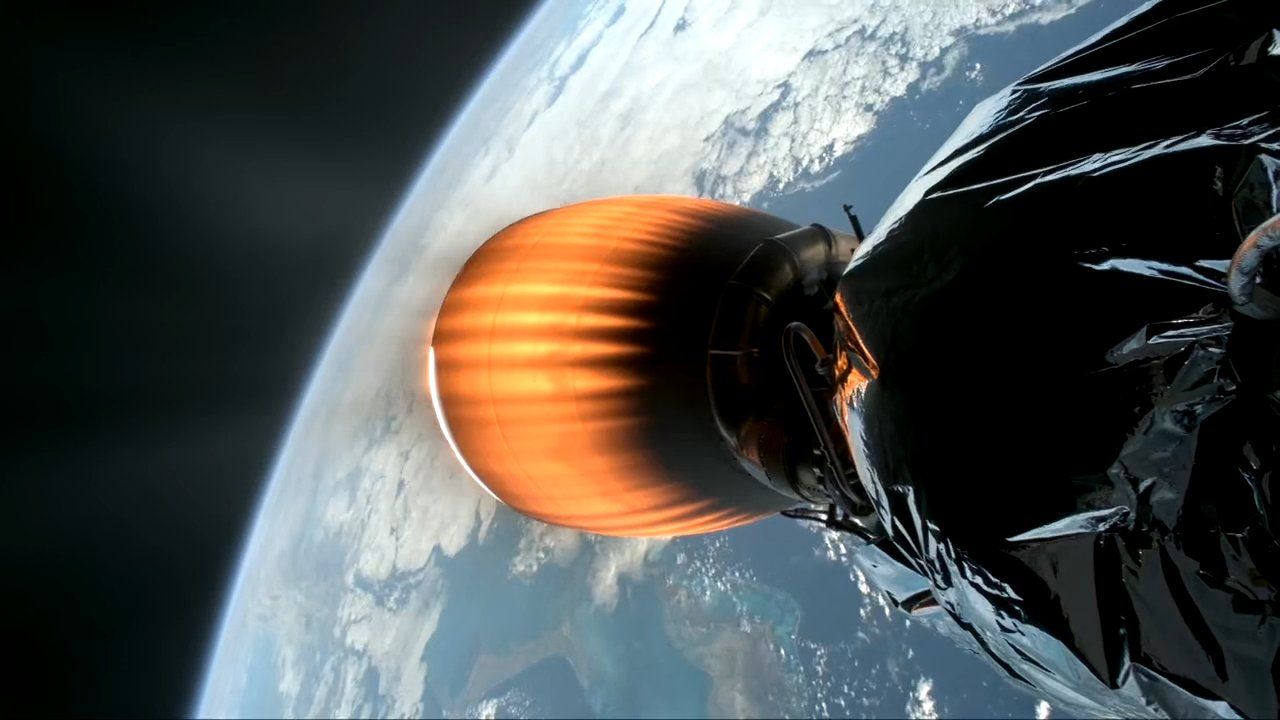
SpaceX set a new single-year record with 165 orbital Falcon 9 launches in 2025 (all Falcon 9), including 123 Starlink missions that placed over 3,000 satellites and expanded the constellation to more than 9,300 active spacecraft. Falcon 9 boosters returned safely on all but three missions, the company recorded its 500th rocket landing and 500th reuse launch, and a single booster has now flown 32 times; Falcon Heavy did not fly in 2025. SpaceX also conducted five suborbital Starship tests (two full successes in Aug and Oct) and is targeting Starship's first orbital flight in 2026, underscoring a dominant operational cadence that accelerates Starlink scale and strategic aerospace positioning.
Market structure: SpaceX’s 165 orbital Falcon 9 launches (123 Starlink missions, >3,000 sats) compress commercial-launch pricing and create a quasi-monopsony for satellite suppliers that can scale production. Direct winners are high-volume component manufacturers and ground-equipment suppliers able to sell at scale; direct losers are small/mid-cap launchers that compete on price and niche GEO customers (expected margin erosion of 20–40% for peer small-launch revenues over 12 months). Cross-asset: expect widening credit spreads for small launchers (IG/BB rated firms) and increased idiosyncratic equity volatility in RKLB, LC, and other niche players; commodity impacts (kerosene, helium) are immaterial vs market size (<0.5% incremental global demand).
Risk assessment: tail risks include a major Falcon failure or regulatory action limiting Starlink (low probability, high impact) and supply-chain shocks for RF chips; a single catastrophic Starship failure could spur a 20–30% repricing in space-related equities over days. Time horizons: immediate (days) sees volatility spikes in peers; short-term (3–12 months) sees revenue share shifts and contract repricing; long-term (2–5 years) Starship orbit capability can expand addressable TAM for heavy payloads and lunar logistics. Hidden dependencies: government procurement decisions (DoD/USSF) and spectrum allocation will materially shift winners; component concentration (a few RF/antenna chipmakers) is a single-point-of-failure.
Trade implications: prioritize defensive longs in large diversified defense/electronics (LHX, RTX, LMT) and selective shorts/option exposure to small-launch pure plays (RKLB). Implement relative-value: long LHX (+1.5–3% portfolio) vs short RKLB (−1–2%) to capture margin shift; use 3–9 month option structures (buy 3-month 25-delta puts on RKLB, sell 3-month 10-delta puts on LHX to fund). Rotate away from consumer broadband incumbents (VSAT, SATS) where Starlink is direct competition; target 6–12 month downside of 15–35% absent strategy change.
Contrarian angles: consensus underestimates service bundling and regulatory pushback risk—if regulators force satellite deorbit/spectrum fees or mandate interoperability, Starlink’s growth and unit economics could deteriorate 10–25% EBITDA. Historical parallel: telecom tower overbuild in 2010s — incumbents that vertically integrated lost pricing power despite demand growth. Unintended consequences include accelerated consolidation opportunities (distressed M&A targets among small launchers) and knock-on price-support for suppliers able to secure multi-year contracts with SpaceX; these create tactical M&A arbitrage and credit trades over 12–24 months.
AI-powered research, real-time alerts, and portfolio analytics for institutional investors.
Request DemoOverall Sentiment
moderately positive
Sentiment Score
0.50
