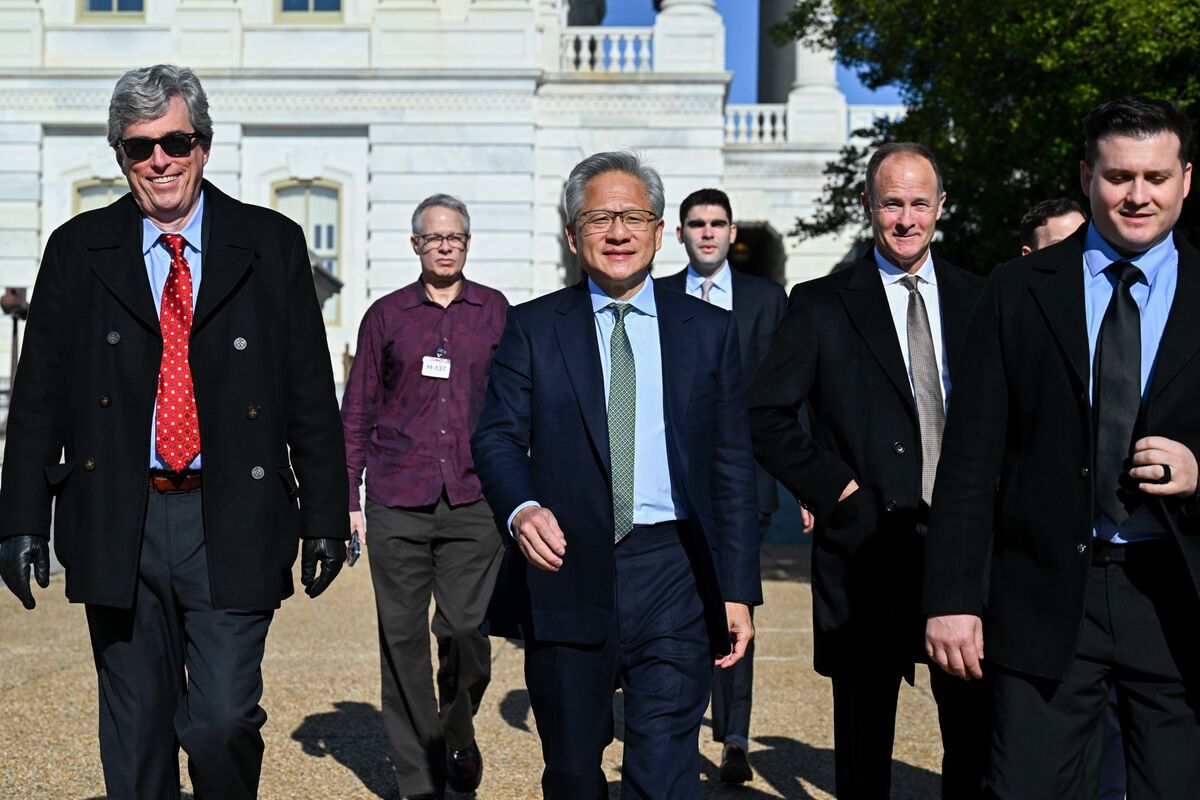
Lawmakers kept the proposed GAIN AI Act out of this year’s must-pass defense policy bill, a setback for efforts to force chipmakers including Nvidia and AMD to prioritize U.S. customers before selling advanced AI chips to China and other arms-embargoed countries. The omission effectively preserves current export flexibility for Nvidia’s lucrative AI-chip sales to China, representing a significant lobbying win for the company, though the legislative landscape could still change before the bill’s finalization.
Market structure: The bill’s removal preserves Nvidia’s near-term pricing power in high-end AI GPUs and leaves incumbents (NVDA, TSMC, ASML, LRCX, AMAT) as beneficiaries of continued constrained supply/demand dynamics. Expect NVDA to capture disproportionate share of scarce next‑gen parts, implying upside to bookings and gross margins versus a scenario where China allocations were mandated (rough order: high-single-digit EPS difference over 12 months if allocative curbs had passed). AMD is a relative neutral/laggard because its data‑center GPU cadence and software stack trail NVDA.
Risk assessment: Tail risks include reintroduction of export language in other must‑pass bills, executive branch export tightening, China counter‑measures, or supply shocks at TSMC/ASML — any could cause >30% downside in NVDA equity within 6–12 months. Immediate (days) volatility will be event‑driven; short term (weeks/months) depends on order flow and earnings guidance; long term (quarters/years) hinges on China’s industrial response and NVDA’s H100/Hopper roadmap and foundry capacity ramp. Hidden dependency: NVDA’s advantage is contingent on TSMC capacity and ASML tool approvals.
Trade implications: Directional overweight NVDA while adding semicap exposure (LRCX/AMAT) on 6–12 month horizon; consider relative short to AMD or to broader GPU laggards to express share gains. Use defined‑risk option structures (call spreads for upside, cheap 10–15% OTM puts for tail hedges) around earnings and Commerce/DoD statements; monitor implied vol and sell premium if IV spikes post‑news.
Contrarian angles: Consensus may underprice the probability of future regulatory re‑tightening and China’s rapid domestic hardware push — both erode multi‑year margins. NVDA’s stock already prices forward growth; implied vol is often elevated but directional calls can be expensive, so consider buying spreads or using pairs to exploit potential mean reversion. Historical parallels: past export skirmishes (Broadcom/Qualcomm era) show policy uncertainty can persist for 6–18 months and create volatile windows for entry/exit.
AI-powered research, real-time alerts, and portfolio analytics for institutional investors.
Request DemoOverall Sentiment
moderately positive
Sentiment Score
0.35
Ticker Sentiment
