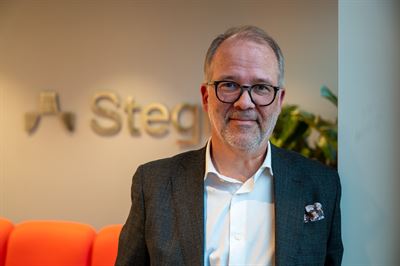
Stegra appointed Markus Holm as Chief Financial Officer effective March 1, 2026; Holm brings 20+ years of CFO and executive experience including roles at Elcogen Group, Sanoma, Metsä Board and Metsä Tissue, and will succeed Otto Gernandt who will remain as senior advisor to support ongoing financing. The announcement underscores executive continuity during a critical build phase for Stegra’s integrated green hydrogen, iron and steel plant in Boden, Sweden, where civil works are largely complete and engineering/equipment installation is underway across hydrogen, iron, steel, water treatment and on-site power facilities. The transition is positioned to support the company’s funding initiatives as the scale-up advances construction and commercialization milestones.
Market structure: Stegra’s CFO hire weakly de-risks project financing risk and favors upstream suppliers — electrolyzer makers (e.g., NEL, PLUG), EPC contractors and renewables IPPs are near-term winners while metallurgical coal producers and legacy blast-furnace steelmakers face gradual demand erosion. Expect competitive dynamics to shift over 12–36 months as commissioned green-steel capacity (Stegra timeline: engineering/equipment now, commissioning likely 18–36 months) exerts downward pressure on carbon premia and coking-coal volumes; steel price pass-through will lag. Cross-asset: anticipate widening credit spreads for green project developers until financing closes (+100–300bp on junior project debt possible), higher volatility in electolyzer equities/options, muted SEK effects but lower long-term coking-coal futures (-10–30% over 12–24 months) if roll-out accelerates.
Risk assessment: Tail risks include failed financing or >25–40% CAPEX overruns, regulatory reversals on green subsidies, and electricity price spikes (e.g., >€60/MWh sustained) that render plant economics unviable; these are low-probability but high-impact. Timeline: immediate (days) — market reaction negligible; short-term (0–6 months) — watch financing announcements; medium (6–18 months) — equipment delivery and EPC milestones; long (18–36 months) — commissioning and first steel output. Hidden deps: grid connection, long-term PPAs, water treatment and rail logistics; catalyst set includes project finance close, PPA awards, and first hot-metal trials.
Trade implications: Direct long: small allocations to electrolyzer/stack makers (NEL.OL, PLUG) and renewables IPPs; short: metallurgical-coking coal producers (e.g., WHC.AX) and undifferentiated steel producers without green strategies. Use 9–18 month call spreads on SSAB (STO:SSAB B) to express green-steel premium capture while selling upside to fund premiums. Size: 1–3% portfolio positions, add on confirmation (financing closed within 90 days or equipment-delivery notices).
Contrarian angles: Markets may underprice execution risk (financing + commissioning) so early-stage small-cap suppliers are over-owned; conversely, the CFO hire materially raises probability of successful capital raise — underappreciated positive. Historical parallel: early LNG terminals where initial projects faced funding delays but successful first movers captured outsized long-term contract pricing; similarly, a successful Stegra commissioning would re-rate suppliers and associated long-term H2 demand by >30% consensus. Unintended consequence: rapid green steel scale could depress near-term steel spreads and trigger consolidation among incumbent steelmakers.
AI-powered research, real-time alerts, and portfolio analytics for institutional investors.
Request DemoOverall Sentiment
mildly positive
Sentiment Score
0.25
