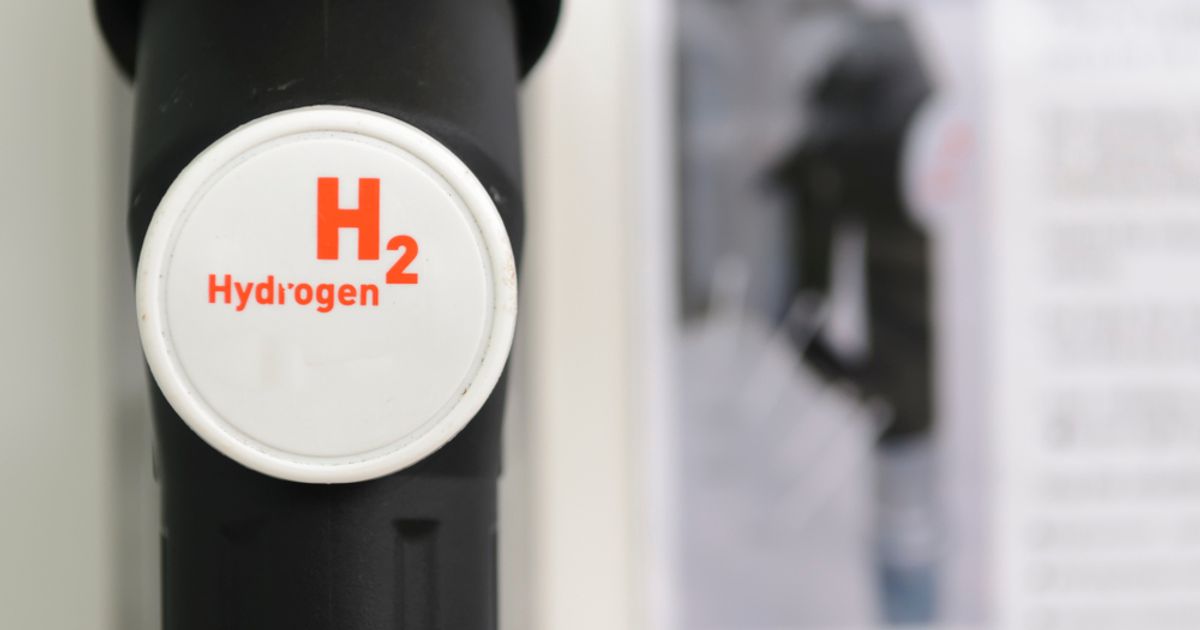
AFC Energy secured a revision to its UK Environment Agency R&D permit allowing export and sale of low‑carbon hydrogen from its pilot ammonia‑cracking Hy‑5 plant, accelerating revenue generation by several months; shares rose about 4% to 12.78p. The company and JV partner ICL are targeting multiple Hy‑5 units (each up to 500kg H2/day) at ICL’s facility, Peel Hunt reiterated a 'buy' and 23p target (WACC 15%) and flagged ISO 99.97% hydrogen purity — a permit change that materially de‑risks near‑term commercialisation and timing of hydrogen sales.
Market structure: The permit change makes AFC (AIM:AFC / OTC:AFGYF) a nearer-term revenue generator and directly benefits ammonia producers (ICL) and modular hydrogen tech suppliers; industrial gas majors (LIN, APD, AIQUY) could win as offtakers or partners while incumbent grey hydrogen sellers face margin pressure in specific local markets. The Hy‑5 unit adds ~500kg/day (~182.5 tpa) per module, so each module's revenue sensitivity is roughly £0.55M–£1.1M/year at £3–£6/kg hydrogen, implying commercial materiality only after multi‑unit deployments. Cross-asset: limited sovereign or FX impact, modest credit upside for JV counterparty ICL, and commodity linkage to ammonia markets (higher ammonia demand should support related fertiliser/industrial chemicals prices).
Risk assessment: Tail risks include permit reversal, purity shortfalls, JV disputes or failure to scale (low-probability but high-impact), and hydrogen price collapse if overcapacity materialises; operational scale risk is real — single-unit economics are small. Immediate move: share reaction days; short-term (weeks–months) depends on binding offtake contracts and meterable sales; long-term (1–3 years) depends on roll‑out permits and module cost declines. Hidden dependencies: continuous ammonia supply chains, local safety/regulatory frameworks, and hydrogen storage/transport capacity. Catalysts: signed offtake agreements, further Environment Agency approvals, and demonstration of serial module deployment.
Trade implications: Direct long on AFC at current ~12.8p is a high-risk, high-reward micro‑cap trade (Peel Hunt 23p target ~+80%); cap sizing to 1–2% risk budget. Complement with exposure to ICL (JV partner) and a hydrogen-sector ETF (LSE:HYDR) via defined‑risk call spreads for sector upside without single‑name idiosyncrasy. Use a pair: long AFC vs short ITM Power (LSE:ITM) to isolate ammonia‑cracker adoption vs electrolysis, and hedge via puts given limited AFC liquidity.
Contrarian angles: The market may overvalue the permit change — it accelerates timing but revenue per unit is modest; investors overestimating rapid roll‑out risk paying too high a multiple for pilot success. Conversely, underappreciated upside exists if AFC secures accelerated permitting for a cluster (3+ units) — revenue scales linearly and could justify a re‑rating. Historical parallel: pilot regulatory wins in modular clean tech often spur short rallies but require repeatable deployments to sustain multiples. Watch for unintended consequences: insurer or grid safety constraints could slow roll‑out despite permit wins.
AI-powered research, real-time alerts, and portfolio analytics for institutional investors.
Request DemoOverall Sentiment
moderately positive
Sentiment Score
0.33
