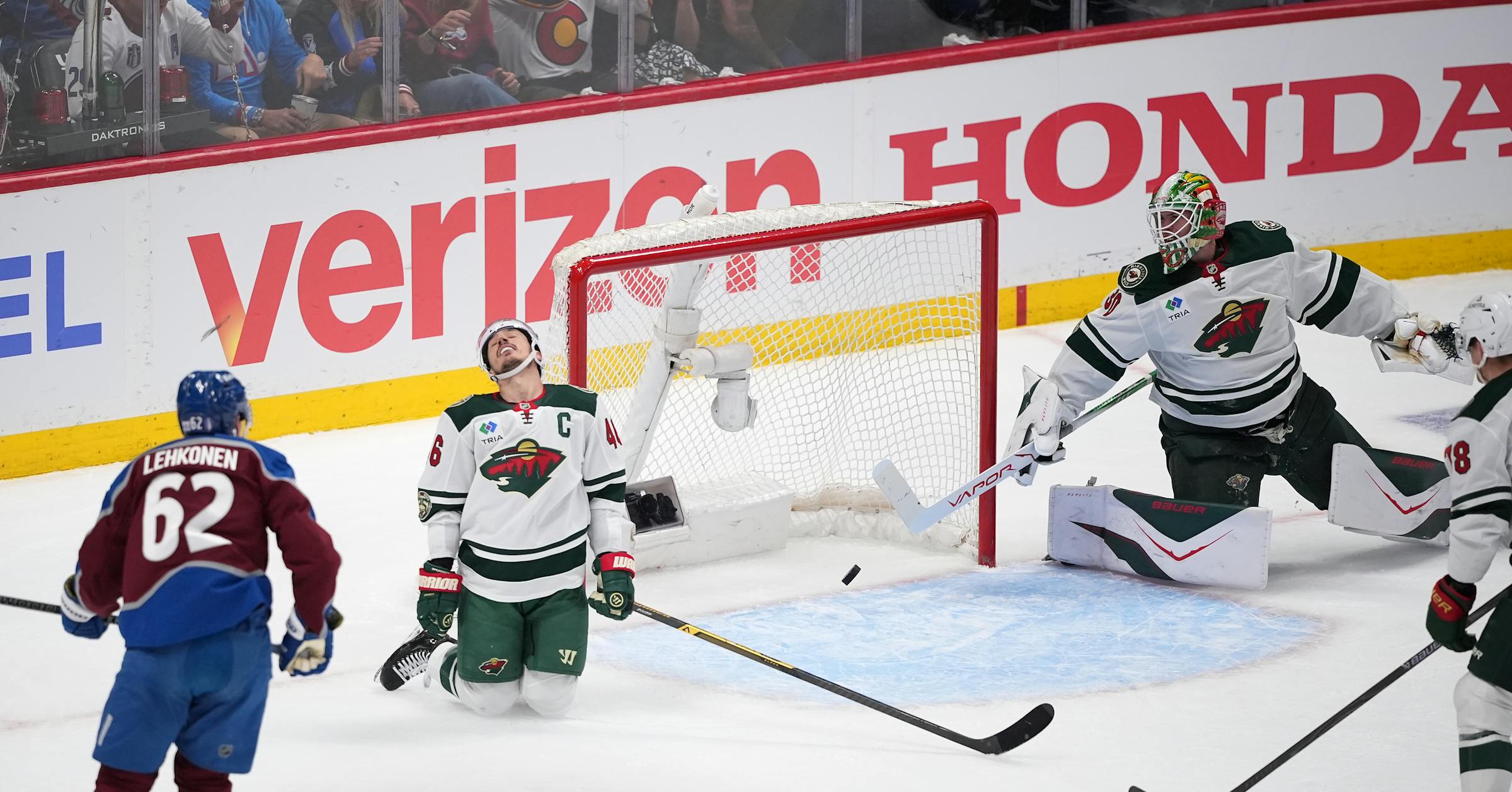
The Wild were beaten 9-6 by the Avalanche in Game 1 of the series, falling behind 1-0 after allowing nine goals at Ball Arena. Minnesota’s offense produced six goals, but defensive breakdowns overwhelmed that output. The piece is a sports recap with no material market-moving financial information.
This reads like a classic playoff market-technical setup: one side is trying to win with pure offense while the other has the more repeatable process edge. In hockey terms, the team with the stronger defensive structure is usually the better short in a seven-game series because one outlier scoring night can still be absorbed; the team leaning on high-variance scoring is more vulnerable to regression once travel, fatigue, and matchup adjustments accumulate. That creates a second-order angle for live-betting and series pricing: the market will likely overreact to a 9-goal game and overstate the probability of another track meet in Game 2. The key risk is that the favorite’s underlying advantage may be even larger than the final score suggests if the underdog’s offense was partially inflated by empty-calorie transition chances and special teams volatility. Over a 3-7 day horizon, the main catalyst is coaching adjustment: if the trailing team tightens neutral-zone gaps and slows pace, the scoring environment can compress quickly, which tends to punish anyone who bought the over after one chaotic result. Conversely, if the higher-powered side keeps forcing pace, the series can become a blowout tree where the underdog is forced into the wrong game state and the favorite’s win probability rises nonlinearly. The contrarian view is that a high-scoring loss is not necessarily a bearish signal for the underdog’s series prospects if it indicates they can generate enough offense to trade punches. In that case, the market may be overpricing the favorite because it equates defensive inconsistency with total series control, when in reality playoff series often hinge on whether the trailing club can steal one road game and flip home-ice dynamics. The best setup is likely not a straight directional bet but a volatility expression: the series is likely to produce larger-than-normal price swings in game lines, team totals, and live totals as both benches adjust.
AI-powered research, real-time alerts, and portfolio analytics for institutional investors.
Request DemoOverall Sentiment
mildly negative
Sentiment Score
-0.15
