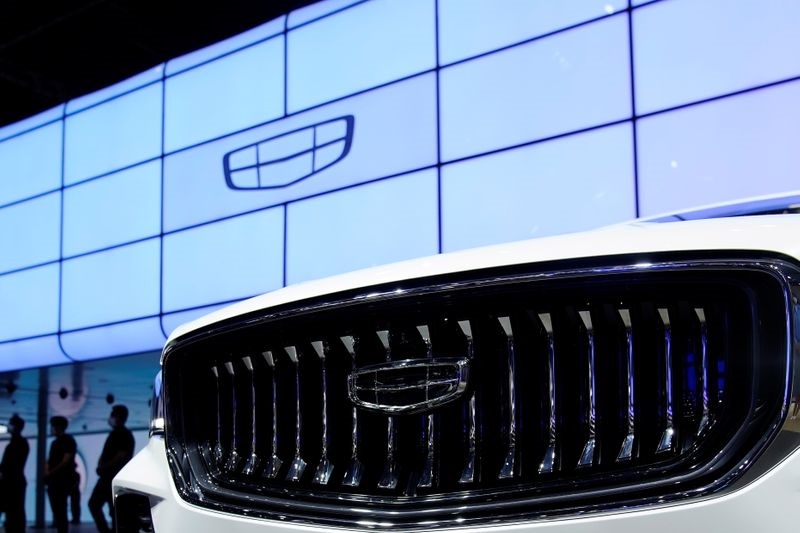
Geely reported 2025 profit attributable to shareholders of RMB 16.85bn (vs RMB 16.81bn prior) and revenue up 25% to RMB 345.2bn. Total vehicle sales rose 39% to just over 3.0m units, NEV sales surged 90% and core profit excluding one-offs increased 36%; the company proposed a final dividend of HK$0.50 (up from HK$0.33) and is targeting ~3.45m vehicle sales in 2026. Hong Kong-listed shares traded about 3.4% lower to HK$18.20 intraday despite the strong NEV growth and improved core profitability.
Geely’s execution on NEV penetration crystallizes a structural bifurcation: scale-integrated incumbents with broad dealer networks and diversified ICE/NEV portfolios will earn incremental operating leverage while standalone EV pure-plays will face accelerating cash burn as price competition forces higher unit subsidies. Second-order beneficiaries include domestic battery and sensor suppliers that can win larger, multi-platform contracts (think tier-1 battery makers and lidar/ADAS vendors) because OEMs will consolidate vendors to secure price and quality thresholds. Near-term catalysts are quarterly volume beats or a visible improvement in gross margins per vehicle driven by mix and cost synergies from higher production runs; conversely, policy shocks (subsidy rollbacks, export barriers) or a sharp RMB depreciation would compress margins within 1-3 quarters and force promotional pricing. Over a 12–36 month horizon, the bigger value driver is monetization of intelligent-driving software and data services—capex today to install sensors and OTA capability can flip to recurring revenue that widens long-term EBITDA margins if adoption and regulatory approvals proceed. A practical trade framework is to express conviction in scale + optionality while hedging execution risk: overweight scaled incumbents with clear path to software monetization, hedge with short exposure to capital-intensive pure-plays that lack dealer networks. Watch inventory-to-sales, dealer incentives, and battery raw-material spreads as leading indicators; a 10–15% widening in lithium or nickel spreads historically precedes margin pressure across OEMs. Contrarian lens: the market currently conflates rising NEV penetration with uniform margin uplift across the sector; that’s unlikely. Geely-like players will capture most of the near-term profitability from NEV growth, while headline NEV volume growth masks diverging balance-sheet stress — the re-rating of two-tier OEMs is underdone and creates a tactical alpha opportunity.
AI-powered research, real-time alerts, and portfolio analytics for institutional investors.
Overall Sentiment
moderately positive
Sentiment Score
0.35
