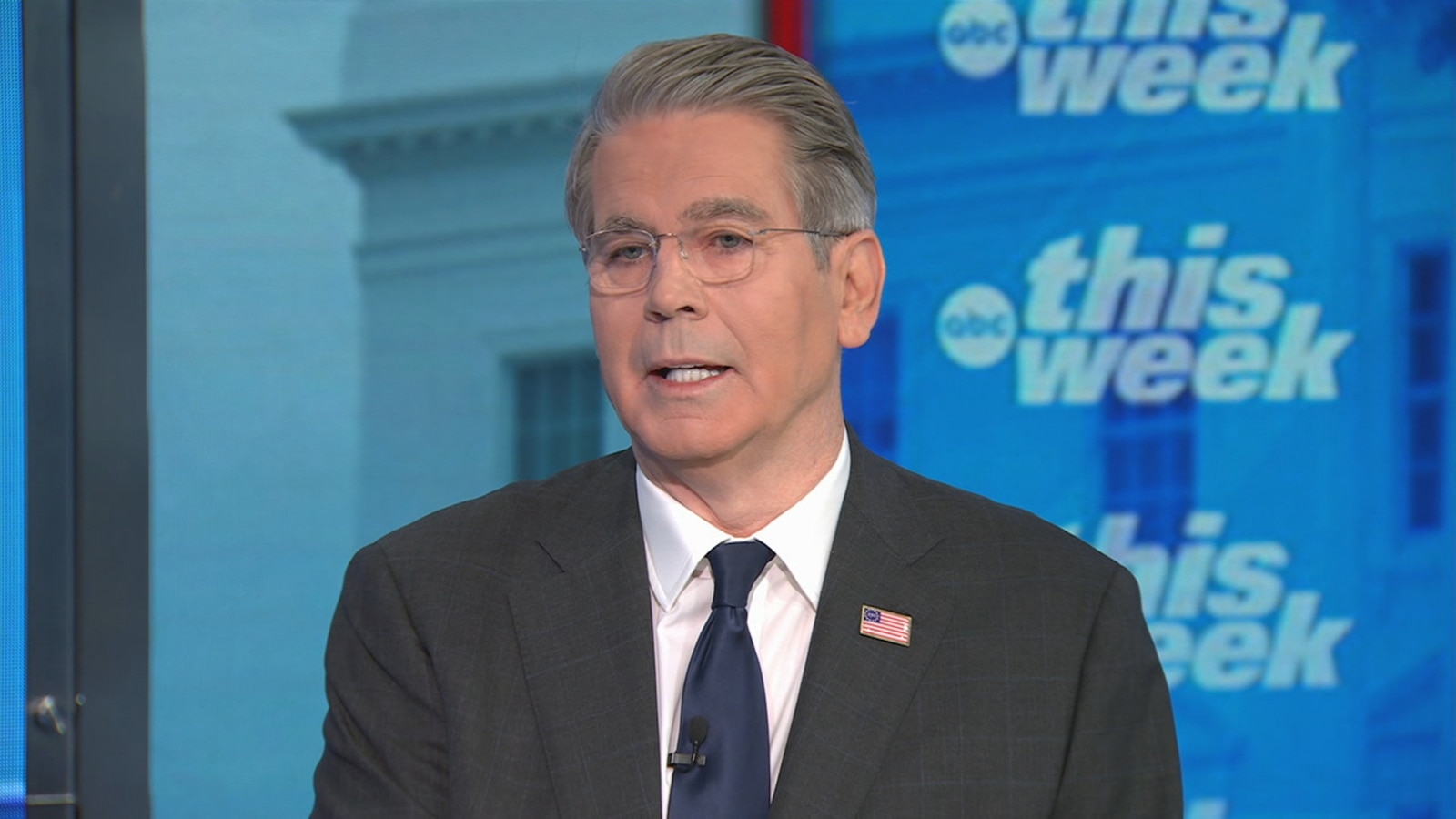
Treasury Secretary Scott Bessent defended a reported framework for a Greenland deal between President Trump and NATO Secretary General Mark Rutte, saying it would be "much more fulsome" for the United States while key details — including territorial ownership — remain unresolved. Bessent also reiterated threats of aggressive trade measures, including Trump's prior 100% tariff threat on Canada over its trade concessions with China, and criticized European-India energy trade flows that he said effectively finance Russia’s war effort; he additionally commented on a separate domestic law-enforcement incident and state fraud investigations in Minnesota. Investors should note heightened geopolitical and trade-policy rhetoric that could increase policy uncertainty for energy, autos and cross-border trade flows, but no concrete, market-moving agreements were announced.
Market structure: A Greenland arrangement that increases US strategic rights tilts the winners toward US defense primes (Lockheed Martin LMT, Northrop Grumman NOC, Raytheon RTX) and Arctic-capable energy/mining firms (BHP BHP, Rio Tinto RIO, NexGen NEXG). Expect incremental demand for ISR, basing logistics and Arctic shipping vessels raising pricing power for specialized contractors; commodities tied to Arctic resources (nickel, uranium, rare earths) see a medium-term supply squeeze. FX and rates: a modest safe‑haven USD bid vs CAD (1–2% over 2–8 weeks) and a +3–5% risk premium on Brent in a geopolitical shock scenario.
Risk assessment: Tail risks include a tariff spiral (up to the threatened 100% on Canadian goods) or NATO political blowback that triggers sanctions/blocking laws; probability low (<10%) but impact high (CAD down >5%, Canadian equities hit). Immediate (days) risks are headline-driven FX/equity volatility; short-term (30–90 days) hinge on deal text and congressional approval; long-term (6–24 months) depends on sustained US capex in Arctic infrastructure. Hidden dependencies: Greenland local governance, environmental litigation, and US Congressional finance control—each can delay or dilute benefits.
Trade implications: Tactical: establish 2–3% long positions in LMT and NOC (staggered entries over 2–6 weeks) targeting 12–20% upside in 6–12 months; size 0.5–1% long BHP or RIO for commodities exposure. Hedge/FX: buy USD/CAD 3‑month call spread (strike 1.32/1.36) sized to offset 1–2% portfolio currency exposure. Options: buy LMT 6‑month 10% OTM calls (1:1 with short 6‑month 30% OTM calls) to limit cost.
Contrarian angles: Consensus may overstate immediate military buys—real upside is multi‑year capex to build Arctic infrastructure, so miners/shipyards may be underpriced for a 12–36 month horizon. The market may be pricing an instant defense windfall—use option structures and 6–12 month horizons to avoid headline noise. Historical parallels (US base expansions) show multi‑year procurement ramps; unintended consequences include local opposition and regulatory delays that can push returns beyond 12 months.
AI-powered research, real-time alerts, and portfolio analytics for institutional investors.
Request DemoOverall Sentiment
neutral
Sentiment Score
0.00
