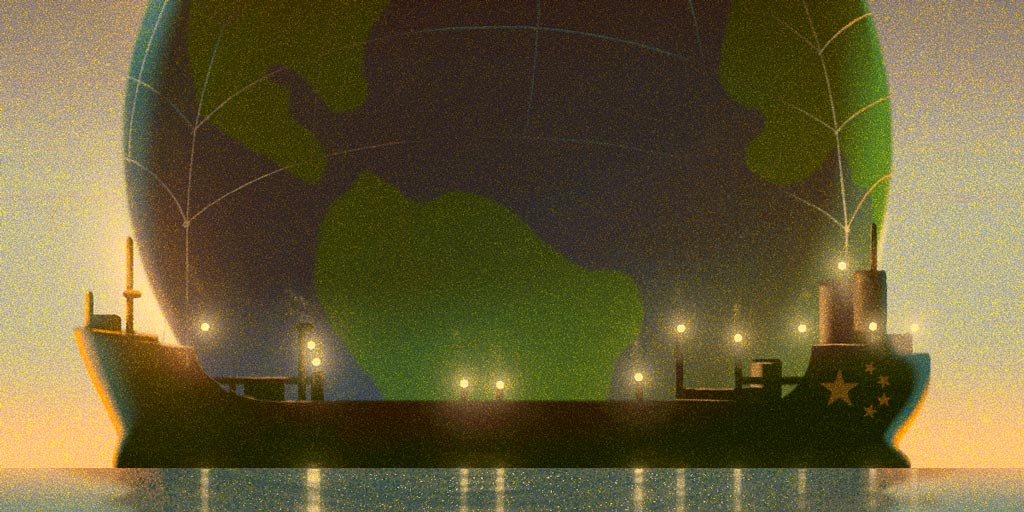
China has strategically developed an extensive global network of over 90 deepwater ports, including critical maritime choke points and major hubs across continents, primarily to support its commercial trade and secure supply chains. This expansion, however, is increasingly perceived by the US and its allies as a significant geopolitical and security challenge, raising concerns over potential intelligence gathering, military access, and economic leverage that could disrupt global commerce and US strategic interests. Consequently, Western nations are actively pushing back, as evidenced by US efforts to counter Chinese influence in the Panama Canal and Australia's move to reclaim Darwin Port, underscoring the entrenched and contentious nature of Beijing's global maritime infrastructure.
China has strategically developed an extensive global network of over 90 deepwater ports, including 34 of the top 100 busiest, to secure its commercial interests as the world's largest merchandise exporter, accounting for 15% of global merchandise exports in 2024. This infrastructure investment, exemplified by the $1.5 billion Lekki Deep Sea Port in Nigeria and the $1.3 billion Chancay port in Peru, aims to optimize trade routes and enhance supply chain efficiency, with a 2018 PwC study estimating a $13 trade return for every $1 China invested in African ports.
Despite China's stated commercial intent, this port expansion is increasingly viewed by the US and allies as a dual-use strategy with significant geopolitical and security implications. Concerns include potential intelligence gathering, military access, and economic leverage, as highlighted by US officials regarding the Panama Canal and the Pentagon blacklisting China Cosco Shipping Corp. for alleged links to the People's Liberation Army. The presence of Chinese-owned ports near critical maritime choke points, such as the Panama Canal and Djibouti, raises fears of disruption to global commerce and naval deployments.
The strategic implications have prompted a coordinated Western pushback, with the US actively seeking to limit Chinese influence in the Panama Canal and Australia moving to reclaim the Darwin Port from its Chinese leaseholder. European nations are also tightening controls on foreign ownership of critical transport infrastructure, following "wake-up calls" like Cosco's 67% acquisition of Piraeus Port Authority in Greece, which saw revenue double to €231 million in 2024. This escalating geopolitical competition, coupled with China's economic slowdown, suggests a potential deceleration in new port acquisitions, though the existing network remains deeply entrenched.
AI-powered research, real-time alerts, and portfolio analytics for institutional investors.
Request DemoOverall Sentiment
moderately negative
Sentiment Score
-0.50
Ticker Sentiment
