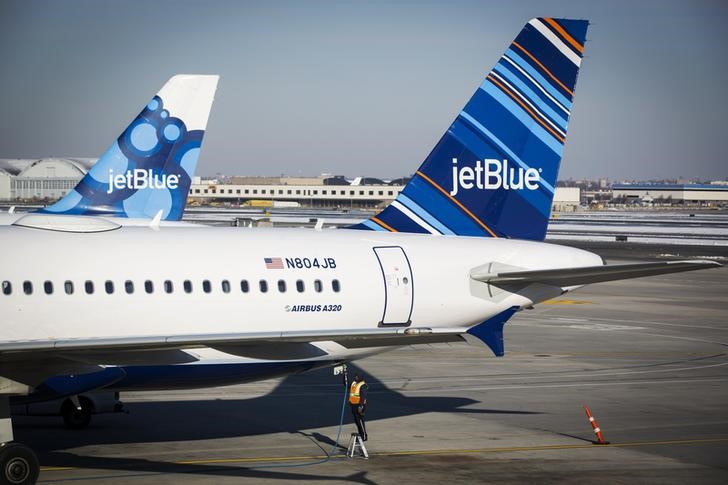
JetBlue CEO Joanna Geraghty told employees the airline is not considering bankruptcy protection this year, saying the company has sufficient liquidity and access to additional capital. The carrier recently secured a $500 million aircraft-backed loan with an option to add another $250 million. The update addresses investor concerns around fuel costs and financial stability, but it does not include a major operational or earnings change.
The immediate market read is that higher fuel is a margin headwind, but the more important signal is balance-sheet psychology: management is effectively trying to de-risk a “survival” narrative before it metastasizes into supplier, lessor, and customer behavior. That matters because airline stress often becomes self-fulfilling once counterparties start demanding tighter terms; reaffirming liquidity can slow that feedback loop and reduce the odds of a near-term financing spiral. For JetBlue, the key variable is not just fuel beta, but whether incremental capital is used to bridge to a cleaner operating reset or simply funds continued dilution of equity value. With leverage already high relative to cash generation, each month of elevated jet fuel compresses the runway to a credible deleveraging story. The market should focus on the next 1-2 earnings prints: if unit revenue fails to offset fuel, the equity starts to trade like an option on asset values rather than earnings power. Second-order winners are upstream energy and, more subtly, carriers with stronger balance sheets and better network pricing power. If geopolitical risk keeps oil bid, airlines with more hedging flexibility and stronger premium mix can defend margins while weaker domestic discounters get forced into capacity discipline. That dynamic can actually improve industry pricing later in the year, but only after weaker names cut growth or raise capital. The contrarian point is that bankruptcy chatter may be more overdone than the stock’s reaction suggests, but that does not make the equity cheap. Liquidity backstops buy time, not a durable rerating; unless fuel moderates or demand stays unusually resilient, the next leg is likely driven by capital structure outcomes, not operating momentum.
AI-powered research, real-time alerts, and portfolio analytics for institutional investors.
Overall Sentiment
neutral
Sentiment Score
0.15
Ticker Sentiment
