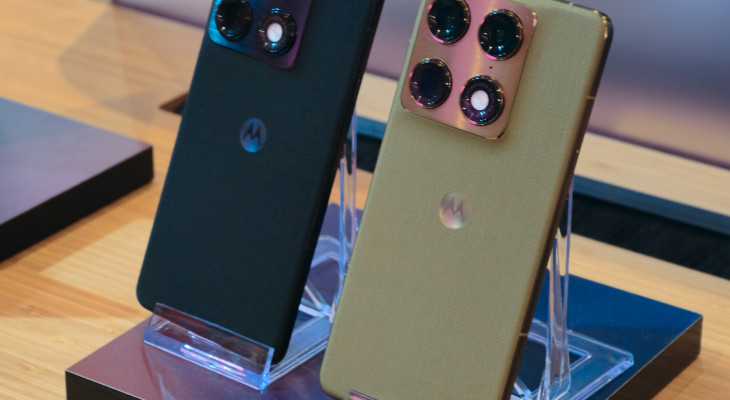
Motorola previewed the Signature, an ultra‑thin (6.99 mm) premium Android flagship emphasizing design and a cross‑device AI ecosystem called Qira, built from Lenovo AI Now and moto ai and integrating partners including Microsoft 365/Copilot, Google, Perplexity and Qualcomm. Key hardware specs: 6.8-inch Extreme AMOLED (165 Hz, Dolby Vision), Snapdragon 8 Gen 5, four 50 MP cameras with a Sony LYTIA sensor, 5200 mAh battery with 90W wired and 50W wireless charging, and up to seven years of Android/security updates; Motorola is positioning the device to compete in the >$800 premium segment with particular strategic focus on India. The piece is positive on design, ergonomics and the AI strategy but flags the need for real-world testing on sustained performance, camera tuning and Qira’s behaviour outside controlled demos.
Market structure: Motorola’s Signature chiefly redistributes premium Android demand rather than upending the market; key beneficiaries are Qualcomm (QCOM) for Snapdragon sales, Microsoft (MSFT) for Copilot/365 integration, and Sony (SONY) for image sensors. Pricing power is modest — success depends on intelligent India pricing (<$800 would materially increase addressable market) and a sustained attach rate; IDC share shifts of 3–5 percentage points in India would be meaningful within 12 months. Cross-asset: modestly positive for semiconductor equities and small upward pressure on tech credit spreads tightening; limited commodity impact, slight near-term INR appreciation if consumer uptake is strong.
Risk assessment: Tail risks include Qira failing to scale (privacy/legal backlash) or camera tuning producing poor reviews, which could cause a >10% demand hit to premium launches in India and reputational damage. Immediate (days) impact is low; short-term (weeks–months) hinges on hands-on reviews and pricing; long-term (quarters) depends on cross-device AI ecosystem monetization and partner contract economics. Hidden dependencies: reliance on MSFT/Google data access, carrier subsidy programs in India, and multi-vendor integration friction.
Trade implications: Direct plays favor QCOM (chip volume upside) and MSFT (enterprise AI leverage), with SONY as a sensor supplier play; consider market-neutral pairs to express Snapdragon vs Intel mobile secular wins. Options: buy 3–6 month calls on QCOM/MSFT ahead of India pricing and SDK partner announcements; reweight semis/software +3% vs hardware -2% in tactical allocations, with 2–8 week entry window around pricing/review catalysts.
Contrarian angles: Consensus assumes on-device AI alone wins share; the market may underappreciate that ultrathin designs can cap camera performance and thus consumer uptake — a repeat of past design-first comebacks (e.g., HTC) that failed without ecosystem stickiness. If Motorola achieves >5% premium share in India within 12 months, the market has underpriced QCOM/MSFT exposure; conversely, poor real-world Qira metrics would be a catalyst for rapid multiple compression.
AI-powered research, real-time alerts, and portfolio analytics for institutional investors.
Request DemoOverall Sentiment
moderately positive
Sentiment Score
0.34
Ticker Sentiment
