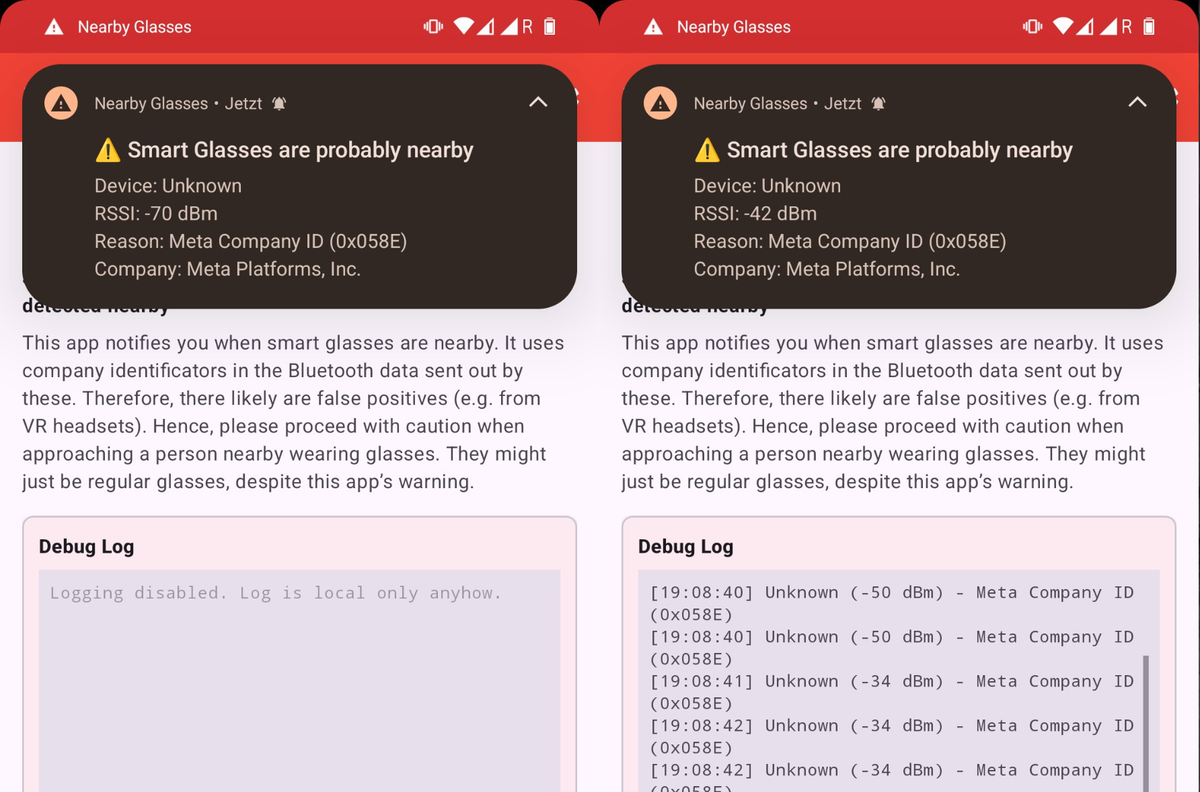
A hobbyist-built mobile app scans for distinctive Bluetooth signatures of smart glasses (including Meta’s Ray-Ban glasses) and sends push alerts if a potential pair is detected nearby, aiming to warn people about covert filming and harassment. The development comes as Meta pursues AI-driven features for its glasses — The New York Times reported a planned facial-recognition feature called “Name Tag” that would identify people via Meta’s AI assistant — raising heightened privacy and reputational risks for wearable-device makers, though the story presents limited immediate financial implications.
Market structure: Short-term winners are niche privacy tools, mobile-OS privacy teams, and cybersecurity vendors as consumer concern reduces marginal demand for always-on smart glasses; losers are Meta (META) and high-end wearable incumbents whose revenue growth from AR eyewear could be cut by low-single-digit percentage points of unit demand over 12–18 months. Competitive dynamics favor incumbents that can embed stronger on-device privacy (Apple/Google) or sell enterprise-grade controls; pricing power for consumer AR hardware deteriorates if adoption becomes conditional on expensive privacy features. Cross-asset: expect a modest bid to cybersecurity equities and elevated implied volatility for META equity/options; limited macro bond/FX move but tech credit spreads could widen 10–30bp if regulation escalates.
Risk assessment: Tail risks include rapid regulatory bans on facial recognition in wearables (EU/US state-level) or large class-action suits that hit META with fines >$1B — low probability <20% in 12 months but high impact. Immediate (days) = reputational headlines and vol spikes; short-term (weeks–months) = slower device preorders, elevated R&D/legal costs; long-term (quarters–years) = product redesign, margin pressure, and tighter ad targeting rules. Hidden dependencies: smartphone Bluetooth permission models, spoofing of Bluetooth signatures, and venue-level policies that can materially blunt or amplify consumer behavior. Catalysts: NYT investigative pieces, FTC/EC probes, upcoming product announcements or congressional hearings in next 30–90 days.
Trade implications: Direct: establish a tactical hedged short in META via 3-month 25-delta puts (size 0.5–1% portfolio) to capture >10% downside risk; protect with roll-ups if implied vol >40%. Relative: pair trade long cybersecurity (CRWD +1.5% weight or HACK ETF +2%) and short META (−1%); expect CRWD to outperform on reallocated privacy budgets over 6–12 months. Options: buy 6‑month CRWD 30–35% OTM calls (1% notional) to lever secular tailwind; avoid unconditional long hardware suppliers until regulatory clarity (30–90 days).
Contrarian angles: Consensus assumes lasting demand collapse for AR hardware — history (Google Glass) shows backlash can delay but not eliminate adoption if UX/value improves; risk that puts on META are overpriced if product rollout pauses only briefly. The detection app’s efficacy is brittle (Bluetooth spoofing, false positives), so consumer fear may be transient; a policy or firmware fix by Meta or OS owners could remove the incremental risk quickly. Watch for overshooting: if META implied vol >50% while fundamentals unchanged, consider selling premium via covered-call or calendar spreads instead of directional bets.
AI-powered research, real-time alerts, and portfolio analytics for institutional investors.
Request DemoOverall Sentiment
neutral
Sentiment Score
-0.12
Ticker Sentiment
