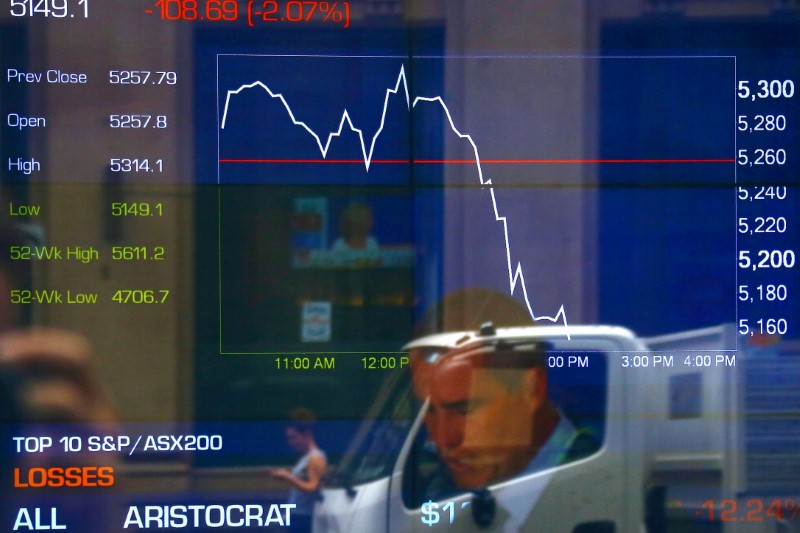
The article is primarily a market wrap, with the S&P/ASX 200 up 0.12% as financials, utilities and industrials led gains. Megaport rose 28.43%, while Graincorp fell 12.86% to a 3-year low; the ASX 200 VIX declined 3.71% to 12.68. Commodities were mixed, with gold down 0.18% to $4,698.25 and crude oil slightly higher, while AUD/USD was flat at 0.73.
The market action is less about the index print and more about a rotation away from macro uncertainty into balance-sheet defensives and rate-sensitive cash generators. A lower implied-vol regime alongside firmer oil is a subtle signal that investors are pricing geopolitical noise as a trading opportunity rather than a full-blown growth shock, which tends to favor financials and insurers over cyclicals with direct commodity or China exposure. The sharp hits to grain, rare earths, and software are telling for different reasons. Grain looks like a classic earnings-quality de-rating: if trade rhetoric hardens, ag exports and pricing power become hostage to policy rather than fundamentals, and that typically bleeds into storage, handling, and shipping names before it shows up in the headline producer. Rare earths are a cleaner China-policy barometer; any improvement in US-China dialogue can unwind the premium quickly, but if talks stall the sector can re-rate lower in a matter of sessions because positioning is crowded and liquidity is thin. The biggest second-order effect is in FX and commodities transmission. A stable AUD despite stronger crude suggests the market is not yet willing to pay for a sustained risk-on impulse; that leaves room for a sharper move if the talks produce even incremental tariff relief or energy-security coordination. Conversely, if the dialogue turns confrontational, the first pain point is likely to be Australia’s China-sensitive exporters rather than the index level itself, making relative-value positioning more attractive than outright beta shorts. Contrarian view: the volatility is being underpriced for the next 2-6 weeks. The market appears to be extrapolating a benign headline outcome while ignoring how quickly trade negotiations can spill into sector-specific export restrictions, especially in materials and ag-linked names; that argues for owning optionality rather than chasing spot moves. The current decline in implied vol may also be an opportunity to buy convexity before policy headlines force a repricing.
AI-powered research, real-time alerts, and portfolio analytics for institutional investors.
Overall Sentiment
neutral
Sentiment Score
0.05
