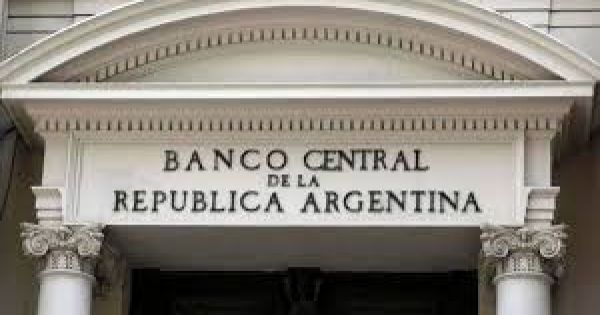
Argentina's central bank (BCRA) announced on Monday a tweak to its foreign-exchange policy that the IMF welcomed; the measures, aimed at further boosting reserves, will take effect in January 2026. The change signals policy alignment with the IMF and, if implemented successfully, could strengthen Argentina's external buffers and market confidence ahead of future financing needs.
Argentina's central bank (BCRA) announced on Monday a tweak to its foreign-exchange policy that the IMF publicly welcomed; the measures are explicitly aimed at further boosting FX reserves and are scheduled to take effect in January 2026. The announcement signals formal policy alignment with the IMF and sets a clear implementation timeline rather than immediate operational change.
Market signals attached to the report are mildly positive (sentiment_score 0.28) with a limited near-term market-impact score (0.35), consistent with a calibrated policy shift that markets may view as constructive but not transformative until concrete reserve accumulation is observed. The delayed start date to January 2026 gives investors time to assess rule details, reserve trajectories and any conditionality tied to IMF support.
Execution risk remains the central uncertainty: the ultimate effect on external buffers depends on the BCRA's operational design, pace of reserve build-up, and Argentina's broader fiscal and macro trajectory. Relevant short-term indicators to watch are monthly reserve changes, FX intervention volumes, IMF communiqués, sovereign bond spreads and forward FX curves; failure to deliver on reserves or widening spreads would reintroduce downside risk.
AI-powered research, real-time alerts, and portfolio analytics for institutional investors.
Request DemoOverall Sentiment
mildly positive
Sentiment Score
0.28
