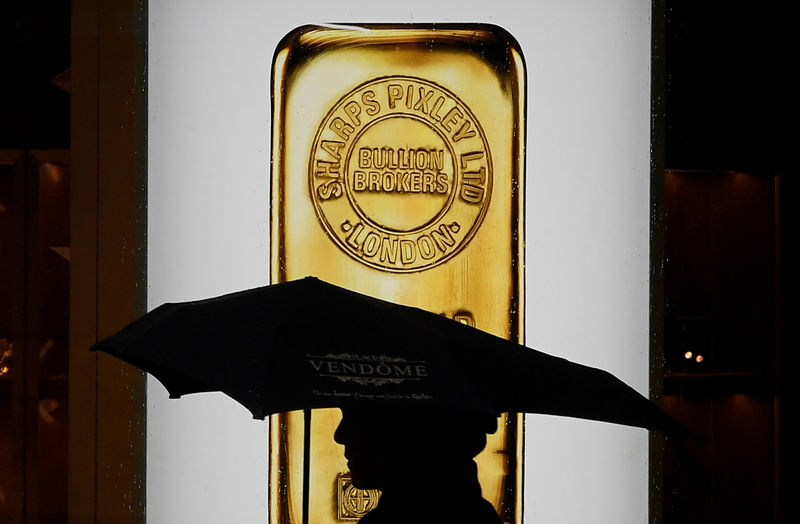
JPMorgan cut its 2026 gold average price forecast to $5,243/oz from $5,708 and lowered central bank purchase estimates to 640 tonnes from 800 tonnes, citing weaker near-term demand momentum and light ETF/futures positioning. The bank still sees gold reaching $6,000/oz by year-end, but says the bullish case is paused pending clearer resolution of the Iran conflict and Strait of Hormuz risks. A sustained Fed hiking cycle driven by strong jobs and faster inflation remains the main downside risk to gold.
The key read-through is that gold is no longer being driven by a clean “real rates down / dollar down” macro tape; it is being gated by the oil shock’s impact on policy expectations. That matters because the next leg is less about absolute inflation prints and more about whether markets start to price a Fed reaction function that stays restrictive even as growth softens — a combination that tends to cap bullion multiple expansion and keep CTA/systematic participation muted. The softer central-bank and ETF demand assumptions are really a proxy for that broader de-risking of the marginal buyer.
The second-order winner if the Strait/Hormuz risk de-escalates is not just gold, but duration-sensitive assets that have been punished by higher term premium: long-end Treasuries, high-quality growth, and gold miners with operating leverage to price recovery. Conversely, if energy keeps feeding inflation expectations, the most vulnerable cohort is the Western ETF holder base, because it is the least sticky flow and can turn into a persistent seller on any sustained real-yield backup. That would also amplify USD strength, which is a self-reinforcing headwind to commodities priced in dollars.
The setup is asymmetrical over the next 4-8 weeks: gold appears range-bound until there is clarity on the geopolitical shock, but the move higher after a policy-risk unwind could be fast because positioning is light and breakout participation is underowned. The contrarian point is that consensus may be underestimating how quickly gold can reprice once the market stops debating “higher for longer” and starts pricing a growth scare alongside falling inflation tail risk. In that regime, the 200-day becomes a springboard rather than support, and miners can outperform bullion by several hundred basis points if flows return.
The main tail risk is not simply a hotter CPI print; it is a sustained sequence of strong payrolls plus sticky energy inflation that forces the Fed to talk about renewed hikes, which would turn this into a real-yield shock rather than a transitory commodity scare. That would likely keep gold suppressed for months, not days, and could unwind ETF inflows much more aggressively than current models imply.
AI-powered research, real-time alerts, and portfolio analytics for institutional investors.
Request DemoOverall Sentiment
mildly negative
Sentiment Score
-0.15
Ticker Sentiment
