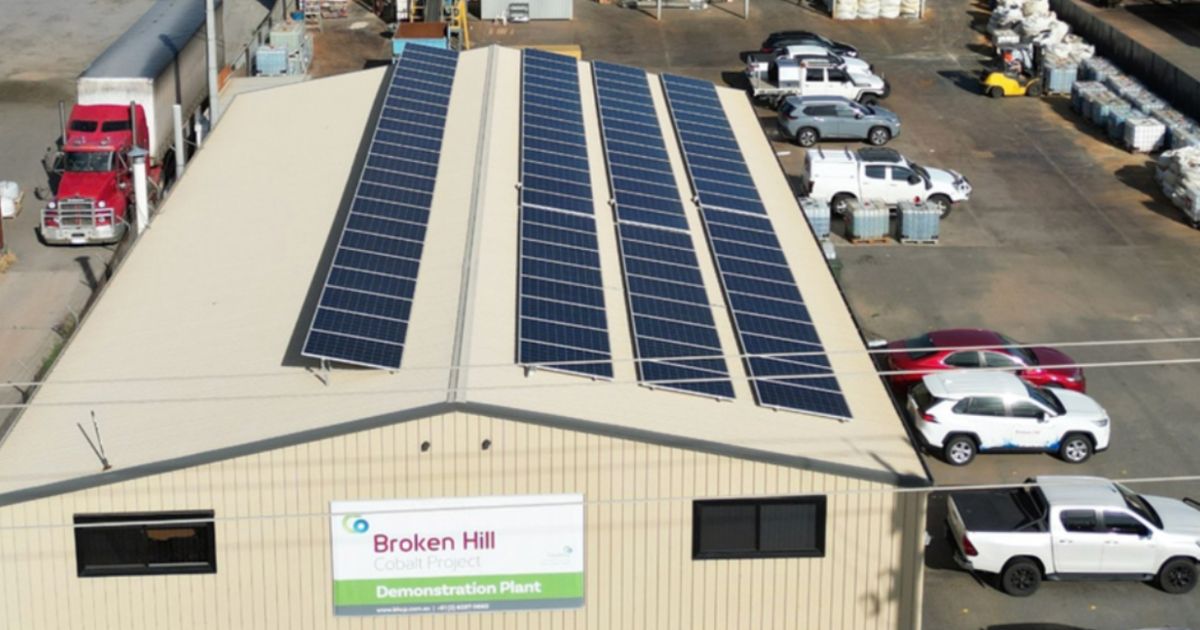
Cobalt Blue will repurpose its Broken Hill Technology Centre to process black mass from recycled batteries after completing a demonstration plant and investing more than A$15 million since 2021 to validate its cobalt refining flow sheet. The company says it is currently the only Australian refiner able to process black mass—a concentrate containing cobalt, nickel, lithium, manganese, graphite, copper and zinc—and plans to use it as a supplementary feedstock for a proposed cobalt refinery to bridge supply until domestic mining or a nickel sector restart. The initiative is pitched as a two‑pronged strategy to advance Australia’s circular‑economy goals and diversify feedstock ahead of a financial investment decision on the refinery, while wider industry uptake will be needed to build a robust local battery‑recycling supply chain.
Cobalt Blue announced it will repurpose its Broken Hill Technology Centre (BHTC) to begin processing black mass from recycled batteries after completing a demonstration plant into which it invested over A$15.0 million since 2021 to validate a cobalt refining flow sheet. The company describes black mass as a powder containing cobalt, nickel, lithium, manganese, graphite, copper and zinc and says it will be used as a supplementary feedstock for a proposed cobalt refinery while domestic mining or a restart in the nickel sector is pending.
Commercial Manager Joel Crane stated Cobalt Blue is currently the only Australian refiner able to process black mass and framed the move as a two‑pronged strategy to advance Australia’s circular economy and diversify feedstock ahead of a financial investment decision (FID) on the refinery. The firm is explicitly positioning BHTC as a near‑term commercial pivot point while it pursues refinery FID and hopes to catalyse broader local recycling capability.
Market signals rate the news moderately positive with modest market impact; however, execution risk is concentrated in securing sustained black mass supply from a nascent domestic recycling sector and converting demonstration success into commercial throughput and financing for the refinery. Near‑term value drivers are FID timing, binding feedstock contracts, and uptake by other refiners; failure on any of these would materially delay the feedstock diversification thesis.
AI-powered research, real-time alerts, and portfolio analytics for institutional investors.
Request DemoOverall Sentiment
moderately positive
Sentiment Score
0.45
