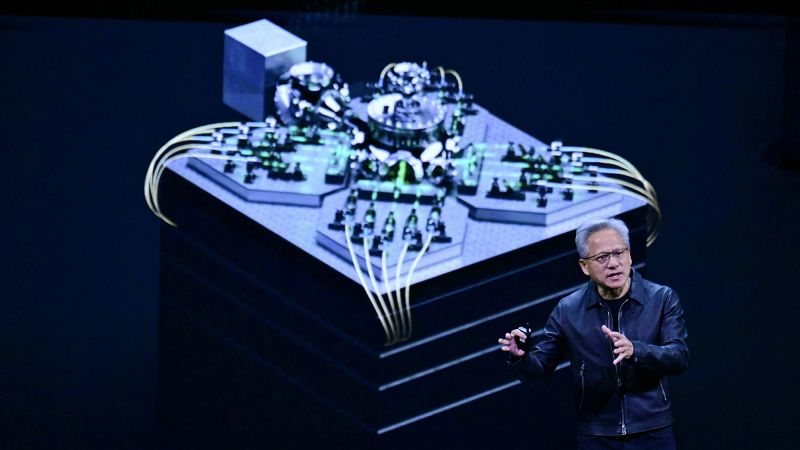
Nvidia CEO Jensen Huang, at the GTC AI conference, unveiled an ambitious strategy to embed the company's AI technology across diverse sectors, including "AI-native" 6G cell towers with T-Mobile and Nokia, 100,000 self-driving cars with Uber by 2027, and industrial AI applications with Siemens and Palantir, alongside a blueprint for "AI factories." This strategic expansion aims to solidify Nvidia's central role in the global AI ecosystem beyond its dominant data center chip business, despite rising competition and trade complexities, with Huang dismissing concerns of an "AI bubble" due to the technology's profitability. The announcements, which saw NVDA stock rise nearly 5%, highlight Nvidia's push for American tech leadership and its navigation of geopolitical challenges, including approved but blocked chip sales to China.
Nvidia CEO Jensen Huang unveiled an ambitious strategy at GTC to integrate the company's AI technology across diverse sectors, including "AI-native" 6G telecom, autonomous vehicles, and industrial automation. Key partnerships with T-Mobile, Nokia, Uber, Palantir, and Siemens aim to embed Nvidia's chips and software, signaling a significant expansion beyond its core data center business. This strategic pivot was met with a nearly 5% rise in NVDA stock.
While Nvidia holds a dominant position as the first $4 trillion public firm in AI chips, it confronts escalating competition from AMD and Qualcomm, alongside market concerns regarding an "AI bubble." CEO Huang refuted these bubble fears, emphasizing AI's current profitability, yet an MIT report noted many companies are not yet seeing ROI from AI deployments. This highlights a dichotomy between perceived value and realized returns.
The company is navigating complex geopolitical dynamics, with Huang advocating for US AI leadership and emphasizing domestic Blackwell chip production in Arizona. Despite White House approval for sales to China, Beijing is currently blocking these transactions, underscoring persistent trade policy challenges. Huang's direct engagement with President Trump further illustrates the strategic national security implications of AI technology.
AI-powered research, real-time alerts, and portfolio analytics for institutional investors.
Overall Sentiment
strongly positive
Sentiment Score
0.75
Ticker Sentiment
