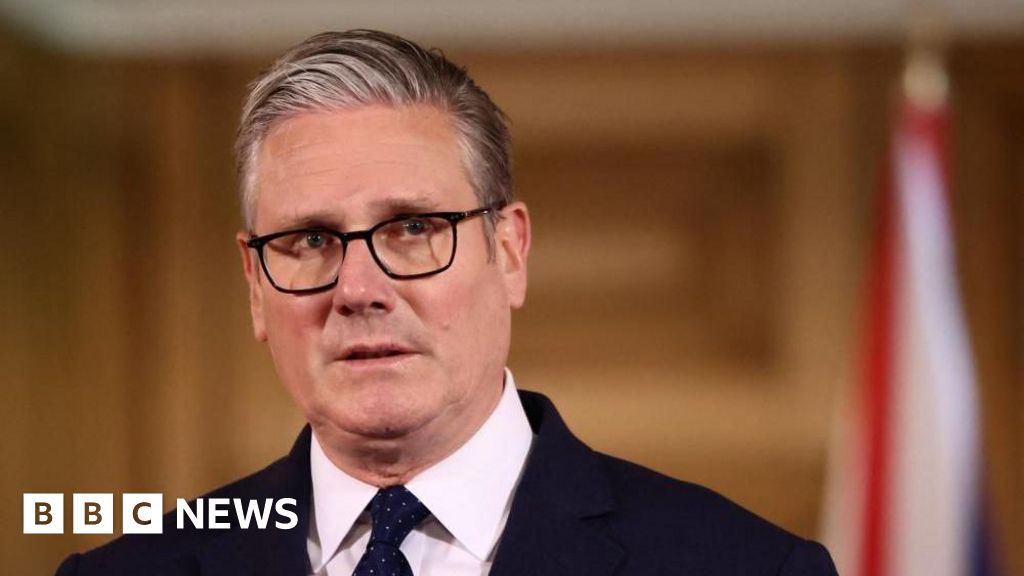
Sir Keir Starmer will host a Downing Street summit to coordinate a cross-sector response to rising antisemitism, alongside a Middle East Response Committee meeting focused on domestic security risks. The UK has raised its terrorism threat level to severe and announced an additional £25 million for police patrols and security at Jewish institutions. The article is primarily a domestic security and policy response story, with limited direct market impact.
This is not just a public-order story; it is an incremental fiscal and operational tailwind for the security ecosystem. The immediate beneficiaries are private guard-force contractors, alarm/monitoring vendors, and perimeter-security integrators, because the state is signaling a multi-month uplift in demand rather than a one-off policing surge. The second-order effect is procurement pull-forward: schools, faith institutions, transport nodes and event venues tend to upgrade access control, CCTV, screening and incident-response contracts after a visible threat reset, which can support bookings for 2-4 quarters even if headline incidents fade. The more important market implication is risk premium compression elsewhere in UK consumer-facing assets if the government is seen as credible in restoring visible security. Retail property, malls, hospitality and selected leisure operators can see less downside from localized disruption if patrol density rises, but the effect is uneven: venues concentrated in London and other high-density urban catchments remain exposed to ad hoc closures, insurance repricing and higher staffing/security OPEX. That creates a widening between operators with strong insurance coverage and disciplined physical-security protocols versus those relying on thin margins and reactive spend. The catalyst path is binary over days versus months. In the next 1-2 weeks, the key risk is copycat activity or a single high-profile failure of protection, which would quickly force another funding step-up and prolong the security trade. Over 3-6 months, if arrests and deterrence reduce incident frequency, the premium moves from guards and hardware into insurers and venue operators as volatility normalizes. The market is likely underpricing the persistence of elevated security spend because budgets once added are politically sticky, especially for community-facing infrastructure.
AI-powered research, real-time alerts, and portfolio analytics for institutional investors.
Overall Sentiment
mildly negative
Sentiment Score
-0.30
