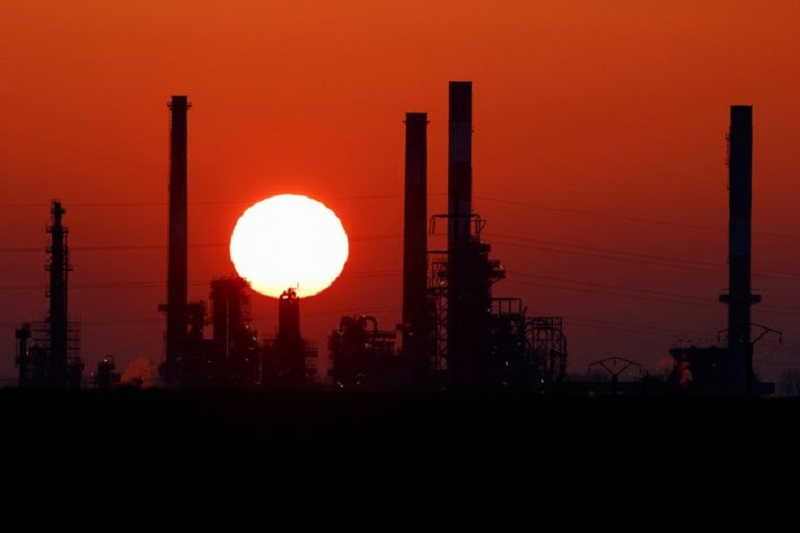
Brent crude spiked above $100/bbl in March 2026, prompting United to cut planned capacity by 5% and creating large fuel hits for carriers (Delta ~ $400m March headwind; American > $400m Q1 expense impact). Truist warns higher oil and reduced flying will lower demand for aerospace aftermarket parts and repairs, expect multiple compression, but maintains Buy ratings on AIR, ATRO, HEI, MOG.A, SARO, TATT, TDG, VSEC, WWD and a Hold on ASLE. Southwest kept Q1 EPS guidance, citing $1bn in annual bag fees and assigned seating as a hedge; supply-chain and OEM quality issues (e.g., scratched 737 MAX wiring) are also slowing fleet modernization and Boeing deliveries.
Elevated oil-driven operating costs are creating a bifurcation across the aviation supply chain: niche, high-margin component suppliers with inelastic spares (actuators, avionics, proprietary OEM parts) should see stickier pricing power, while volume-dependent MROs and lower-tier parts vendors face both demand and multiple compression as marginal flying is removed. Delivery slowdowns for new frames — and the resulting lengthening of older aircraft service lives — set up a timing mismatch: higher per-airframe maintenance intensity but lower total flight hours and unit part-turns, which favors vendors paid per-repair over per-flight volumes.
Sentiment is already pricing in near-term stress for carriers and OEMs, so the first-order macro catalyst is crude staying elevated for 1-3 months; a sustained move beyond that horizon shifts the story from transient margin pressure to structural demand re-pricing for the sector. Catalysts that would reverse the theme are rapid geopolitical de-escalation, a coordinated SPR release, or a large hedging win by airlines — any of which could restore flying and reflate multiples within 4-8 weeks.
Second-order winners include firms with long-term service contracts and pricing escalators (they lock in higher nominal dollars even as flight activity dips), plus defense/industrial actuation suppliers that can cross-sell to other industries absorbing energy-driven inflation. Losers are those with high fixed-cost MRO footprints, cyclical OEMs reliant on smooth delivery schedules, and regional/low-yield carriers lacking ancillary revenue levers; these are the likely sources of forced selling that could temporarily depress equities across the group.
AI-powered research, real-time alerts, and portfolio analytics for institutional investors.
Request DemoOverall Sentiment
mildly negative
Sentiment Score
-0.35
Ticker Sentiment
