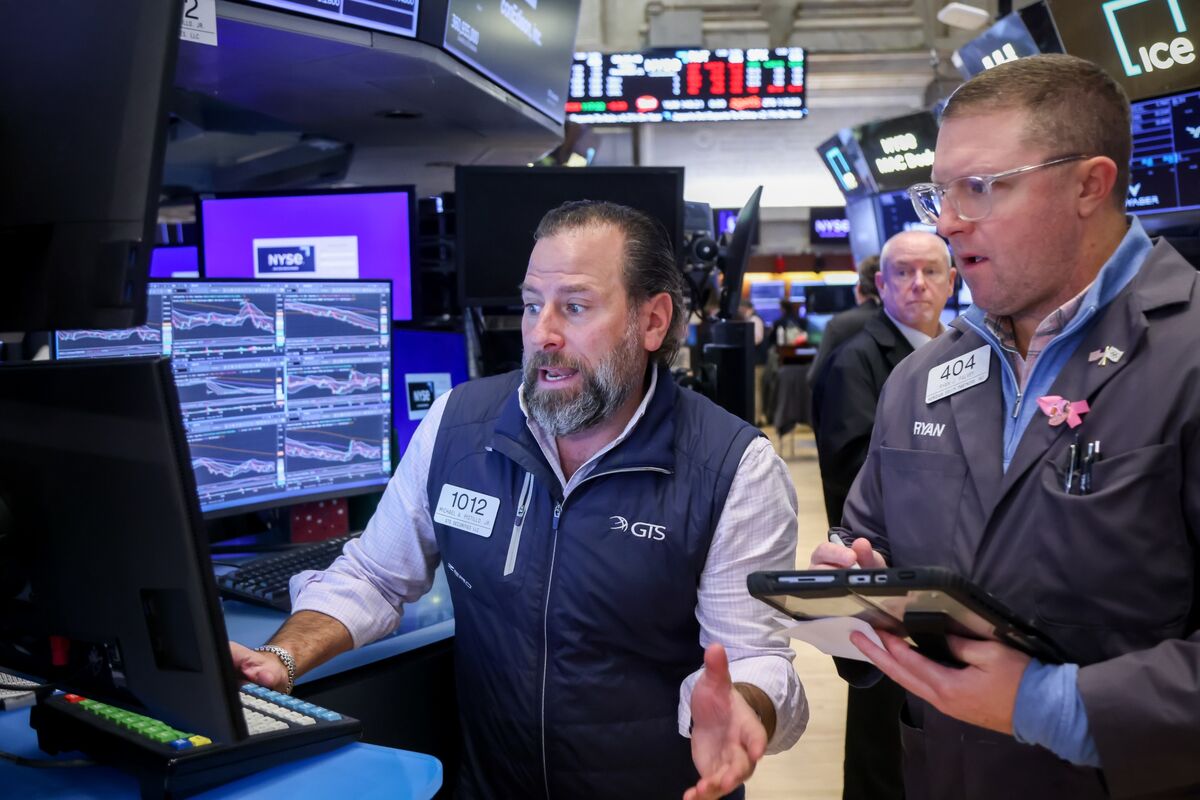
Hedge funds were forced to rapidly adjust positions after a sharp two-day market swing, rushing to protect against losses on Thursday and then unwinding those hedges as prices snapped back Friday; Goldman Sachs partner John Flood reported significant short-covering in macro products such as index futures and ETFs. The activity underscores how tactical P&L protection via broad macro instruments can amplify intraday volatility and drive concentrated flows into passive products during quick reversals, with potential implications for liquidity and short-term market dynamics.
Hedge funds experienced a rapid reversal over a two-day market swing, moving from aggressive P&L-protection hedges on Thursday to unwinding those same positions on Friday as prices snapped back; Goldman Sachs partner John Flood reported “significant hedge fund covers in macro products, such as indexes and ETFs.” The episode highlights that managers used broad macro instruments (index futures and ETFs) for quick hedging, creating concentrated flows into passive products during the reversal.
The mechanics described — large, concentrated covering in macro products — can amplify intraday volatility and produce short-term liquidity strains because passive instruments and index futures concentrate trading interest and are common vehicles for rapid de-risking. The provided sentiment and impact signals (sentiment_score 0.25, mildly positive; market_impact_score 0.35, modest impact) suggest the market reaction was constructive overall but carried elevated technical volatility rather than signaling a systemic shock.
Implications for positioning include a higher probability of episodic, flow-driven reversals and crowded trades in passive benchmarks; these dynamics increase tail-risk for short-biased strategies and can force non-fundamental price moves. Investors should prioritize monitoring ETF and index-futures flows, maintain liquidity buffers, and expect transient but sharp repricings driven by hedge traffic rather than changes in fundamentals.
AI-powered research, real-time alerts, and portfolio analytics for institutional investors.
Request DemoOverall Sentiment
mildly positive
Sentiment Score
0.25
