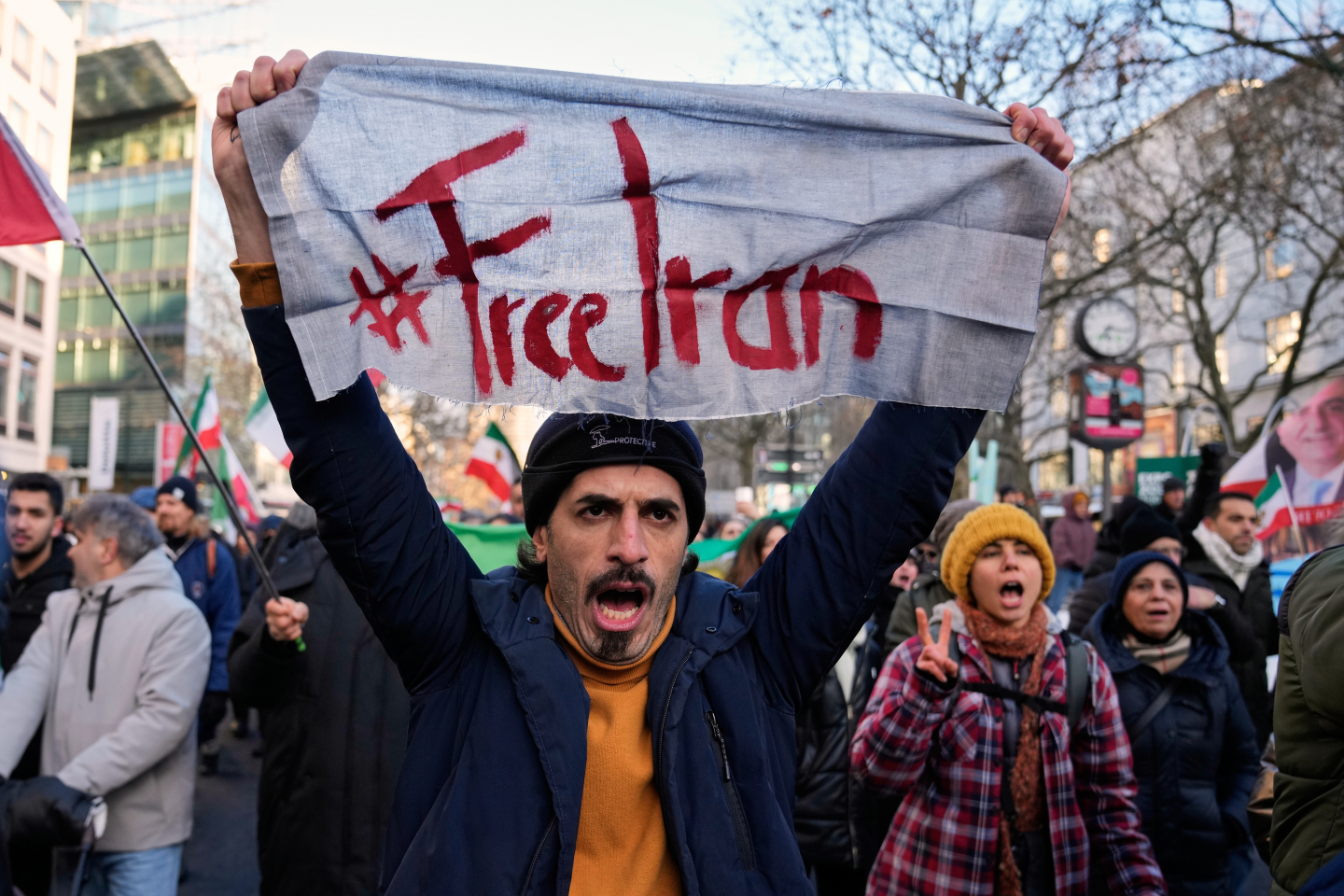
Iran is exhibiting signs of structural fragility after three weeks of unrest across roughly 190 cities, with opposition and rights groups reporting over 3,000 killed and tens of thousands detained; in parts of Isfahan and Kermanshah security forces reportedly lost territorial control. The piece argues the outcome hinges on clandestine opposition networks — some said to have been building since 2014 and advanced publicly by the NCRI’s ten-point plan — rather than visible exile figures, and warns Western leverage and regional hedging may shape but not determine any rupture. For investors, the key risk is political tail-risk: a potential internal rupture that could disrupt regional stability, sanctions dynamics and commodity/EM exposures, though near-term market impact remains contingent on whether organized resistance can sustain a coherent transition.
Market structure: Near-term winners are defense contractors (LMT, RTX, GD), oil majors (XOM, CVX) and safe-haven commodities (GLD) as political instability in Iran elevates a geopolitical premium on energy and security; losers include EM equities (EEM), regional airlines (AAL/DAL) and banks with MENA exposure. Expect an oil risk premium of ~3–7% within weeks on heightened Strait-of-Hormuz risk, with a >15% move a plausible tail if choke-point disruptions occur; Treasuries should rally (10–25bp), USD strengthen, and implied volatilities (VIX, OVX) spike.
Risk assessment: Immediate (days) risk is contagion-driven volatility; short-term (weeks–months) risks include punitive sanctions or regional military escalation that amplify commodity shocks; long-term (quarters–years) outcomes hinge on whether organized opposition produces protracted instability or a managed transition. Hidden dependencies: shipping insurance, rerouting costs, and regional supply backups (KSA spare capacity) can rapidly compress or relieve premiums; catalysts include visible foreign military involvement, U.S./EU secondary sanctions, or a decisive collapse of domestic security control.
Trade implications: Tactical plays favor 1–3 month hedges and targeted longs: buy gold and oil convexity, add 1–2% portfolio exposure to top defense equities, and reduce EM beta by 3–5%. Use options to limit downside: 3-month Brent/WTI call spreads to express supply risk, 3-month EEM puts to hedge EM exposure, and covered-call discipline on energy majors if entering long for 3–6 months.
Contrarian angles: Consensus may overprice immediate regime collapse and underprice the probability of a prolonged low-intensity stalemate; if markets over-rotate into defense and energy, there is a mean-reversion opportunity when supply pathways normalize. Historical parallels (1989–91 USSR analogy) warn that weakening regimes can persist years; set explicit trim/add triggers (e.g., Brent >$95 or +10% in 7 days) to avoid being trapped in an extended risk-off rally.
AI-powered research, real-time alerts, and portfolio analytics for institutional investors.
Request DemoOverall Sentiment
moderately negative
Sentiment Score
-0.40
