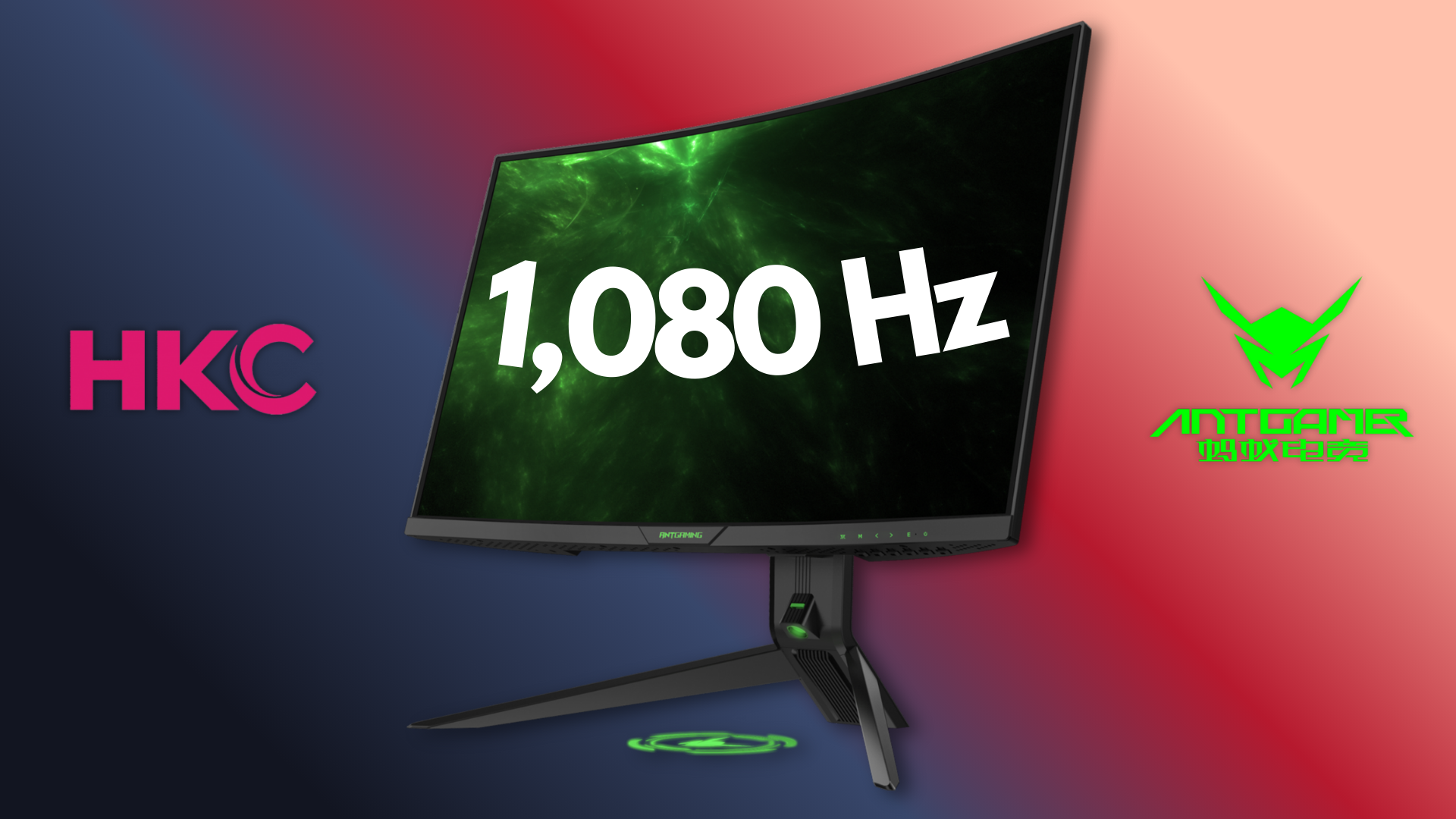
HKC's AntGamer sub-brand unveiled the ANT275PQ MAX, a Fast TN gaming monitor that uses a dual-mode design to reach 1,080 Hz at 720p and 540 Hz at its native 1440p, reportedly with DisplayPort 2.1 UHBR20 connectivity; the model is likely a 27-inch panel and was previously teased at a near‑$1,000 price in China. HKC, which controls roughly 10% of the global monitor market, positions this as a competitive esports-focused product with clear trade-offs in color and contrast versus OLED/Mini‑LED alternatives; both this monitor and HKC’s premium M10 Ultra Mini‑LED will be shown at CES 2026 alongside rival 1,000+ Hz demos from Samsung and TCL, making broader market adoption and margin upside uncertain.
Market structure: High-refresh gaming monitors benefit upstream high-end panel fabs, DP2.1 controller/IP vendors and GPU makers able to monetize higher frame-rate demand; expect Samsung Electronics (005930.KS) and LG Display (034220.KS) to capture pricing power in 12–24 months given scale and IPS/Mini-LED roadmaps, while niche TN-focused OEMs (price-sensitive entrants) face margin pressure. The $900–$1,000 price point signals premium segment demand but limited volume — estimate incremental TAM expansion of ~5–10% in monitor ASPs for 2026 if esports/competitive titles and tournaments adopt higher-FPS standards.
Risk assessment: Tail risks include oversupply of niche 1,000+ Hz panels, lack of GPU horsepower (frames-per-second), and geopolitical export controls on display/DP2.1 IP — any of which could collapse pricing and demand within 6–18 months. Near-term catalyst windows are CES 2026 (Nov–Jan build-up) and next-gen GPU launches (NVIDIA/AMD within 3–9 months); watch GPU frame-rate telemetry and OEM channel pre-orders for hard confirmation.
Trade implications: Favor large-cap panel makers and memory vendors that supply GPUs — e.g., long Samsung (005930.KS) and Micron (MU) — while remaining cautious on small Chinese monitor brands without DP2.1 capacity. Use 3–6 month call spreads on NVDA to capture GPU upside tied to display demand, and consider pair trades (long LG Display 034220.KS / short TCL Technology 000100.SZ) to express quality/capex advantage over lower-end competitors.
Contrarian angles: Consensus over-emphasizes headline Hz; adoption is constrained by GPU economics and human-perceived value (TN color tradeoffs), so premium pricing could compress if larger vendors ship cheaper 1,000 Hz alternatives — risk of rapid commoditization is real in 12–24 months. Historical parallel: early OLED/4K monitor cycles showed initial ASP spikes then 30–40% price drops; plan exit triggers accordingly.
AI-powered research, real-time alerts, and portfolio analytics for institutional investors.
Request DemoOverall Sentiment
neutral
Sentiment Score
0.10
