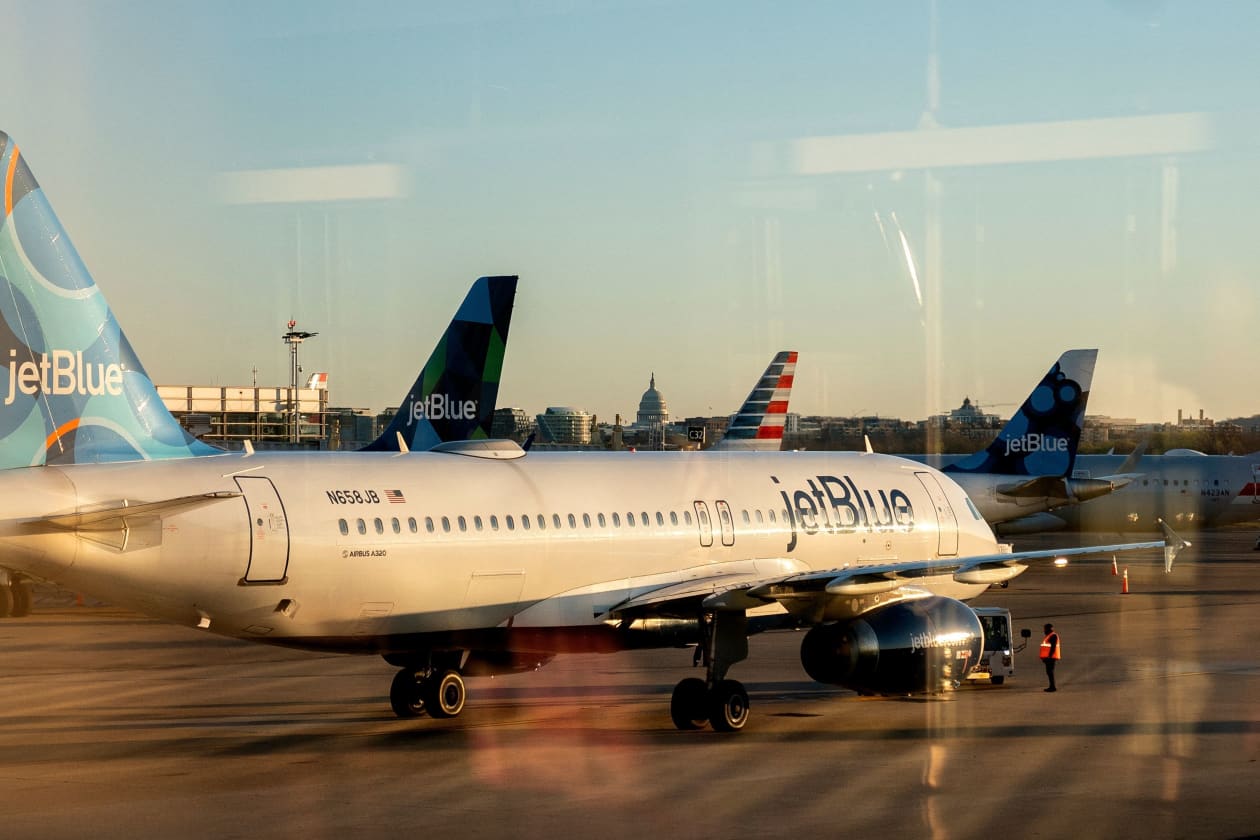
JetBlue shares jumped as much as 15% after reports it hired advisers to explore a potential sale, pushing the stock into positive territory for the year. The move is driven by M&A speculation (deal unconfirmed); monitor adviser confirmations, potential bidders and any regulatory/antitrust risks to assess whether the rally is sustainable.
The market reaction is trading a call option on a takeover process rather than a change in JetBlue’s operating fundamentals; that creates a short-duration event where flows, short-covering and positioning dominate outcomes over cash yield or margin improvement. Expect most of the move to be resolved within days-to-weeks unless an exclusivity auction is announced — the realistic timeline for due diligence and binding bids is 3–9 months, with regulatory review potentially extending a deal to 12–24 months.
Second-order effects concentrate in congested Northeast choke points (JFK, BOS) and on carriers with overlapping coastal footprints; slot reallocation or route rationalization could transfer 100–300 bps of unit revenue to incumbents on affected route pairs. Labor and fleet integration risks are asymmetric: wage & scope agreements and narrowbody fleet commonality determine whether synergies are attainable or merely paper savings, and those negotiations are the most likely sources of deal failure or value erosion.
The primary tail risk is regulatory and political: past precedent shows antitrust scrutiny can convert a speculative premium into a drawn-out value trap, and rising rates or a tighter financing market can kill even signed deals. The market is currently pricing in a mid-to-high probability of at least a process (not a consummated bid); absent firm bids, expect mean reversion of 20–40% of the rumor premium within 7–14 trading days as liquidity-driven positions unwind.
AI-powered research, real-time alerts, and portfolio analytics for institutional investors.
Overall Sentiment
moderately positive
Sentiment Score
0.45
Ticker Sentiment
