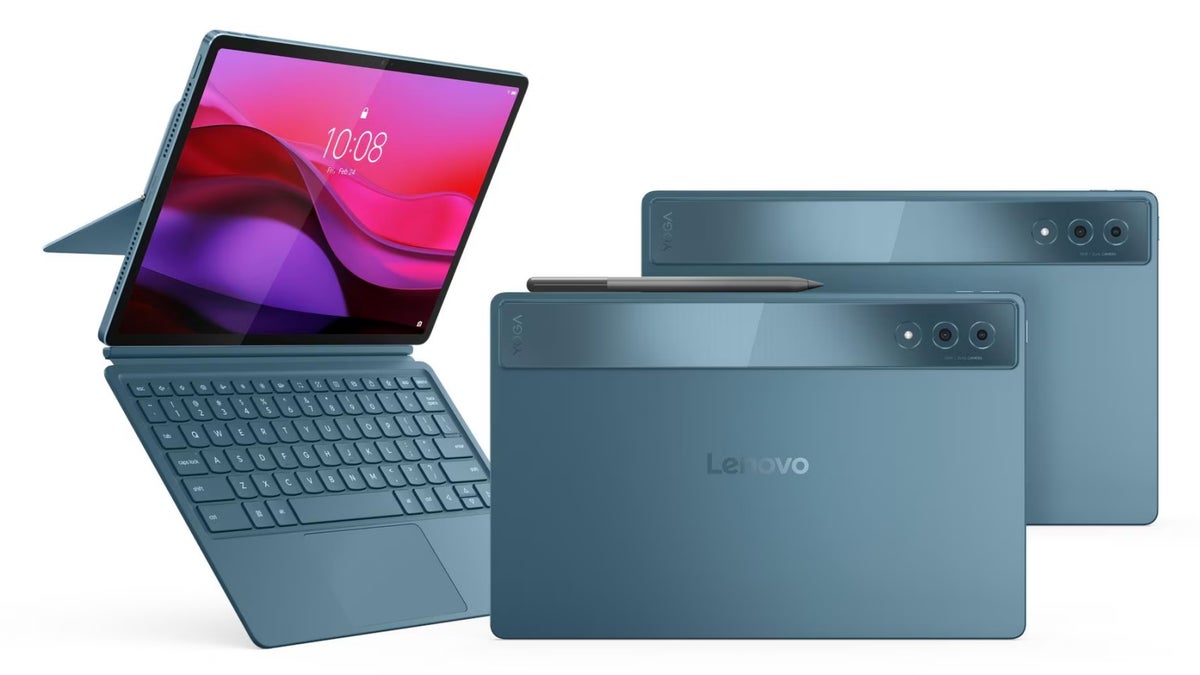
Lenovo raised US list prices across its Android tablet line by $30–$70, increases of roughly 4%–20% (e.g., Tab One $149.99→$179.99, Yoga Tab $549.99→$619.99, Yoga Tab Plus $769.99→$799.99). The article flags a risk to demand and potential hit to Lenovo’s growth if discounts become rarer, noting the company’s prior Q4 2025 shipment surge of +36.2% year-over-year. Cause is attributed to higher memory chip costs ('chipflation'), so watch for price reversals or promotional activity in the coming weeks and potential margin/volume impact on Lenovo results.
A major Android OEM’s recent list-price repositioning is a classic elasticity experiment: removing routine deep promotions lifts headline ASPs but risks a sharp fall in realized unit demand at the margin. Expect most of the damage to show up first in channel sell-through and promotional cadence (weeks–months), not necessarily in headline revenue immediately—retailers will either widen promotions or let inventory stagnate, producing volatile reported shipments over the next 1–3 quarters.
At the component level, higher OEM list prices are a blunt instrument to pass through higher memory costs; procurement teams operate on quarter-to-quarter contract cycles, so we should see order smoothing or outright volume cuts in the next DRAM contract round (Q2–Q3 cadence). That can flip fast: if OEMs destock, memory suppliers see a topline hit after the current price spike dissipates, creating asymmetric upside for memory names if chipflation persists and asymmetric downside if demand collapses.
Catalysts: retailer promotional calendars (Prime Day/Back-to-School cadence in coming weeks), quarterly device shipment/ASP disclosures from major OEMs, and the next DRAM contract pricing window. Tail risk centers on discretionary-spend sensitivity—if list-price increases coincide with a softer macro, expect multi-quarter share erosion for the incumbent and a persistent hit to accessory/ecosystem revenues.
Contrarian angle: list-price hikes have historically been reversed quickly when they threaten share in low-margin consumer electronics. If the OEM rapidly restores aggressive discounts to defend installed-base growth, downside for the OEM is limited and any short-term dislocation in chip orders will be temporary—this argues for time-limited, event-driven trades rather than large structural shorts.
AI-powered research, real-time alerts, and portfolio analytics for institutional investors.
Request DemoOverall Sentiment
mildly negative
Sentiment Score
-0.35
Ticker Sentiment
