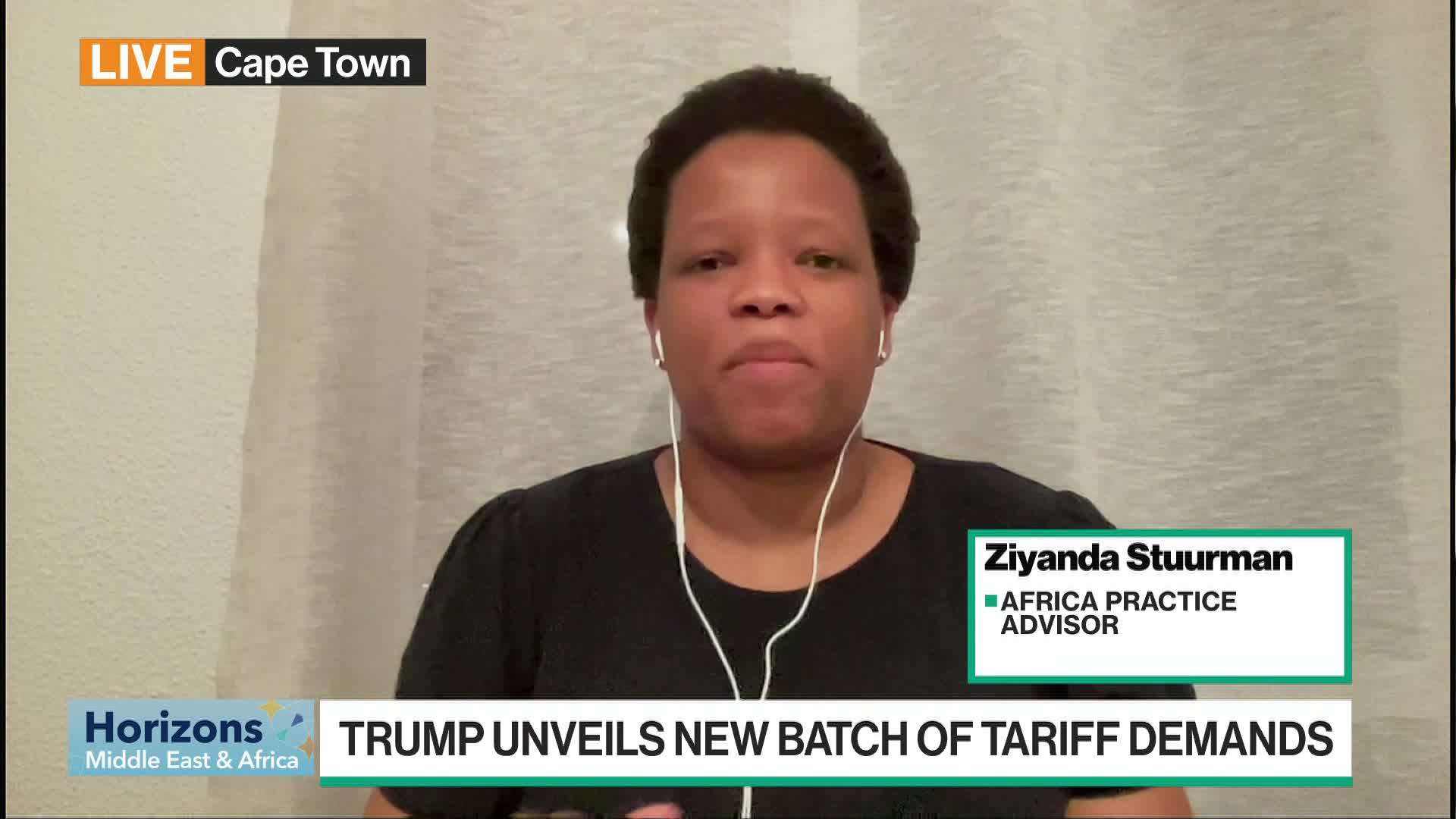
As President Trump's reciprocal tariff deadline approaches, the specific impact on African nations remains largely unknown, with no country having finalized a trade deal with the US. This current lack of clarity, highlighted by Ziyanda Stuurman of Africa Practice, underscores potential shifts in US-Africa trade dynamics and presents an unquantified variable for investors monitoring global trade flows.
The impending deadline for reciprocal tariffs under the Trump administration introduces significant uncertainty into US-Africa trade relations, a situation underscored by a mildly negative sentiment signal. According to Ziyanda Stuurman of Africa Practice, the specific economic impact on the continent remains unquantified, as no African nation has finalized a trade agreement with the U.S. This policy ambiguity creates a challenging environment for assessing risk, particularly for assets and supply chains with exposure to US-Africa trade flows. The prevailing tone of uncertainty highlights the lack of clarity on the final nature and scope of these tariffs, leaving a critical variable unresolved for investors focused on emerging markets and global trade policy.
AI-powered research, real-time alerts, and portfolio analytics for institutional investors.
Request DemoOverall Sentiment
mildly negative
Sentiment Score
-0.25
