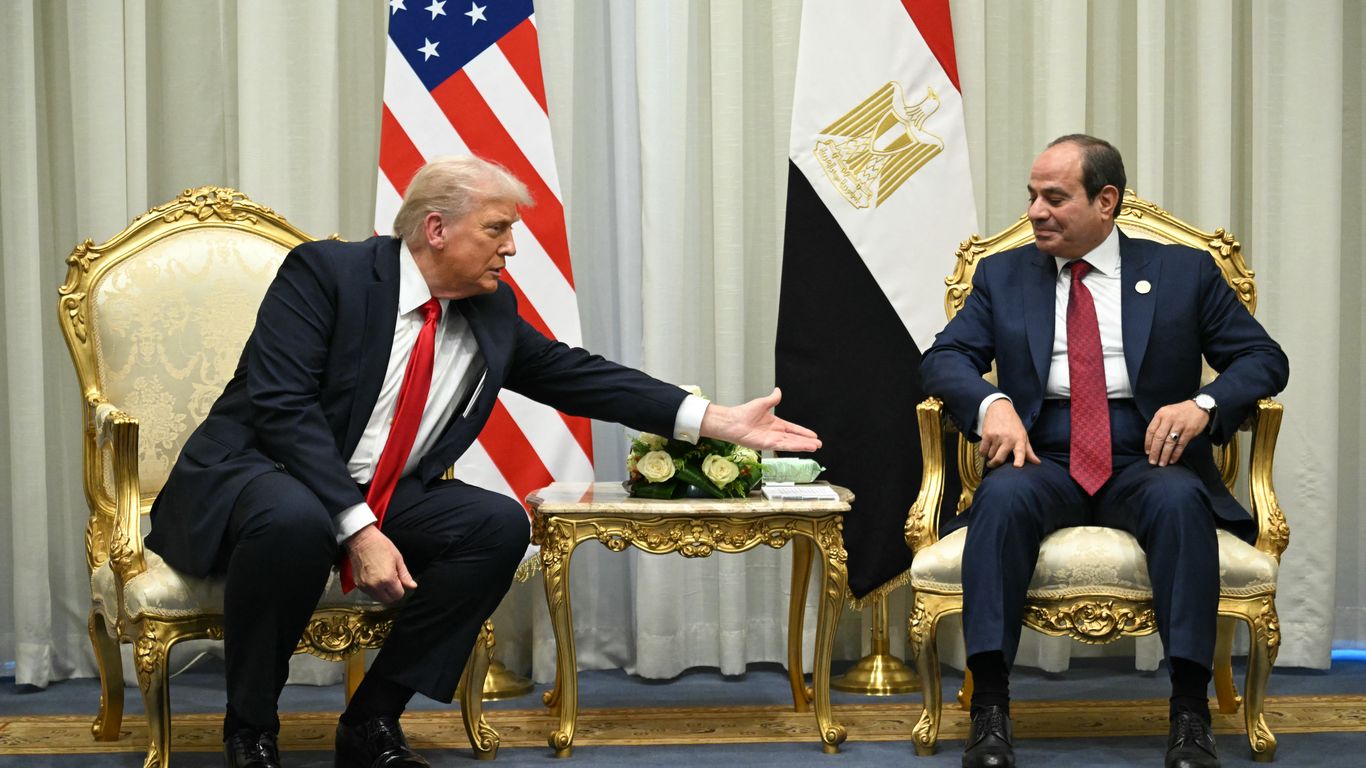
The U.S. is preparing to broker a summit between Israeli PM Benjamin Netanyahu and Egyptian President Abdel Fattah al‑Sisi contingent on Israel approving a multibillion‑dollar natural gas deal that would provide an estimated 25% of Egypt's electricity supply (Chevron is a partner in the field). Washington is pushing economic diplomacy — leveraging Israel's gas, tech/AI, renewables and water expertise — to thaw regional ties and revive the Abraham Accords, but Netanyahu has yet to formally approve the gas deal and has delayed direct engagement. Hedge funds should monitor the gas‑deal approval, potential cross‑border energy contracts and any public commercial commitments, as these would materially affect regional energy flows and companies with exposure to the project.
Market structure: A signed Israel–Egypt gas deal is a modest positive for integrated E&P players tied to the field (notably Chevron/CVX) and for Egyptian power/LNG economics; expect a 1–3% re-rating of exposed equities on confirmation and a 20–50bp tightening of Egyptian sovereign spreads over 3–12 months as export optionality improves. Regional LNG/short-term gas (TTF) could face 2–6% downward pressure in 3–12 months if Egypt frees up LNG feedstock, but global oil markets will be largely unchanged as volumes are regional.
Risk assessment: Tail risks include political blowback in Israel/Egypt, operational delays at the export/processing plants, or escalation in Gaza that halts flows — each could wipe 50–100% of near-term project value; time buckets: immediate (days) = headline volatility, short (weeks–months) = cabinet/FID moves, long (quarters–years) = physical ramp and export volumes. Hidden dependencies: Egyptian domestic opposition to gas exports, payment/FX conversion mechanics, and Chevron’s FID timing; catalysts are Israeli cabinet approval, a US-brokered summit, and a Chevron project update.
Trade implications: Primary trade is a tactical, size-constrained long in CVX and regional energy infra names on approval signals; pair opportunities exist (long CVX / short TTF gas futures) to capture decoupling between oil majors and regional gas prices. Use 6–12 month call spreads to control capital and sell short-dated premium to finance exposure; enter on formal Israeli approval or public Chevron FID and trim if approval stalls beyond 90 days.
Contrarian angles: The market may overestimate geopolitical upside — CVX’s absolute exposure to this single field is small versus its market cap, so a full-scale rally is unlikely; conversely, consensus underprices implementation risk and the potential for Egyptian domestic politics to block exports, which would re-rate regional assets lower. Historical parallels (Israel–Jordan gas deals) show multi-year execution lags; hedge modestly and avoid overconcentration in single-deal narratives.
AI-powered research, real-time alerts, and portfolio analytics for institutional investors.
Request DemoOverall Sentiment
neutral
Sentiment Score
0.15
Ticker Sentiment
