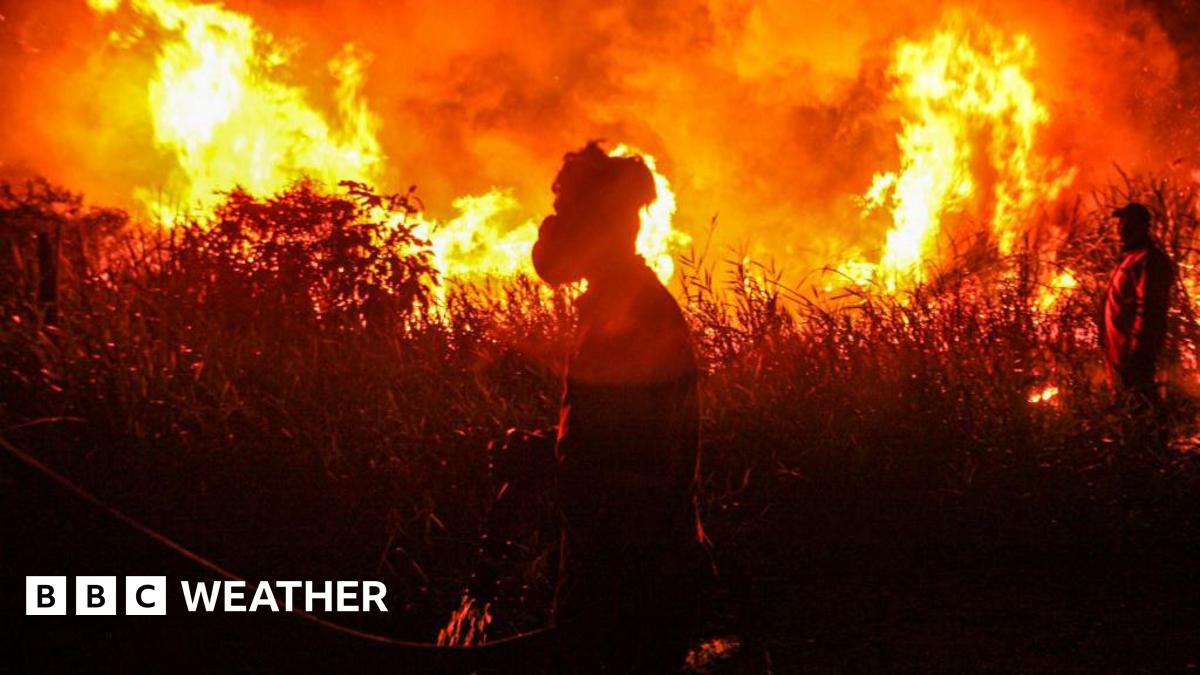
NOAA now sees a two-in-three chance that the developing El Niño becomes strong or very strong by this winter, with some forecasts implying Niño3.4 temperatures above 2.5C and possibly 3.0C. The article warns of record global temperatures, drought and flood risks, weaker Atlantic hurricanes, and higher food prices as fertiliser disruptions and crop losses hit supply. Potential humanitarian impacts are described as severe, with the biggest macro risk being a broad weather shock that could lift global temperatures and pressure agriculture.
The market is underpricing the asymmetry in timing: the next 6-12 weeks are more important than the headline winter forecast. A rapid transition from cool conditions to a strong warm phase tends to create the biggest regime shift in agricultural pricing, because planting and input decisions are being locked in now; once acreage and fertilizer applications are set, the price response shows up first in futures and input-sensitive equities, then in physical inflation with a lag of 1-2 quarters. The second-order winner is not just food producers, but firms with flexible global sourcing and pricing power. Consumer staples with diversified procurement can preserve margin while downstream packaged-food names and animal protein processors face a squeeze from feed, fertilizer, and logistics at the same time. In EM, the most fragile balance sheets are import-dependent countries where food and fertilizer are a larger share of CPI; the policy response there is often FX weakness, subsidy pressure, or export restrictions, any of which can amplify the inflation impulse rather than offset it. The clearest risk to the bullish climate trade is not a benign El Niño fade, but a policy-led reversal in commodity pricing: coordinated fertilizer relief, export controls, or a faster-than-expected moderation in Pacific warming could deflate the move. That said, the market usually waits too long to price the compounding effect of drought risk across multiple breadbaskets, so the first move is often the most tradeable. The best setup is to own convexity into late-summer forecast revisions and harvest uncertainty, not to chase after inflation has already shown up in CPI prints. Contrarian view: consensus is focused on headline temperature records, but the bigger P&L driver may be volatility in yields and shipping rather than outright commodity levels. If the event is strong but geographically uneven, some softs and grains could see brief spikes followed by sharp reversals, while weather-vol products and agribusiness supply-chain names may offer better risk-adjusted exposure than broad commodity baskets.
AI-powered research, real-time alerts, and portfolio analytics for institutional investors.
Request DemoOverall Sentiment
strongly negative
Sentiment Score
-0.55
