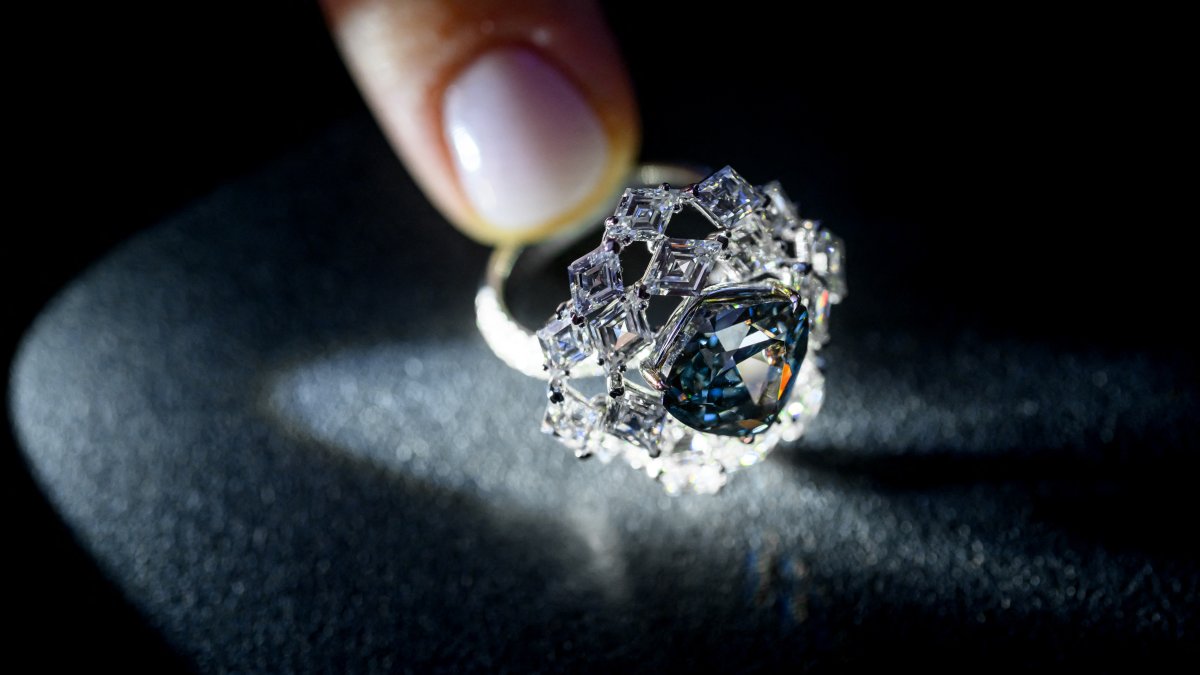
Christie’s sold the 5.5-carat Ocean Dream blue-green diamond for more than 13.5 million Swiss francs ($17.3 million), above the 7-10 million franc estimate and more than double its 2014 sale price of roughly $8.5 million. The result set a record for the highest auction price for a stone of its kind, underscoring strong collector demand for rare colored diamonds. Sotheby’s separately failed to sell a 6-carat fancy vivid blue diamond the prior day, highlighting uneven auction outcomes in the rare-stone market.
The auction result is less about jewelry and more about a signaling event for ultra-high-net-worth spending: when a trophy asset clears well above reserve in a short bidding window, it suggests liquidity at the very top is still abundant despite softer sentiment elsewhere. That matters for the broader luxury ecosystem because the marginal buyer for rare stones is the same cohort underwriting high-end watches, private jets, and bespoke apparel; a strong clearing price can pull forward confidence across adjacent discretionary categories over the next 1-2 quarters. The bigger second-order effect is on supply discipline. Exceptional colored stones are effectively non-reproducible, so strong auction prints can widen the valuation gap between rare and commercial inventory, benefiting firms with authenticated, provenance-rich stock while pressuring dealers sitting on undifferentiated goods. If this persists, expect more owners to withhold inventory in hopes of a higher reference price, which can reduce transaction velocity even as headline prices rise. The asymmetry here is that the market can look stronger than it really is: one-off trophy sales are notoriously thin evidence for broad-based demand. The failed placement of another high-end colored diamond the same week is a warning that the bid is highly selective, meaning the price impulse may not translate into every segment of luxury collectibles. Over the next month, watch whether follow-on lots clear at similar multiples or whether this becomes a single-print outlier that simply tightens auction house marketing narratives. Contrarian view: the consensus is likely overreading the strength of the category because rare assets are benefiting from wealth preservation behavior, not necessarily expanding consumption. If real rates stay elevated and global risk assets wobble, ultra-rare collectibles can still hold value, but the broader luxury trade may not see a meaningful volume lift. That makes this more of a sentiment barometer for the top 0.1% than a clean read-through for the broader consumer.
AI-powered research, real-time alerts, and portfolio analytics for institutional investors.
Request DemoOverall Sentiment
mildly positive
Sentiment Score
0.20
