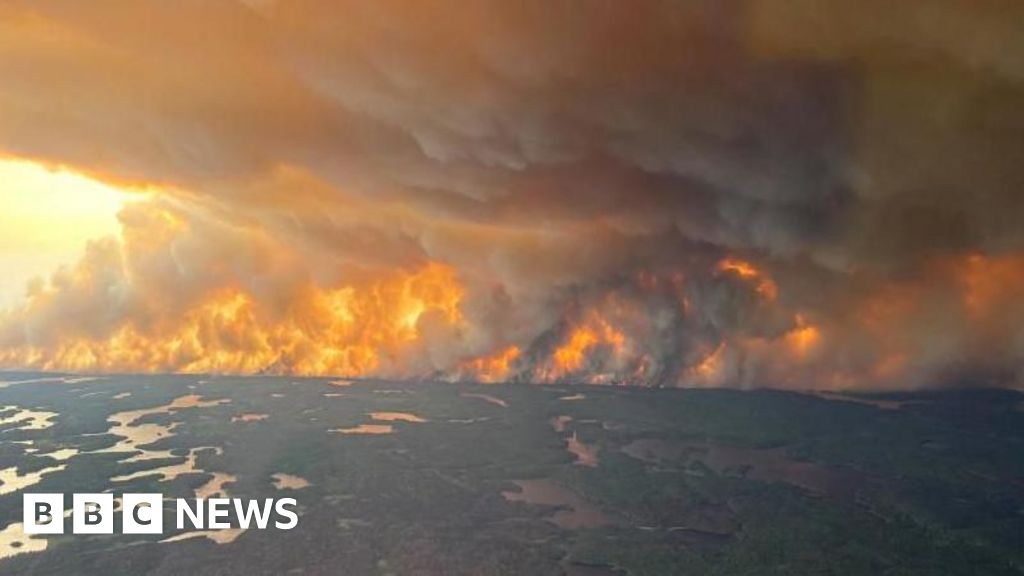
Western Canada is facing a severe wildfire emergency, with Saskatchewan declaring a state of emergency as 14 wildfires burn uncontrollably, following Manitoba's similar declaration affecting 17,000 people. Over 166 fires are active across Canada, straining resources and prompting deployment of the Canadian Armed Forces, with smoke impacting air quality as far south as US cities like Minneapolis and Chicago; this follows Canada's worst wildfire season on record in 2023, with scientists linking these events to climate change, as Canada warms at twice the global average.
Western Canada is currently grappling with a significant wildfire crisis, marked by Saskatchewan's declaration of a state of emergency due to 14 uncontrollable wildfires, following a similar declaration in Manitoba where 17,000 individuals were evacuated. Nationally, with over 166 active fires reported by the Canadian Interagency Forest Fire Centre, 84 of which are deemed "out of control" across multiple provinces including Alberta, Ontario, and British Columbia, the situation is severe, necessitating the deployment of the Canadian Armed Forces in Manitoba. This crisis, characterized by an "extremely negative" sentiment, carries profound human and environmental consequences, including tragic fatalities, widespread evacuations, and significant smoke pollution extending into US cities like Minneapolis and Chicago, triggering air quality alerts. The events unfold against the backdrop of Canada's record-breaking 2023 wildfire season, with scientists attributing the escalating frequency and intensity of such events to climate change, a phenomenon impacting Canada at twice the global average warming rate. The themes of Natural Disasters & Weather and ESG & Climate Policy are central to understanding the broader implications of this ongoing emergency.
AI-powered research, real-time alerts, and portfolio analytics for institutional investors.
Request DemoOverall Sentiment
extremely negative
Sentiment Score
-0.80
