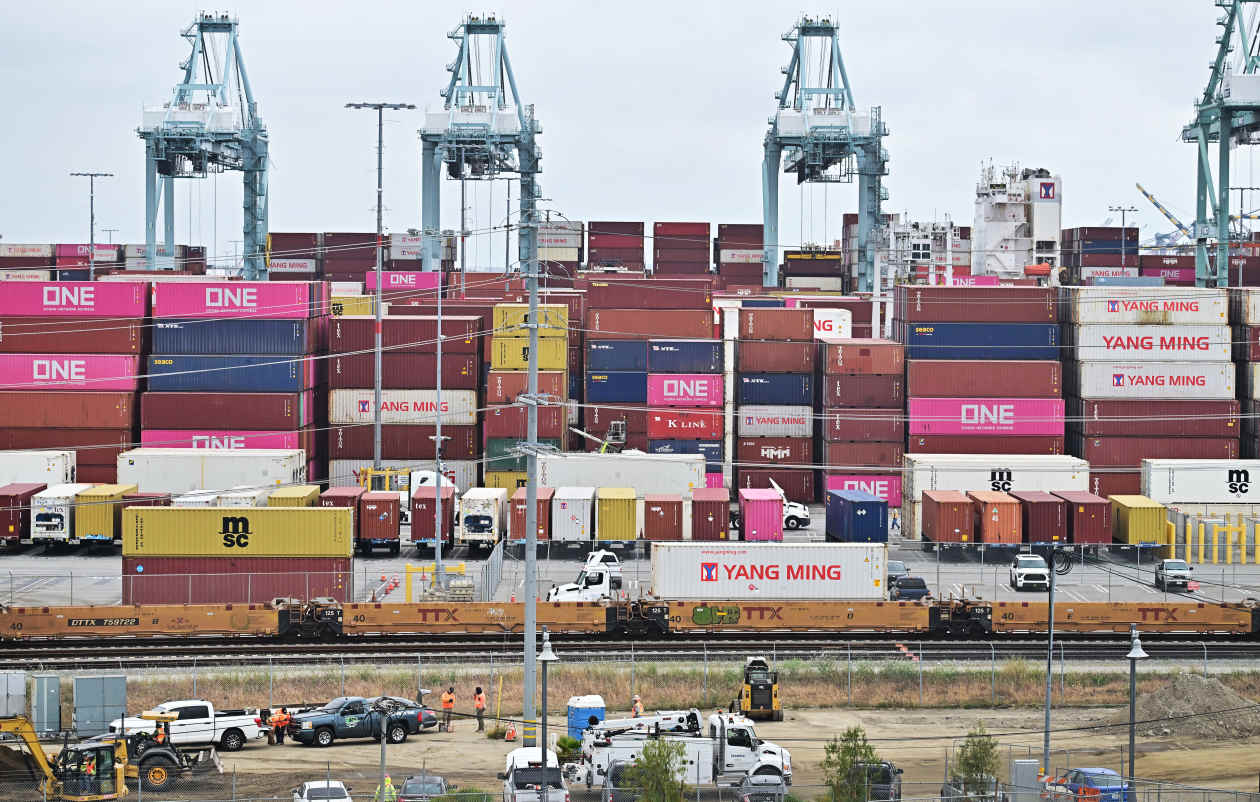
Container shipping activity to the U.S. from China increased 9% for the week ending June 5, though still 25% below year-ago levels, sparking hopes of a second inventory frontloading wave ahead of the summer transport season, according to Goldman Sachs. This uptick follows a pause in some U.S.-China tariffs and a prior frontloading wave that boosted Q1 corporate earnings. However, elevated tariff rates, the end of duty-free access for low-value shipments, and a 94% jump in ocean container rates to the U.S. West Coast, coupled with choppy shipping data and economic uncertainty, suggest retailers and consumers may remain in a slowdown mode.
Container shipping activity from China to the U.S. exhibited a notable 9% increase for the week ending June 5, as reported by Goldman Sachs researchers, signaling potential for a second inventory frontloading wave. This uptick occurs amidst a 90-day pause on certain U.S.-China tariffs initiated earlier in 2025 and ahead of the critical summer transport season for retailers preparing for back-to-school and holiday sales. However, these freight flows remain approximately 25% below prior-year levels. A previous frontloading surge earlier this spring was credited with bolstering U.S. corporate first-quarter earnings and providing a temporary shield against tariff-related cost escalations, contributing to the S&P 500 index recently reclaiming the 6,000 level. Despite this positive short-term data point, significant headwinds persist. The current tariff rate on Chinese goods, though reduced to 30% from 145%, is still considered substantial by Goldman Sachs and could negatively impact demand over time. Furthermore, Chinese e-commerce entities are contending with the cessation of 'de-minimis exemptions' for low-value shipments. Compounding these concerns, ocean container rates from China and East Asia to the U.S. West Coast have surged 94% on a weekly basis to nearly $6,000 per 40-foot equivalent unit for the summer season. Goldman Sachs highlights that shipping data remains 'choppy' and the broader outlook for tariffs and the U.S. economy is clouded, suggesting that retailers and consumers might maintain a 'slow-down mode,' thereby warranting caution against drawing definitive conclusions from week-to-week fluctuations.
AI-powered research, real-time alerts, and portfolio analytics for institutional investors.
Overall Sentiment
mixed
Sentiment Score
0.05
Ticker Sentiment
