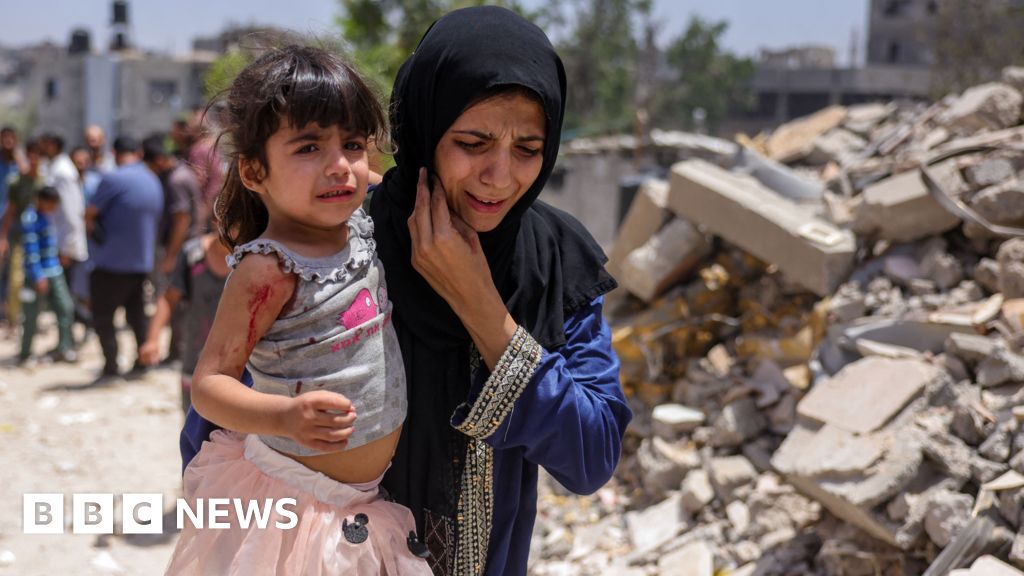
EU officials, including Kaja Kallas and Ursula von der Leyen, have strongly criticized Israel's military actions in Gaza, stating they exceed what is necessary to combat Hamas and decrying attacks on civilian infrastructure as disproportionate. The EU also opposes the US and Israel-backed aid distribution model that bypasses the UN, with Kallas emphasizing that humanitarian aid should not be weaponized amid warnings of catastrophic hunger in Gaza. These criticisms are coupled with actions from other countries, such as the UK suspending trade talks with Israel, and the EU launching a formal review of its trade agreement with Israel, signaling increasing international pressure.
Significant international diplomatic pressure is mounting on Israel from key Western allies, including prominent EU officials, Germany, the UK, France, and Canada, regarding its military operations in Gaza. EU's top diplomat, Kaja Kallas, asserted that Israeli strikes "go beyond what is necessary," while Commission President Ursula von der Leyen described recent attacks on civilian infrastructure as "abhorrent" and "disproportionate." These criticisms are contextualized by a reported death toll of 3,924 people since military actions resumed in March, and a total of 54,084 since October 7, 2023, alongside severe humanitarian concerns as Gaza's 2.1 million inhabitants face catastrophic hunger due to an Israeli blockade that has severely restricted aid. The EU, a substantial humanitarian donor, reports its aid is largely blocked and opposes a US/Israel-backed alternative aid distribution system (GHF) that circumvents the UN, with Kallas warning against the weaponization of humanitarian aid. Concrete diplomatic and economic consequences are materializing: the UK has suspended trade talks with Israel, and the EU has initiated a formal review of its trade agreement, with Kallas expected to present "options" at the EU foreign ministers meeting on June 23rd. These actions, combined with strong rebukes such as from German Chancellor Friedrich Merz who "no longer understands" Israel's objectives, indicate a potential shift in international policy toward Israel, carrying notable implications for trade relationships and regional geopolitical stability.
AI-powered research, real-time alerts, and portfolio analytics for institutional investors.
Request DemoOverall Sentiment
strongly negative
Sentiment Score
-0.80
