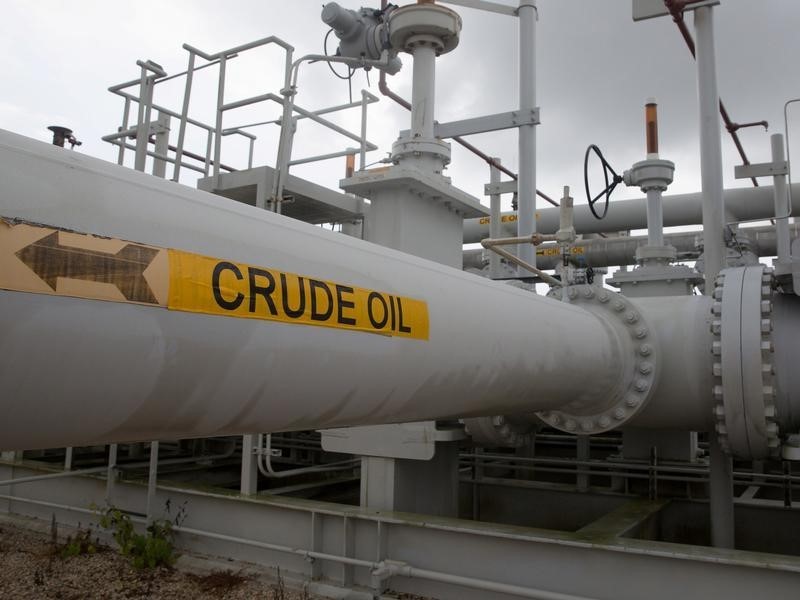
Jefferies raised its terminal WTI and Brent forecasts by $5/bbl to $70 and $75 and lifted 2026 WTI to $81.79/bbl (2027 WTI to $75). The bank cites roughly 10–12 million bpd effectively offline and ~400 million barrels of SR/ floating storage masking front-month tightness, saying structural supply constraints and heightened geopolitical risk to energy infrastructure will push the back of the curve higher. Jefferies models flat U.S. shale growth in 2026 and only ~550,000 bpd of additional exit-rate growth at $85 WTI, and recommends buying high-quality operators and oilfield services names (Ovintiv, ConocoPhillips, EOG, Northern Oil & Gas, Cenovus, SLB, Baker Hughes, Halliburton) on weakness.
Higher-for-longer oil materially reorders optionality across the oil value chain: low-decline, long-life producers with strong free cash flow conversion (tier-1 Permian and high-quality Canadian heavy assets) capture most of the upside margin and should see balance-sheet optionality re-accelerate within 6–18 months. Service companies that can credibly convert backlog into higher day-rates and utilization (complex completions, specialty drilling, subsea) will see margin expansion earlier, but that requires >6 months lead time for rig and equipment deployment.
A key second-order effect is capital allocation inertia: managements that have shifted to returns-first frameworks will not chase short-term rallies, so supply response is likely elastic only above a multi-quarter price threshold; that makes sustained price moves more binary (small news -> big volatility) and extends the time window for structural winners. Insurance, shipping and financing costs for flows through geopolitical chokepoints will add an implicit per-barrel premium to delivered costs — favoring producers with shorter, domestic cash-to-market pathways.
Near-term catalysts to watch are geopolitical escalation/de-escalation headlines (days), inventory re-building or erosion trends (weeks–months), and multi-quarter capex decisions from U.S. independents (3–12 months). Reversal risks are concentrated: rapid diplomatic resolution, meaningful demand destruction from fuel-intensity adjustment, or a coordinated surge in sanctioned-origin flows that materially expands spare capacity could compress the current risk premium within 30–90 days.
The market currently underprices the timing asymmetry between physical tightness and capital response: if prices hold above the structural threshold for multiple quarters, expect re-rating of high-quality E&P and selected services; conversely, headline-driven short squeezes remain frequent and offer tactical selling/hedging windows.
AI-powered research, real-time alerts, and portfolio analytics for institutional investors.
Request DemoOverall Sentiment
moderately positive
Sentiment Score
0.40
Ticker Sentiment
