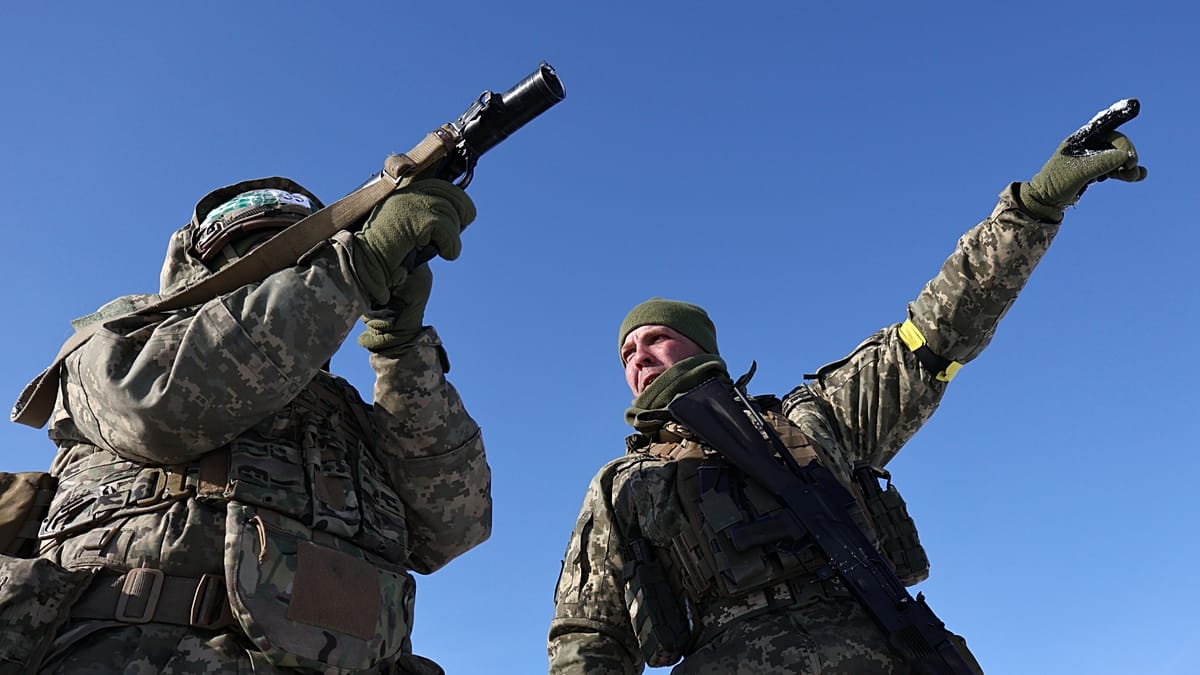
Ukrainian forces have regained multiple settlements and reversed weeks of Russian gains in southeastern and northeastern fronts, with the main advance reported roughly 80 kilometres east of Zaporizhzhia city, according to ISW. Kyiv and SpaceX implemented measures from early February to block unauthorised Russian use of Starlink for drone operations, while Ukrainian cyber operatives posed as an activation service to collect 2,420 data packets from Russian-used terminals (and €5,000 in payments), reportedly leading to terminal deactivations and identification of 31 alleged collaborators; Moscow now faces communications and command issues and is struggling to prepare for a planned summer 2026 offensive.
Market structure: Immediate winners are large defense primes (Lockheed Martin LMT, Northrop NOC, RTX) and cybersecurity vendors (Palo Alto PANW, CrowdStrike CRWD) because battlefield C2, EW and hardened SATCOM demand will spike; losers include Russia-exposed energy names/ETFs and commercial SATCOM vendors with geopolitical operational risk. Competitive dynamics favor primes with integrated ISR/EW portfolios and Tier-1 suppliers (L3Harris LHX, IRDM) — pricing power should rise as governments prioritize ruggedized terminals and anti-jam tech, creating a 12–36 month procurement wave.
Risk assessment: Tail risks include NATO entanglement, retaliatory cyberattacks on Western suppliers, or regulatory action against private SATCOM (SpaceX) that could disrupt supply chains; probability low-medium but impact high on quarters’ revenues and share prices. Time horizons: tactical comms disruption over days-weeks, procurement/order announcements over 1–3 months, structural defense modernisation and semiconductor supply tightening over 6–36 months. Hidden dependency: private-sector policy (SpaceX) is a systemic single point that can rapidly change battlefield effectiveness and vendor win-rates.
Trade implications: Direct plays are long select primes (LMT, NOC, RTX) and cybersecurity (PANW, CRWD), plus small tactical drone exposure (AVAV) and satellite resilience names (LHX, IRDM). Use options to cap downside: 6–9 month call spreads on primes and 3–6 month 25–30 delta calls on cyber names to lever a near-term procurement/incident-driven rerating. Cross-asset: buy 1–2% oil volatility hedge (Brent calls) and modest long gold for tail-risk; underweight Russian assets/RSX and RUB FX for 1–3 months.
Contrarian angle: Markets may over-rotate to commercial SATCOM suppliers (VSAT) despite high execution and sanction risk — the private nature of Starlink means the winners are likely defence integrators, not consumer SATCOM. Historical parallel: post‑2014 Ukraine produced multi-year outperformance for primes, not one-off spikes; expect a multi-quarter grind higher with episodic volatility. Unintended consequence: crowd-funded drone proliferation may compress ASPs for OEMs and inflate demand for commoditized semiconductors, benefiting chip suppliers over boutique drone makers.
AI-powered research, real-time alerts, and portfolio analytics for institutional investors.
Request DemoOverall Sentiment
neutral
Sentiment Score
0.00
