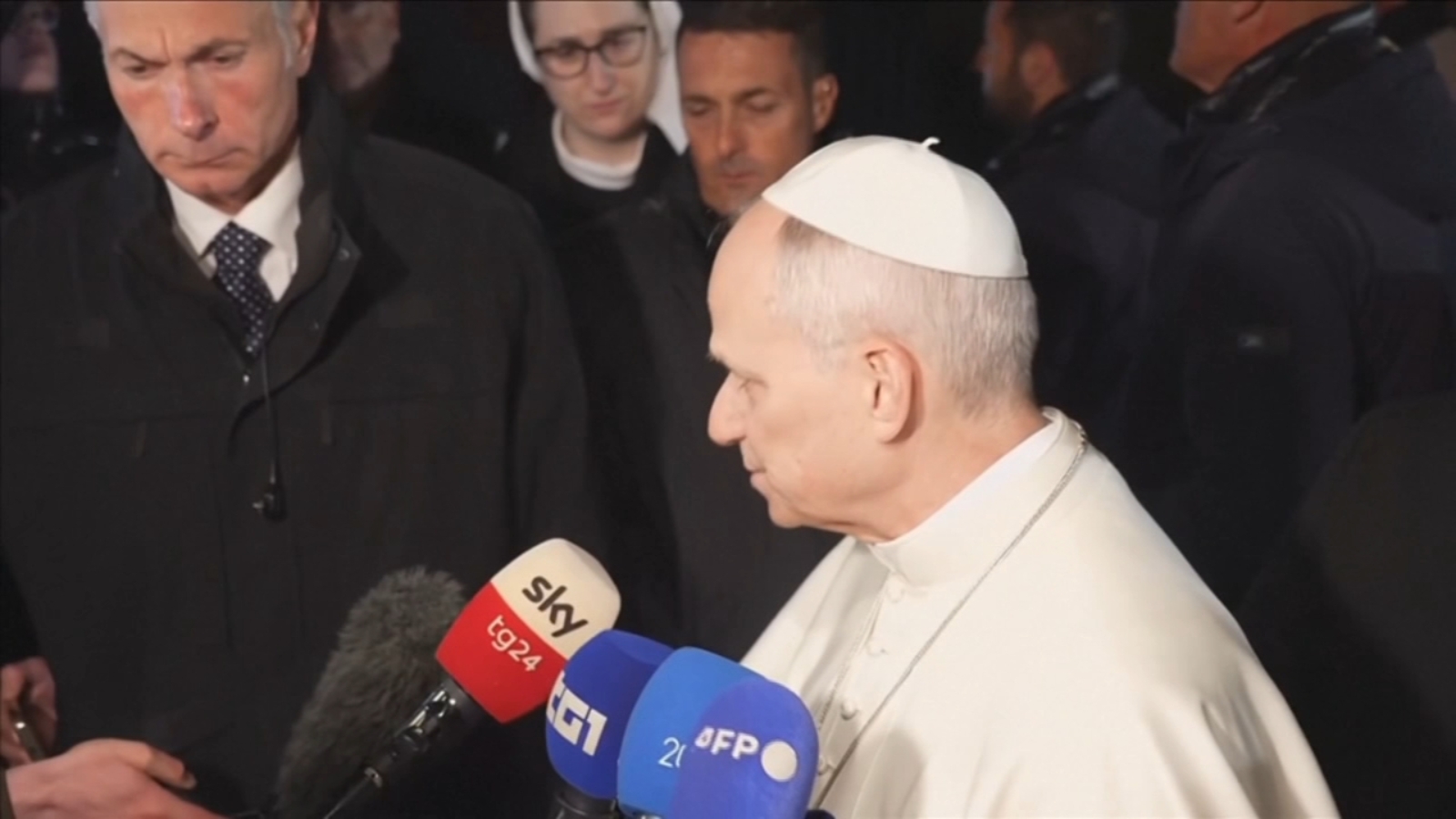
Pope Leo XIV urged de‑escalation, saying he hopes the U.S.-Israel war on Iran could end before Easter and called on leaders, including President Trump, to seek an off‑ramp. The remarks are moral and symbolic with no new policy or operational developments announced, so immediate market impact is minimal. Watch for sustained geopolitical risk that could eventually pressure oil and defense equities if conflict escalates.
A high-profile religious/diplomatic intervention increases the probability of a short-term diplomatic de-escalation attempt within days-to-weeks, which historically knocks 2-6 USD/bbl off oil risk premia and depresses short-term volatility in defense equities by ~3-7% on news. Markets price these episodes quickly; the window of downside in risk premia is narrow (7–21 days) and driven more by headline momentum and stated mediator commitments than by underlying military posture changes.
Second-order winners from a temporary off-ramp are travel and leisure incumbents (airlines, hotel REITs) and EM credit in Gulf-linked economies as geopolitical risk premia unwind; losers are short-dated optionality on defense primes and commodity hedges. Supply-chain effects are asymmetric: a brief de-escalation reduces near-term insurance and rerouting costs for shipping but does not materially change capex or backlog for long-cycle defense programs—so any equity move in contractors is likely a headline-driven roundtrip.
Tail risks that would reverse this thesis include a high-casualty incident, broken negotiations, or a major proxy attack, each capable of re-introducing a $3–8/bbl shock and 8–15% jumps in defense stocks within 48–72 hours. Watch two catalysts over the next 2–4 weeks: formal mediator announcement or explicit ceasefire language (de-escalation trigger) versus any large-scale asymmetric retaliation (escalation trigger).
AI-powered research, real-time alerts, and portfolio analytics for institutional investors.
Overall Sentiment
neutral
Sentiment Score
0.00
