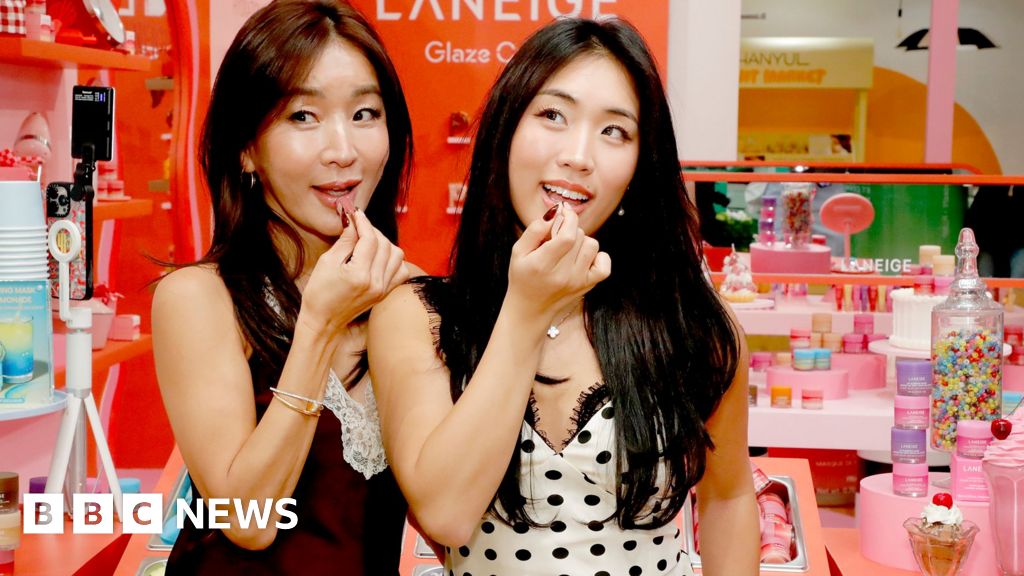
K‑beauty has scaled into a major economic sector: South Korea's domestic market was roughly $13bn in 2024, Amorepacific reported about $6.2bn in sales in 2024 (around half the domestic market), LG Household & Health Care $4.1bn, and exports rose 15% in H1 2025 to $5.5bn, putting annual exports on track to exceed $10bn. Growth is driven by rapid product innovation, an ODM-led industrial ecosystem (eg Cosmax supplies ~4,500 brands and accounted for just over a quarter of 2024 cosmetics exports) and strong Western demand, while risks include thin margins, high brand churn (≈8,800 closures), competitive pressure, and policy/headline risks such as the US 15% tariff and ongoing M&A activity (eg L'Oréal's late‑2024 acquisition).
Market structure: Winners are scale players and ODMs — large conglomerates that own or acquire K‑beauty (Amorepacific, large ODMs like Cosmax) and global retailers with broad shelves (WMT, Sephora partners). Losers are small independents and specialty retailers exposed to margin compression and crowded SKUs; pricing power will shift to scale owners and fast OEMs as product churn and promo intensity rise. Strong demand: South Korea exports +15% H1 2025 and on track for >$10bn/year implies sustained volume growth, but unit margins will compress as churn and competition increase. Cross‑asset: stronger export growth should tighten KR sovereign spreads and support KRW long term, while near‑term tariff risk biases USDKRW volatility; modest upside for packaging commodities (PET/aluminium).
Risk assessment: Key tail risks — US tariff escalation beyond 15%, rapid social‑media backlash/regulatory limits on influencer claims, and operational failure at concentrated ODMs; any of these could knock 10–30% off near‑term revenue for exposed names. Time horizons: immediate (days) = tariff/news headlines and influencer controversies; short (weeks–months) = Q1/Q2 earnings, Olive Young US rollout, export data; long (quarters–years) = industry consolidation and margin normalization. Hidden dependencies include heavy reliance on a few ODMs (Cosmax scale risk) and retail distribution deals (Sephora/WMT contract terms). Primary catalysts: M&A (L'Oréal buys), monthly export releases, and US tariff reviews.
Trade implications: Direct plays: overweight Korean export exposure (EWY) and global conglomerates that can scale K‑beauty; underweight small publicly traded specialty retailers/indies (ULTA, small caps). Pair trades: long scale/multinational beauty (L'Oréal/LRLCY or large conglomerates) vs short premium US specialty retail (ULTA/EL) to capture margin compression. Options: use 3–6 month call spreads on WMT to play mass retail distribution gains and buy 3‑month KRW puts (USDKRW calls) as a defined‑cost tail hedge. Enter over next 4–8 weeks and re‑assess after two export prints or US tariff clarifications (60–90 days).
Contrarian angles: Consensus assumes secular, unconstrained market-share gains for K‑beauty — miss: commoditization and ingredient copycats by global majors can cap pricing before revenue growth scales margins. Historical parallel: Japanese cosmetics cycle — rapid global diffusion then decade of consolidation and margin erosion; expect similar mechanical slowdown within 18–36 months unless brands sustain true R&D differentiation. Mispricings: publicly traded Korean exporters/ODMs may underprice operational concentration risk; overdone: small US prestige retailers may be priced for 'no competition' and are vulnerable. Unintended consequence: heavier regulation on influencer marketing could materially reduce viral-driven spikes overnight.
AI-powered research, real-time alerts, and portfolio analytics for institutional investors.
Request DemoOverall Sentiment
moderately positive
Sentiment Score
0.35
Ticker Sentiment
