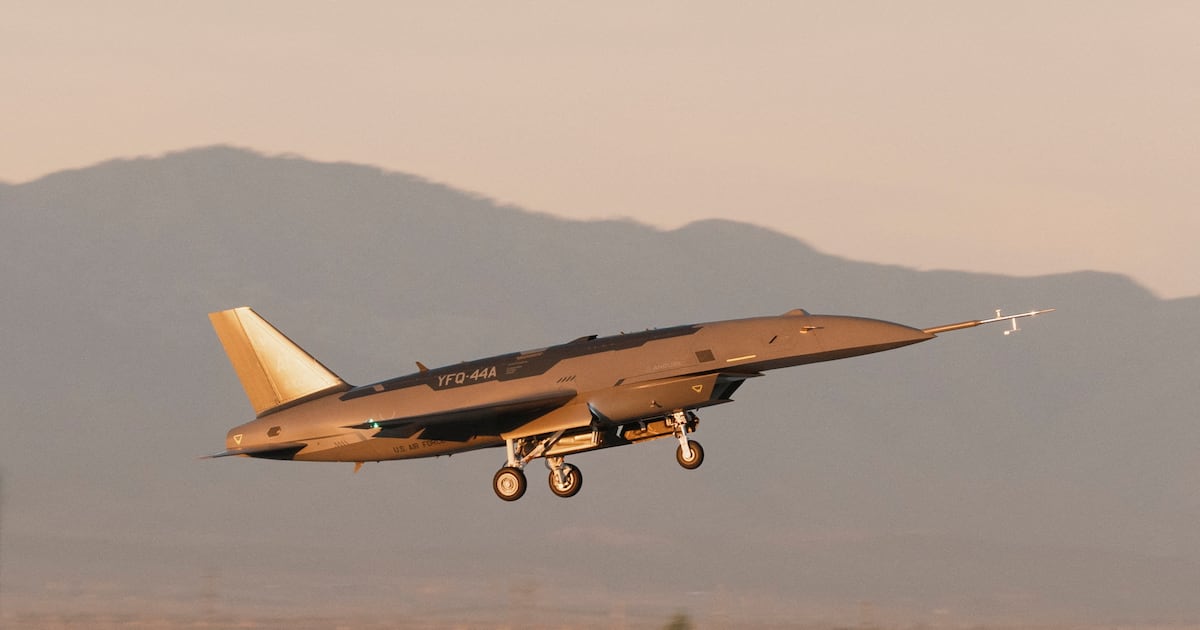
Anduril's autonomous weapons systems have reportedly exhibited repeated defects, leading the U.S. military and independent experts to question their reliability and readiness. The revelations create near-term procurement and operational risks, expose the company to reputational and contract-level scrutiny from the Department of Defense, and increase the likelihood of technical remediation, oversight or contractual review that could affect future deployments and commercial prospects.
Market structure: Reliability problems at Anduril (and similar autonomous vendors) mechanically transfer negotiating leverage to legacy primes (LMT, RTX, NOC, GD, LHX) that have certifications, test infrastructure and political capital. Expect incumbents to capture an incremental 10–20% of near-term unmanned-system RFP value over 12–24 months as programs are re-scoped for redundancy and proven stacks; smaller pure-play drone names (AVAV, small private startups) are direct losers. Cross-asset signals: expect a short-term spike in equity implied vol for small-cap defense/AI names, modest safe-haven bid in US Treasuries (2–10bp lower yields intraday on headlines) and a slight USD appreciation in risk-off flows; commodity impacts are minimal outside higher titanium/aluminum demand for hardware in multi-year ramps.
Risk assessment: Tail risks include a regulatory clampdown (Congress/DoD certification freeze) with an estimated 5–15% probability that could delay programs by 12–36 months, and an operational catastrophe (10–20% scenario) causing contract cancellations and reputational contagion. Immediate (days) — headline-driven volatility and private-market mark-downs; short-term (weeks–months) — re-prioritization of DoD RFPs and GAO/Inspector General reviews; long-term (quarters–years) — structural shift to certified, modular architectures and higher recurring services revenue for primes. Hidden dependencies include sensor/semiconductor vendors (NVDA, QCOM) and third-party integrators — failure at one supplier cascades procurement delays.
Trade implications: Tactical trades favor long large-cap primes and short small autonomous specialists. Specific instruments: buy LMT/RTX/NOC 3–6 month call spreads (target 1–2% position each) to capture re-rating if primes win RFPs; initiate small-cap shorts or buy puts on AVAV (0.5–1% portfolio risk) to benefit from re-testing cycles; consider a long ITA ETF overweight (+150–200bps) funded by cutting 200–300bps from high-beta AI/robotics names. Entry window: act within 2–6 weeks to capture post-headline dislocation; exit or re-assess at the next DoD contract award cycle (90–180 days).
Contrarian angles: The market may over-penalize autonomy broadly — high-quality autonomy suppliers with rigorous test protocols and insurance (notably NVDA-enabled system integrators) could be underowned and rebound once certifications are clarified. Historical parallel: Boeing 737 MAX’s grounding punished smaller suppliers first then normalized as certification tightened, benefiting firms able to scale compliance — expect a similar beneficiary list among primes and testing/validation vendors (BAH, TDG-like businesses). Unintended consequence: increased demand for validation, cyber and systems-integration services (benefiting BAH, SAIC) creates multi-year after-market service revenue that markets may be underpricing today.
AI-powered research, real-time alerts, and portfolio analytics for institutional investors.
Request DemoOverall Sentiment
moderately negative
Sentiment Score
-0.55
