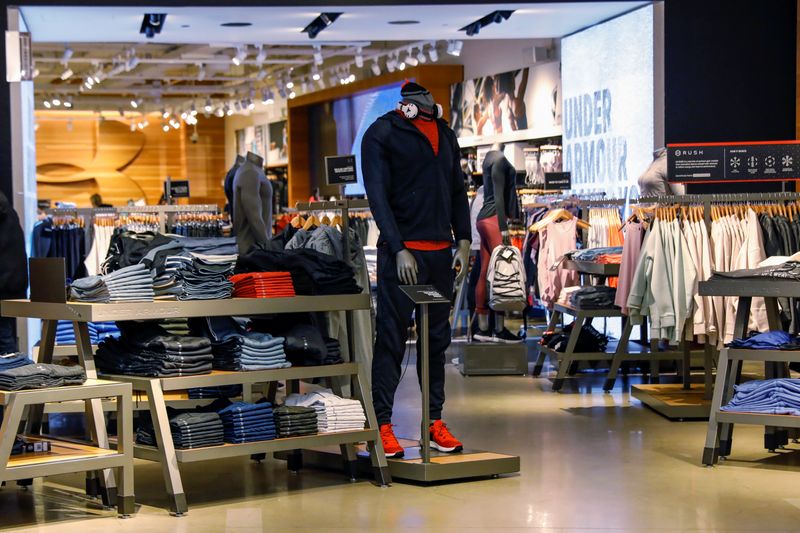
Fairfax Financial and CEO Prem Watsa collectively bought about $5.87 million of Under Armour Class A shares over May 12-14, 2026, adding 1,178,344 shares at roughly $4.97-$5.00 each. The buying comes after UA fell 20% over the past week and trades at $4.96 versus an InvestingPro fair value of $7.97, suggesting potential undervaluation. The article also notes mixed Q4 fiscal 2026 results: adjusted EPS was a $0.03 loss versus a $0.02 loss expected, while revenue beat at $1.2 billion versus $1.17 billion.
The important signal is not the dollar amount of buying; it is that a long-duration value allocator is leaning into a falling knife while the equity is still de-rating on weak operating momentum. That usually matters most when the buyer already has deep industry knowledge and a multi-year horizon, because it can compress the left tail of a capital-raise or distress narrative and create a reflexive floor in a thinly owned name. For a sub-$3B equity, that kind of sponsorship can dominate flow for several weeks even if fundamentals are not yet improving. The second-order effect is on positioning, not operations: if investors believe an informed owner is defending the shares, short interest and put demand can unwind faster than earnings estimates can recover. That creates a tradable dislocation where the stock can rebound on multiple expansion before the business inflects, especially if the next print is merely “less bad” rather than strong. The competitive read-through is that branded athletic apparel remains structurally challenged by larger, better-capitalized peers that can outspend on marketing and product; any rally here is likely a sentiment trade, not a secular share-gain story. The risk is that insider-style buying gets misread as a fundamental bottom when the real driver is average-down discipline. If margins stay pressured and the company cannot show clean inventory, gross margin, and sell-through stabilization within 1-2 quarters, this can revert quickly; the market will not pay up for hope in a low-growth, low-margin franchise. The asymmetric upside case is a squeeze into earnings season, but the downside remains open if guidance disappoints again or if the broader consumer discretionary tape weakens. The contrarian point is that this may be less a value signal on the operating company and more a statement about capital preservation by a disciplined owner willing to support a marked-down asset. That can be bullish for the shares tactically, but it does not resolve the underlying question of whether the brand has pricing power in a promotion-heavy market. In other words, the buying may cap immediate downside, but it does not automatically justify a durable rerating.
AI-powered research, real-time alerts, and portfolio analytics for institutional investors.
Request DemoOverall Sentiment
mildly positive
Sentiment Score
0.15
Ticker Sentiment
