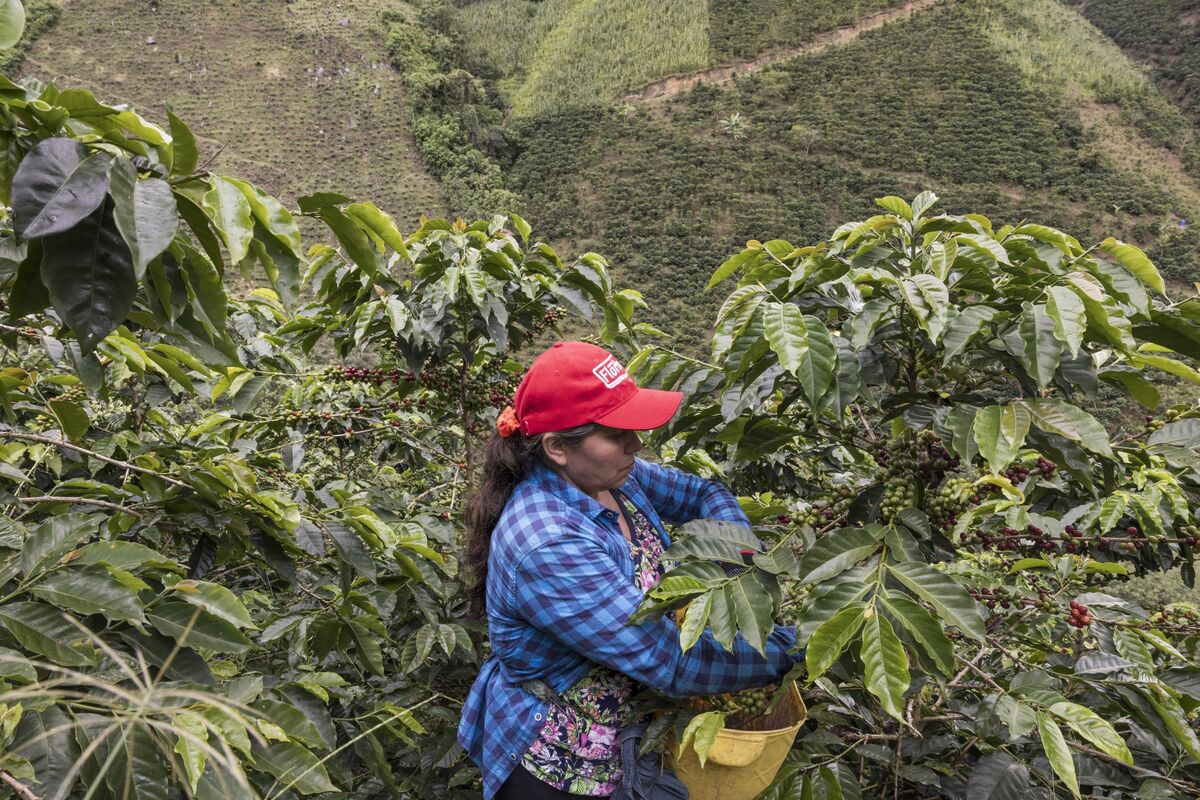
Women in Colombia’s coffee sector are gaining ground—running farms in regions such as Huila, forming cooperatives and launching boutique brands—yet structural barriers, notably limited access to credit, are constraining their ability to scale even as global coffee prices remain elevated. The dynamic points to under‑exploited upside in supply‑chain diversification and gender‑lens investment opportunities, but persistent financing and institutional barriers limit near‑term supply shifts and make this primarily an ESG and microfinance thematic rather than a macro market mover.
Market structure: The rise of women-led farms and cooperatives in Colombia is likely to bifurcate the coffee market — incremental growth in higher-margin specialty output (premium 20–50% price over commodity grades) while leaving mass-market commodity volumes less affected in the near term. Winners: specialty roasters, premium retail (e.g., SBUX) and boutique Colombian brands able to command origin premiums; losers: bulk traders and low-margin processors that compete on spot arabica (ICE KC). Expect gradual reallocation of share from commodity to specialty over 12–36 months, limiting upside for plain arabica prices but increasing pricing power at the retail/brand level.
Risk assessment: Key tail risks include a climate shock (El Niño/La Niña or coffee leaf rust) that can cut Colombian output by >10% in a season, and policy/regulatory shifts (land reform or export taxes) that could spike local spreads and FX volatility. Immediate (days) impact is negligible; short-term (weeks–months) is seasonal price swings in KC; long-term (years) is structural premiumization and credit access barriers. Hidden dependency: scaling specialty supply requires 2–4x capital for micro-milling/quality control — without targeted credit interventions the supply response will be supply-constrained, not price-dampening.
Trade implications: Tactical trade: favor premium roasters/retailers and underweight commodity arabica exposure — implement 1–2% portfolio long SBUX (play premiumization) and 1% short JO (coffee ETN) to express divergence over 3–12 months. Use options: buy a 3–6 month JO put spread (strike width sized for ~15% downside) to cap cost if expecting mean reversion in arabica; alternatively buy SBUX 6–12 month call spread to capture margin expansion. Monitor triggers: if ICE KC (front-month) falls >15% in 90 days, reduce short JO; if Colombian export volumes rise >5% YoY, add to short commodity exposure.
Contrarian angles: The market underestimates that female-led co-ops can materially change quality mix, not just supply — this could compress commodity prices while expanding origin-branded premiums, benefiting branded roasters even as ETNs lose. The ESG/impact narrative could be overvalued in private-label boutique valuations (too much price multiple), creating selection risk among specialty names. Historical parallel: past agricultural premiumization (Peruvian coffee, Ethiopian origin branding) shows multi-year uplift for exporters who control supply chains; failure mode is credit market failure — if microcredit doesn’t scale, the shift stalls and commodity prices rebound.
AI-powered research, real-time alerts, and portfolio analytics for institutional investors.
Request DemoOverall Sentiment
mixed
Sentiment Score
0.05
