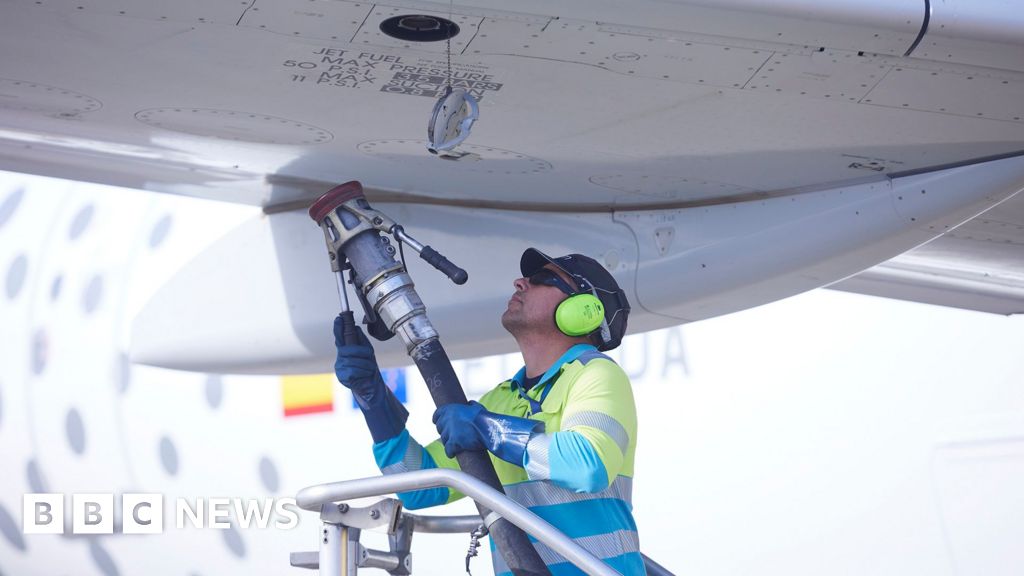
European airports warned that if the Strait of Hormuz remains closed for another three weeks, systemic jet fuel shortages could hit the EU, with Gulf supply accounting for about 50% of Europe’s aviation fuel imports. The benchmark European jet fuel price has already surged to an all-time high of $1,838 per tonne from $831 before the war began. Smaller airports are seen as especially vulnerable, while ACI Europe is urging collective purchasing and temporary easing of import restrictions.
The market is underpricing how quickly a jet-fuel bottleneck can cascade from airlines into a broader European growth scare. The first-order hit is obvious: carriers with weak balance sheets and thin ancillary revenues will be forced to choose between capacity cuts and margin collapse, but the second-order damage lands on regional airports, airport-services firms, and local economies that depend on summer traffic. Smaller airports are the pressure point because they have less bargaining power in procurement and lower ability to substitute fuel logistics, so the pain should concentrate outside the major hubs before becoming visible in headline traffic data.
This is also a relative-value event, not just a sector-wide negative. European airlines with more flexible fleet deployment, stronger hedging, and large non-European revenue exposure should outperform the weakest pure-play leisure operators, while airport owners with diversified hubs can pass through some of the shock better than local-regional facilities. In energy, the real beneficiary is not crude outright but the middle-distillate complex: jet fuel cracks can remain elevated even if crude retraces, which means refiners with distillate-heavy yield and trading capability should see improved margins if logistics stay constrained.
The key catalyst window is days to three weeks, not months. If the strait reopens smoothly, the market will likely fade the move quickly; if not, expect a forced repricing in airline guidance, summer capacity plans, and airport throughput assumptions. A less obvious risk is political intervention: any EU-level fuel pooling, temporary import-rule easing, or emergency allocation scheme would reduce the shortage premium faster than physical supply would suggest, so the trade should be sized for a headline-driven reversal.
Contrarianly, this may be less a structural supply shock than a stress test of Europe’s fragmented fuel procurement system. The market may be extrapolating scarcity too far if inventories are better than feared or if carriers can re-route supply through alternate hubs, but that does not eliminate a near-term earnings hit from higher working capital and disrupted scheduling. The setup favors a tactical, event-driven posture rather than a long-duration bearish call on the entire travel complex.
AI-powered research, real-time alerts, and portfolio analytics for institutional investors.
Request DemoOverall Sentiment
strongly negative
Sentiment Score
-0.65
