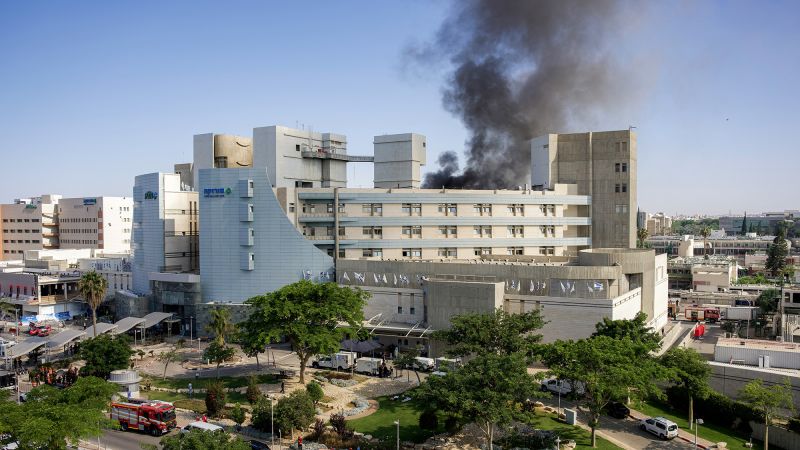
President Trump is allowing two weeks for diplomacy regarding Iran before deciding on a potential strike, while an Iran-backed militia in Iraq threatened to attack US military bases if the US enters the conflict. An Israeli hospital sustained significant damage from Iranian missiles, prompting Prime Minister Netanyahu to warn of strikes on Iranian nuclear facilities and suggesting no Iranian official, including the Supreme Leader, should be immune from retaliation. Tensions remain high, with reports from Tehran indicating near-empty streets amidst anti-aircraft fire.
Geopolitical tensions in the Middle East have reached a critical point, characterized by direct military exchanges and threatening rhetoric between Iran and Israel, with the US weighing its options. The situation has moved beyond posturing, as evidenced by Iranian missile strikes causing "extensive damage" to an Israeli hospital and Israel's subsequent threat to target Iran's nuclear facilities and its Supreme Leader. This severe escalation justifies the extremely negative sentiment score (-0.85) and high market impact rating (0.85). President Trump's decision to allow a two-week window for diplomacy introduces a period of significant uncertainty; a failure in talks could trigger a broader regional conflict, with Iran-backed militias already threatening US military bases. The on-the-ground reports from Tehran of empty streets and anti-aircraft fire underscore the high state of alert and the tangible risk of imminent warfare, which has direct implications for global risk assets, energy markets, and the defense sector.
AI-powered research, real-time alerts, and portfolio analytics for institutional investors.
Request DemoOverall Sentiment
extremely negative
Sentiment Score
-0.85
