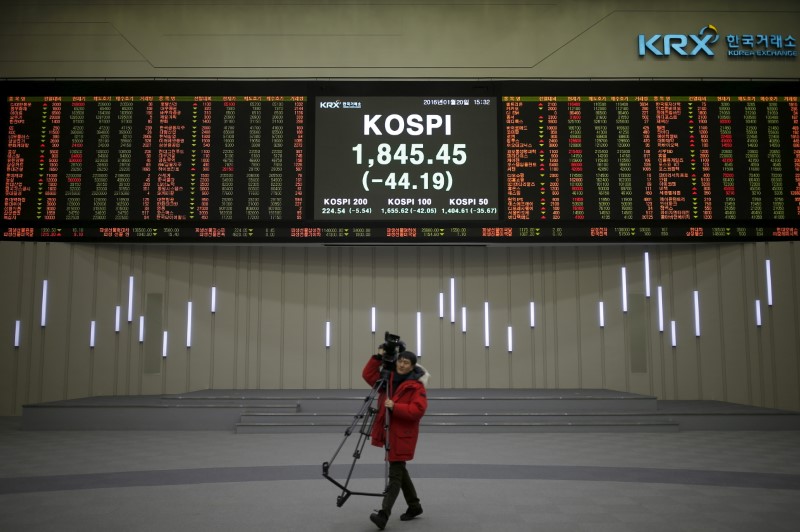
Asian equities were broadly higher, led by South Korea’s KOSPI, which surged 3.5% to a record 6,828.33 as Samsung Electronics rose 2.8% and SK Hynix jumped 6.8% on strong first-quarter earnings and tight memory-chip supply. Hong Kong’s Hang Seng added 1.7% as Baidu, SMIC, and Xiaomi each gained more than 4%, while Australia’s ASX 200 fell 0.2% on rising bets the RBA will lift rates by 25 bps on Tuesday. Geopolitical caution over the U.S.-Israel war on Iran remains a risk backdrop, but the near-term tone is risk-on for Asian tech and chip shares.
The cleanest read-through is not broad Asia-beta, but a further widening of the AI supply-chain trade: memory remains the bottleneck in accelerating AI capex, so the strongest second-order beneficiaries are the component suppliers with pricing power rather than the headline AI platform names. That keeps the setup constructive for NVDA through better supply availability and faster system shipments, but the immediate equity upside may actually sit in upstream memory and foundry ecosystems, where earnings revisions can still outpace price moves for several quarters. BIDU looks like a sentiment rebound rather than a fundamental regime shift. The market is still pricing Chinese AI optionality at a discount because model monetization, regulatory cadence, and domestic demand visibility remain uncertain; that makes the stock prone to sharp factor-driven rallies, but also vulnerable if the move is being driven more by breadth rotation than by new product evidence. In other words, BIDU can work as a tactical beta trade, but it is not yet a high-conviction medium-term compounder unless ad spend and cloud AI monetization inflect in the next 1-2 earnings cycles. Geopolitically, the Hormuz risk premium is still under-owned in equity positioning because it transmits first through energy, then through inflation expectations, then through rates. If crude remains bid for another 2-6 weeks, the market will likely reprice central bank flexibility and discount multiples, which is bearish for long-duration growth even if the direct earnings hit is small. The cleaner trade is to own beneficiaries of higher realized pricing and hedge rate-sensitive duration exposure rather than chase the index move itself. The contrarian view is that the AI-linked rally may be partly overcrowded at the large-cap level, while the real laggards are the non-US beneficiaries with direct supply leverage and still-cheap valuations. Also, if the geopolitical shock does not escalate further, the inflation impulse can fade quickly and unwind the hawkish rates narrative, which would support a relief rally in growth and semis over a 1-3 month horizon.
AI-powered research, real-time alerts, and portfolio analytics for institutional investors.
Request DemoOverall Sentiment
mildly positive
Sentiment Score
0.25
Ticker Sentiment
