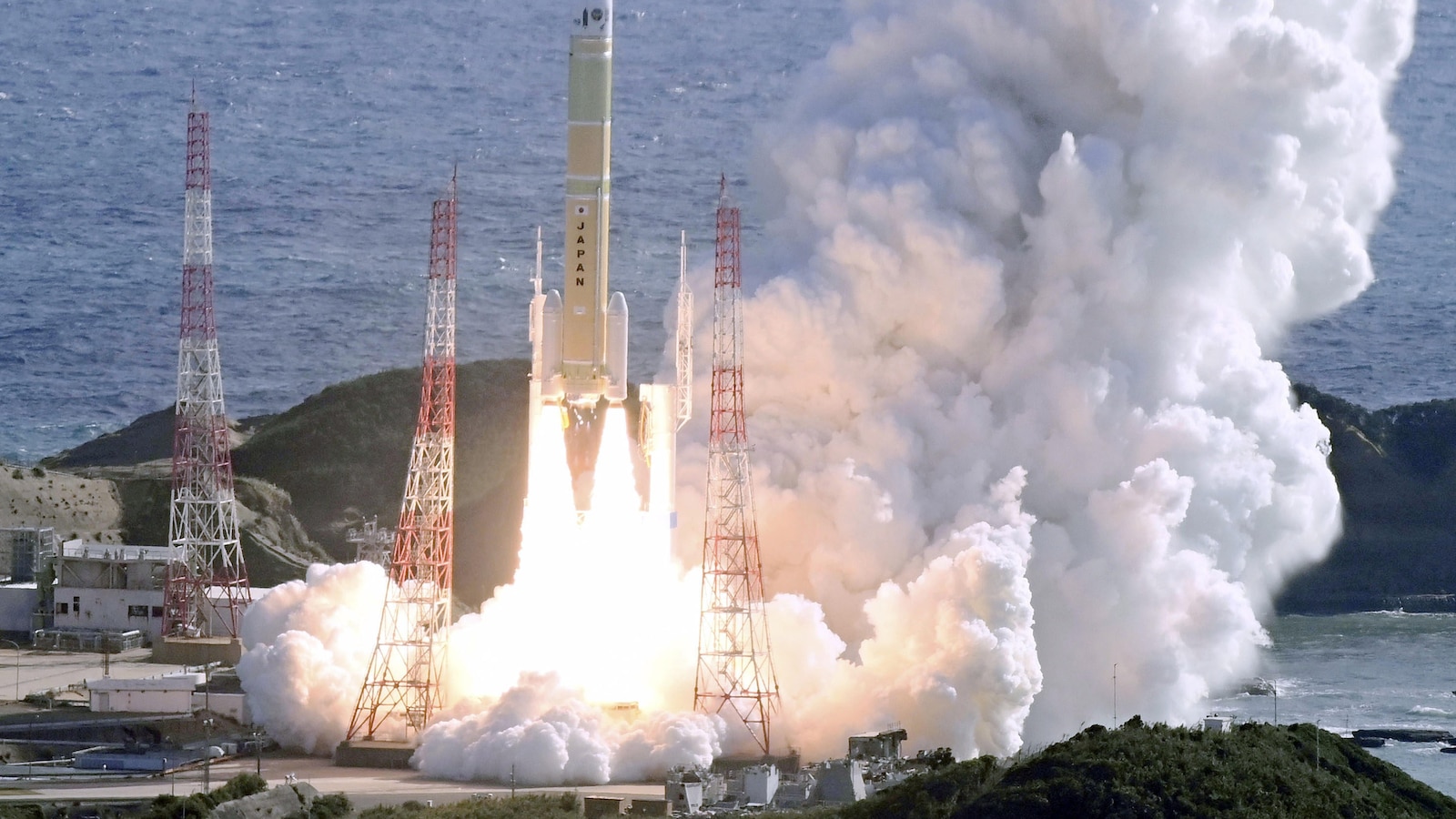
Japan's JAXA said its H3 rocket failed to place the Michibiki 5 navigation satellite into its planned orbit after a premature cutoff of the second-stage engine and unconfirmed satellite separation. The second major H3 failure since its flawed 2023 debut undermines efforts to replace the near-perfect H‑2A, delays expansion of the QZSS regional geolocation network (targeting seven satellites by March 2026 and 11 by the late 2030s) and raises operational and competitive risks for Japan's push to field a cost-competitive commercial launch vehicle; the government has convened a task force to investigate.
Market structure: The H3 failure increases near-term demand for proven, reliable launch and navigation-capable suppliers — incumbents with operational track records (Lockheed Martin LMT, Northrop Grumman NOC, RTX/ULA indirect exposure) gain pricing power while domestic OEMs and JAXA-linked contractors (e.g., Mitsubishi Heavy Industries 7011.T) suffer credibility and contract risk. Commercial GNSS and chipset suppliers (Qualcomm QCOM, Qorvo QRVO, Skyworks SWKS) gain optionality as Japan delays QZSS completion and buyers seek multi-source solutions. Insurance and reinsurance premiums for launch failures should tick up, squeezing small-cap launchers' P&Ls.
Competitive dynamics & supply/demand: Expect a reallocation of 6–18 months of Japan-bound launch demand to foreign providers, tightening slots and enabling mid-single to low-double-digit price increases for dependable providers; backlog and capacity constraints will matter most in 3–12 months. FX and fixed income cross-effects: potential modest JPY weakness on credibility shock may increase hedging flows; Japanese sovereign/defense-linked bond issuance could rise if government funds replacements, pressuring rates slightly over 12–24 months.
Risk assessment: Tail risks include a government procurement freeze or contractual cancellations (high-impact, <10% probability) that could shave >10–20% off revenues of small-space OEMs; investigative findings within 30–90 days are the primary catalyst. Hidden dependencies: insurance payouts, supply-chain single-sourcing, and export-control politics (US/Japan tech cooperation) can amplify outcomes over 6–24 months.
Contrarian angle: The market may under-price eventual recovery — historical parallels (Ariane/H-II development hiccups) show flagships often recover after 2–4 iterative fixes, creating a 6–18 month rebound if fixes are software/sequence-related rather than structural. If the investigation clears systemic design faults, small-cap launchers could rerate sharply; the key mispricing window is the 30–90 day investigative period.
AI-powered research, real-time alerts, and portfolio analytics for institutional investors.
Request DemoOverall Sentiment
moderately negative
Sentiment Score
-0.55
