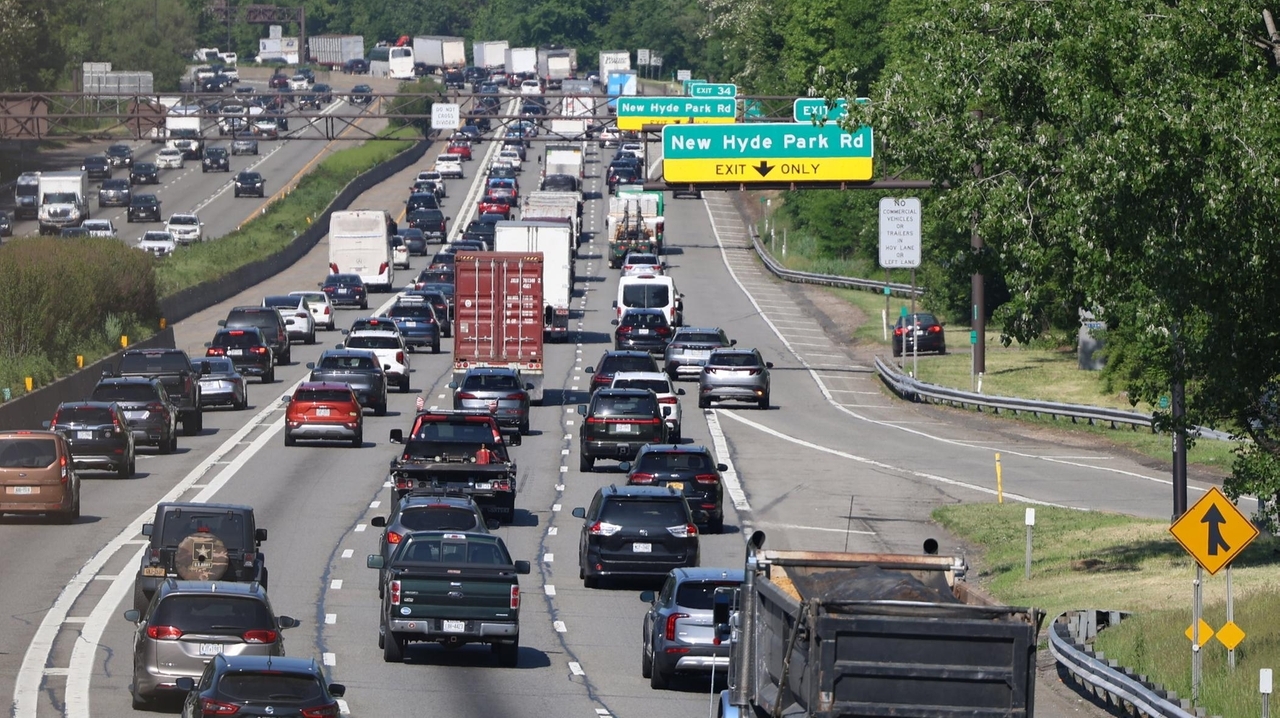
Long Islanders were forced to drive while LIRR service was unavailable due to a strike, leading to frustration over heavier traffic and higher gas prices. The article highlights a near-term commuter disruption rather than a broader market-moving development. Impact is localized, but it underscores increased fuel consumption and transportation inconvenience.
The immediate economic effect is not the commute itself but the forced reallocation of transport spend: when a rail option disappears, discretionary trips become more expensive and less frequent, while road fuel demand and parking/toll usage rise. That is a small but real tailwind for gasoline retailers and highway-linked services over the next several weeks, especially if the strike persists long enough for behavior to reset. The more interesting second-order effect is margin compression for lower-income households, which tends to hit big-box, value, and restaurant traffic before it shows up in broad retail data.
From a competitive standpoint, substitute mobility providers gain share only if they have idle capacity. Ride-hailing and car-rental economics should improve at the margin, but the bigger winner is likely local convenience commerce near park-and-ride nodes and suburban arterials, where incremental car traffic lifts impulse purchases. Conversely, discretionary destination retail in Manhattan and transit-dependent corridors faces a near-term demand air pocket; the effect is more about timing and convenience friction than permanent lost spend, but even a 1-2 week disruption can shift weekly comp momentum.
The contrarian angle is that higher gas prices do not always mean durable energy-market upside here; they may simply reflect short-lived demand inefficiency and bottlenecks. If commuters consolidate trips or carpool after the initial shock, gasoline volumes could normalize before price-sensitive demand destruction becomes visible, making the macro read-through overdone. The real risk is on duration: a days-long strike is noise, a months-long strike would start to affect employment patterns, suburban consumer sentiment, and eventually local tax receipts and housing activity.
Catalyst watching should focus on strike resolution timing and whether transit ridership snaps back immediately or with a lag. A fast settlement would unwind most of the trade within 24-72 hours, while a prolonged dispute would favor a broader basket of car-dependent consumer names and suburban retail. The setup is best treated as a tactical relative-value event, not a structural thesis.
AI-powered research, real-time alerts, and portfolio analytics for institutional investors.
Request DemoOverall Sentiment
mildly negative
Sentiment Score
-0.35
