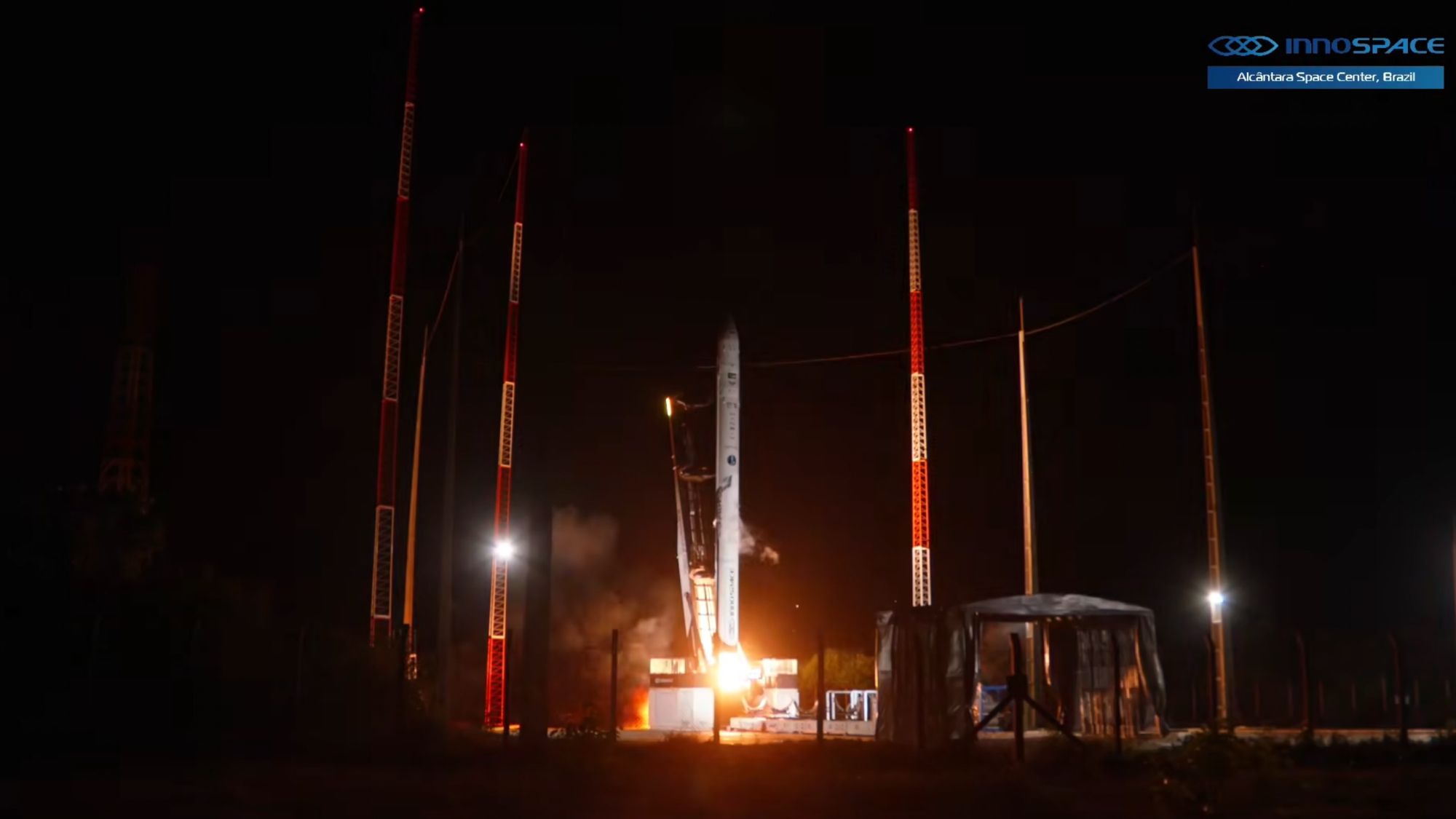
South Korean startup Innospace suffered a failed debut orbital launch of its 17.3 m Hanbit-Nano rocket from Alcantara, Brazil, on Dec. 22 (0113 GMT Dec. 23); the vehicle experienced an anomaly around 50 seconds after liftoff and crashed approximately one minute into flight. The two-stage rocket—first stage LOX/paraffin, upper stage configurable with LOX/paraffin or LOX/methane—was carrying five small satellites (Brazil/India) and three tech-demo payloads and is designed to deliver up to 90 kg to sun-synchronous orbit. Founded in 2017 with roughly 260 employees, the company has cut its webcast and provided no immediate cause; the setback raises near-term schedule and commercialization risks for Innospace and its planned Hanbit-Micro/Mini follow-ons.
Market structure: The Innospace failure is a negative idiosyncratic shock to the sub-90kg small-launch niche that will reduce near-term available commercial capacity and bargaining leverage for new entrants. Winners are established defense primes and established launch providers (pricing power +5–20% on small-payload solutions over 3–12 months); losers are nascent launch startups, smallsat rideshare brokers and insurers who face higher claim frequency and repricing risk.
Risk assessment: Tail risks include regulatory/insurance clampdowns in Brazil or South Korea that could add 30–50% to compliance/insurance costs for small launchers, or cascade funding withdrawals that force bankruptcies among startups within 6–18 months. Immediate impact (days) is reputational contagion and equity repricing in speculative space names; medium-term (3–12 months) is manifest reshuffles and contract migrations to incumbents; long-term (2+ years) could concentrate market share among a few providers.
Trade implications: Expect credit spreads for small aerospace/venture debt to widen; implied vol spikes in space-themed equities/ETFs (UFO, RKLB) over 1–3 months. Tactical plays: overweight defense primes (LMT, NOC, RTX) and buy protection on speculative launch equities via puts; consider shorting a diversified space ETF exposure by a small size to express convex downside if more failures follow.
Contrarian angles: Consensus may over-penalize capable public launchers — early-stage failures historically (SpaceX pre-2012) preceded consolidation and rapid re-rating for survivors. If RKLB or space ETF UFO drop >20% on headline contagion without fundamental contract losses, that can be a 3–12 month buying opportunity; conversely, tightened insurance or regulation is a durable negative and justifies increasing defensive positioning.
AI-powered research, real-time alerts, and portfolio analytics for institutional investors.
Request DemoOverall Sentiment
strongly negative
Sentiment Score
-0.60
